
The Advantages and Challenges of Swan’s Decentralized Custody Strategy for Bitcoin
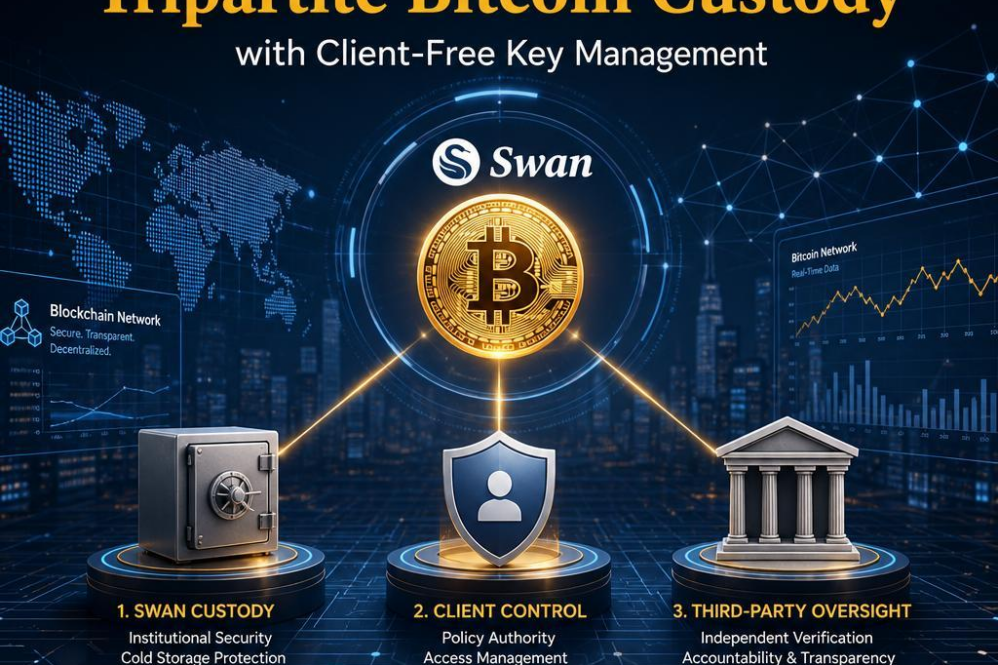
Swan’s approach to Bitcoin custody represents a important shift from conventional methods, emphasizing security and robustness. By distributing custody responsibilities across multiple entities, Swan aims to mitigate the risks inherent in centralized systems. This strategy involves several custodians collaborating to manage different aspects of asset protection. Unlike single-entity custody, which is more susceptible to breaches or operational disruptions, this decentralized model enhances security and resilience.
The multi-entity custody model offers several benefits. By diversifying the custodial network, the risk of a security breach compromising all holdings is substantially reduced. Each entity operates independently, making it harder for hackers to exploit a single point of weakness. This approach also improves operational resilience.If one custodian encounters issues, others can step in to ensure assets remain secure. Though, implementing such a system requires robust coordination and communication among the participating entities.
While the multi-entity custody model presents promising advantages, it also comes with challenges.Managing relationships and trust among various custodial entities necessitates extensive legal and contractual frameworks. Ensuring secure data exchange and operational synchronization across entities adds logistical and technical demands. Decentralization can also complicate asset management and trading, possibly introducing delays and complexity. Addressing these operational and regulatory complexities will be crucial for Swan and similar services to fully realize the potential of their approach.
Designing Reliable Custody Solutions for Bitcoin by Eliminating Single Points of Failure
Building trust in Bitcoin custody requires a meticulous approach to risk management and security. Single points of failure pose a significant risk as they can lead to total losses if exploited. Ensuring the system remains operational even if part of it fails is crucial. Users must have confidence that their digital assets are safe from technical glitches or malicious attacks.This requires a robust infrastructure with redundancy at every level.
To mitigate single points of failure, custodians often employ multi-signature wallets and distributed ledger techniques.Multi-signature wallets require multiple parties to authorize transactions, providing an additional layer of security against unauthorized access. Incorporating distributed ledgers within the custody network distributes control and reduces dependency on any single node or entity. This decentralization decreases the risk of system-wide failures due to a single point of weakness. Security experts continually refine these measures to stay ahead of potential threats.
While these solutions offer significant improvements in security and reliability, they also present operational complexities. Maintaining consistent access across a distributed network can be challenging,especially when coordinating among multiple entities. Balancing robust security with user accessibility remains a significant challenge. Custodians must carefully weigh the benefits of enhanced security features against potential inconvenience or cost to users. As the landscape of digital asset custody evolves, the need for innovative solutions that protect and enhance user experience will only grow.
Guidelines for Clients Navigating Decentralized Custody Solutions in the Bitcoin Ecosystem
When dealing with decentralized custody solutions in Bitcoin, clients should focus on understanding the underlying technologies and potential vulnerabilities. Decentralized custody, often seen in multi-signature wallets or hardware wallets, enhances security by distributing control of private keys among multiple parties. Each client must understand the concept of private key management, which is crucial for securing Bitcoin holdings. Understanding how each entity’s role in key management affects the security of funds is critical.
Performing thorough due diligence is essential before committing funds to any custody arrangement. Assess the reputation and security history of service providers, the strength of their technical infrastructure, and their commitment to openness and user education. Considering community feedback and ancient performance records can also help gauge the reliability of a custody solution.While this due diligence can be time-consuming, it is a crucial step in securing investments in a decentralized habitat.
Lastly, educating oneself on the legal and regulatory landscape surrounding Bitcoin custody is essential. Different jurisdictions have varying regulations regarding cryptocurrency custody, which can impact the legitimacy and security of custody solutions. Awareness of these laws helps clients avoid engaging with services that operate in a legal gray area or may not have proper safeguards in place.By staying informed and acting prudently, Bitcoin users can better protect their assets within the decentralized custody framework.