
In a striking commentary on the evolving landscape of cryptocurrency and precious metals, economist Peter Schiff has suggested that investors consider liquidating their Bitcoin holdings in favor of silver. This outlook emerges as Bitcoin’s price approaches an enterprising target of $258,000, igniting a fervent debate among investors regarding the viability of digital currencies versus conventional assets. As the Hodler’s Digest examines the week’s pivotal market trends, Schiff’s assertion highlights the ongoing tension between proponents of Bitcoin and advocates of tangible assets, particularly in an increasingly inflationary economic surroundings.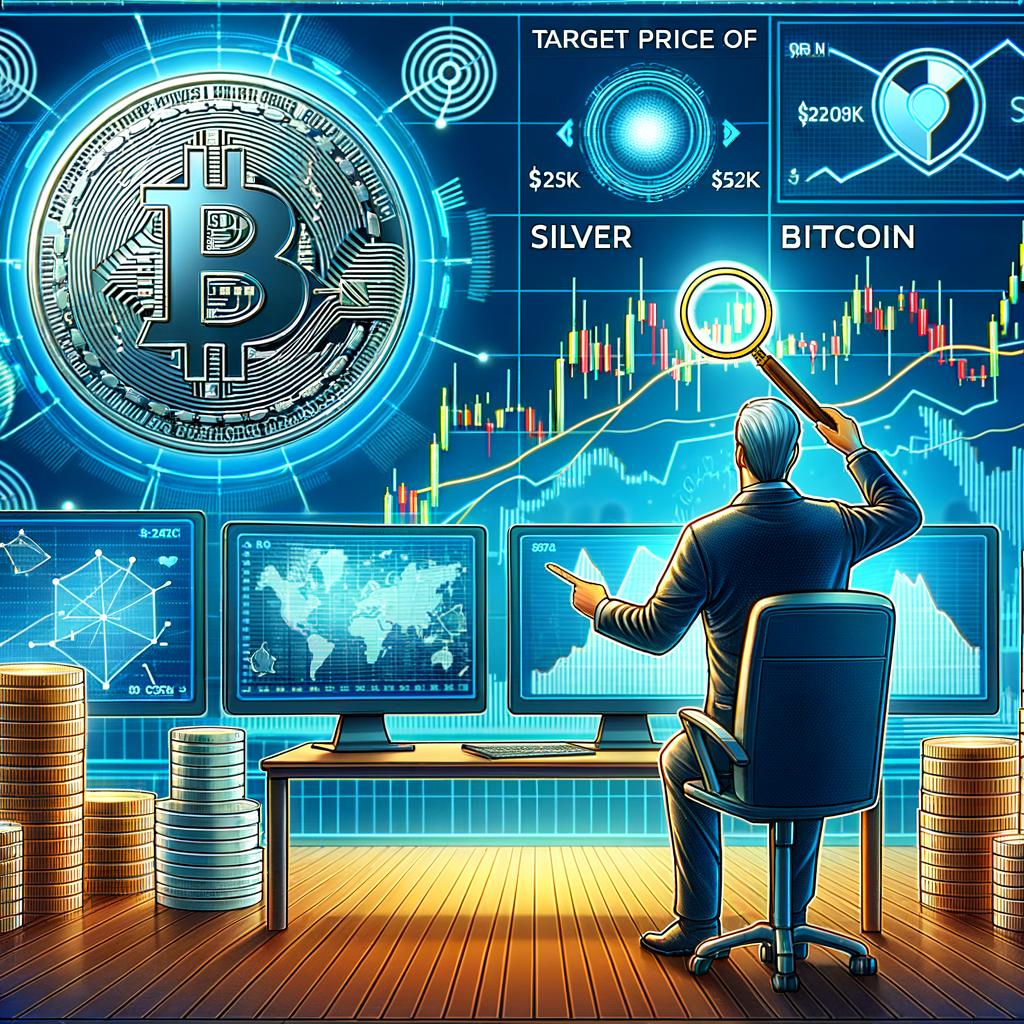
Schiff Advocates for Silver Over Bitcoin Amidst $258K Target Speculation
Peter Schiff, a well-known economist and financial commentator, has reiterated his long-standing preference for silver over bitcoin considering ongoing market speculation surrounding potential price targets for the leading cryptocurrency, particularly the recently suggested $258,000 mark. Schiff asserts that, unlike Bitcoin, which he perceives as a speculative asset, silver offers intrinsic value as a tangible commodity with various industrial applications. He emphasizes that silver has a historical role as a store of value and a hedge against inflation, a characteristic he finds lacking in digital currencies.
In Schiff’s view, Bitcoin’s volatility and reliance on market sentiment make it a risky investment. he argues that many investors focus too heavily on Bitcoin’s past performance and future price predictions, neglecting the basic aspects of sound investment principles.By promoting silver, Schiff encourages investors to consider commodities that are less susceptible to market manipulation and speculative bubbles:
- Intrinsic value: Silver maintains a meaningful physical presence in the market, with demand driven by both investment and industrial needs.
- Inflation hedge: Historically, silver has been a reliable means of preserving value during economic downturns.
- Market stability: Silver markets, while still subject to fluctuations, are generally less volatile than those of digital currencies.
Moreover, Schiff highlights the increasing usage of silver in green technologies, such as solar panels and electric vehicles, further cementing its future demand. He argues that as the global economy transitions to more enduring energy sources, silver’s role will become even more crucial. In contrast, he remains skeptical about Bitcoin’s long-term viability, predicting that regulatory pressures could pose significant risks to its market position. Through these assertions, Schiff aims to guide potential investors towards a more pragmatic approach to wealth preservation that leans on established assets rather than speculative phenomena.
Analyzing Peter Schiff’s Predictions: A Shift in investment Strategies
Peter Schiff, a prominent financial commentator and CEO of Euro Pacific Capital, has long been known for his bearish outlook on the U.S. economy and advocacy for investing in gold and foreign assets. Recently, schiff’s predictions regarding the potential downturn of the stock market and the ramifications for investors are drawing renewed scrutiny amidst a climate of rising inflation and economic uncertainty. His assertions challenge traditional investment strategies and suggest a paradigm shift that could redefine how investors allocate their resources.
Schiff posits that inflation will continue to erode the purchasing power of the dollar, leading to an unavoidable decline in the value of stocks.he emphasizes the historical correlation between economic downturns and rising gold prices, asserting that gold is a more reliable store of value in tumultuous times. As a result, investors might consider reallocating assets to include a larger percentage of gold and other hard assets. Potential strategies include:
- Diversification into Precious Metals: Expanding holdings in gold and silver to hedge against currency devaluation.
- International Assets: Investing in foreign markets that may offer better stability and growth opportunities compared to U.S. equities.
- Real Estate Investments: Considering tangible assets which can provide rental income and capital appreciation.
Moreover, Schiff argues that the current economic policies, characterized by loose monetary policies and excessive government spending, are unsustainable. His critique of the Federal Reserve’s interest rate policies suggests that inflation will not merely be transitory, as some economists have claimed. This perspective encourages investors to reassess conventional wisdom and consider the implications of long-term economic shifts.In this context, Schiff’s predictions advocate for a more cautious and strategic approach to investment, urging a scrutiny of market dynamics that traditionally may have been overlooked.
the Hodler’s Digest: Key Insights from July 6 – 12 on Bitcoin and Silver
During the week of July 6 to 12, significant developments in both Bitcoin and the silver market have captured the attention of investors and analysts alike. Bitcoin’s price fluctuations have continued to reflect broader sentiment within the cryptocurrency space, while silver has shown resilience amid macroeconomic uncertainties. These trends underscore the intertwined nature of commodities and digital assets as investors seek refuge from inflationary pressures and global economic instability.
Investors in Bitcoin have responded to a series of market signals, including regulatory updates and institutional adoption. Recent attention from major financial institutions has buoyed optimism, with some key points to consider:
- Institutional Interest: Notable institutions have begun integrating Bitcoin into their portfolios, signaling growing acceptance and interest in digital assets.
- Regulatory Developments: Discussions surrounding regulatory frameworks have emerged, potentially paving the way for enhanced stability in the market.
- Price Performance: The volatility seen earlier in the week reflects the market’s sensitivity to global economic news and investor sentiment.
On the silver front,market dynamics have been influenced by the ongoing financial climate. As investors seek tangible assets, silver has been poised as a strategic option. Key insights from this sector include:
- Supply Chain Constraints: Ongoing disruptions have affected silver supply, contributing to upward price pressure.
- Gold-silver Ratio: The historical relationship between gold and silver prices has garnered attention as investors evaluate their portfolios.
- Inflation Hedge: Given the persistent inflation concerns, silver is increasingly seen as a safeguard against currency devaluation.
the interplay between Bitcoin and silver during this period exemplifies the broader economic environment and investor strategy.As both asset classes evolve, staying informed on emerging trends and economic signals will be crucial for investment success.
navigating Market Trends: The Future of Bitcoin and Precious Metals
The evolving landscape of cryptocurrency, particularly Bitcoin, presents a series of unique opportunities and challenges. As digital assets gain traction, investors are increasingly drawn to the volatility and potential profitability of Bitcoin, especially in the wake of new regulatory frameworks and institutional adoption. Over the past year, bitcoin has seen significant price fluctuations, influenced by macroeconomic factors and market sentiment. Understanding these dynamics is critical for investors who aim to capitalize on Bitcoin’s next phase.
Simultaneously, the precious metals market, traditionally viewed as a safe haven during economic uncertainty, continues to exhibit stability, albeit with its own set of challenges. Factors such as inflationary pressures, geopolitical tensions, and currency fluctuations play a vital role in shaping market trends.As gold and silver prices respond to these elements, they remain attractive alternatives for investors seeking to diversify their portfolios, particularly in uncertain times.
Investors would be wise to consider the interrelationship between Bitcoin and precious metals. While they serve as distinct asset classes, their movements can occasionally echo one another. For example, heightened inflation frequently enough boosts interest in both Bitcoin and gold as investors seek protection against currency devaluation. this dual interest suggests that monitoring trends within both markets can yield valuable insights for strategy formulation. Key indicators to watch include:
- Inflation Rates: Rising inflation may trigger a shift towards both Bitcoin and gold.
- Regulatory Developments: New regulations can significantly impact Bitcoin’s market dynamics.
- Technological Advancements: Innovations in blockchain technology can enhance Bitcoin’s appeal.
- Global Economic Stability: Uncertainty can lead investors to safer assets like gold while also promoting Bitcoin as a hedge.
Ultimately, the interplay of these variables informs investment strategies going forward. By carefully analyzing emerging trends within both Bitcoin and precious metals, investors can position themselves advantageously in the ever-evolving market landscape.
Peter Schiff’s recommendation to divest from Bitcoin in favor of silver underscores the ongoing debate surrounding the future of cryptocurrencies in a volatile market. As Bitcoin approaches significant price targets, investors must carefully weigh the potential risks and rewards of their holdings. With varying expert opinions and market sentiments, the landscape remains dynamic, urging caution and informed decision-making. As we continue to track these developments, it is imperative for investors to stay informed and consider multiple perspectives to navigate the complexities of digital assets and traditional commodities alike.