

Researchers Encounter Limitations in AI-Driven Scientific Discovery
Despite the high hopes pinned on artificial intelligence to revolutionize scientific exploration, researchers are facing significant setbacks. AI models, while capable of analyzing vast datasets and identifying patterns, often lack the intuitive reasoning and contextual understanding that human scientists bring to the table. This has resulted in frequent misinterpretations of data, oversights in experimental design, and premature conclusions. The complexity of scientific phenomena demands more than pattern recognition – it requires creativity, hypothesis generation, and critical thinking, areas where AI continues to struggle.
- Data Overload Without Insight: AI excels at processing large volumes of information but often misses subtle, qualitative nuances important in science.
- Lack of Contextual Judgement: Algorithms struggle to incorporate ethical considerations and real-world implications into scientific models.
- Dependency on Training Data: Biased or incomplete datasets can skew AI predictions, leading to flawed scientific outcomes.
| Challenge | Impact on Scientific Discovery |
|---|---|
| Insufficient Hypothesis Formulation | Limited innovation in experimental approaches |
| Overfitting to Training Data | False positives and unreliable results |
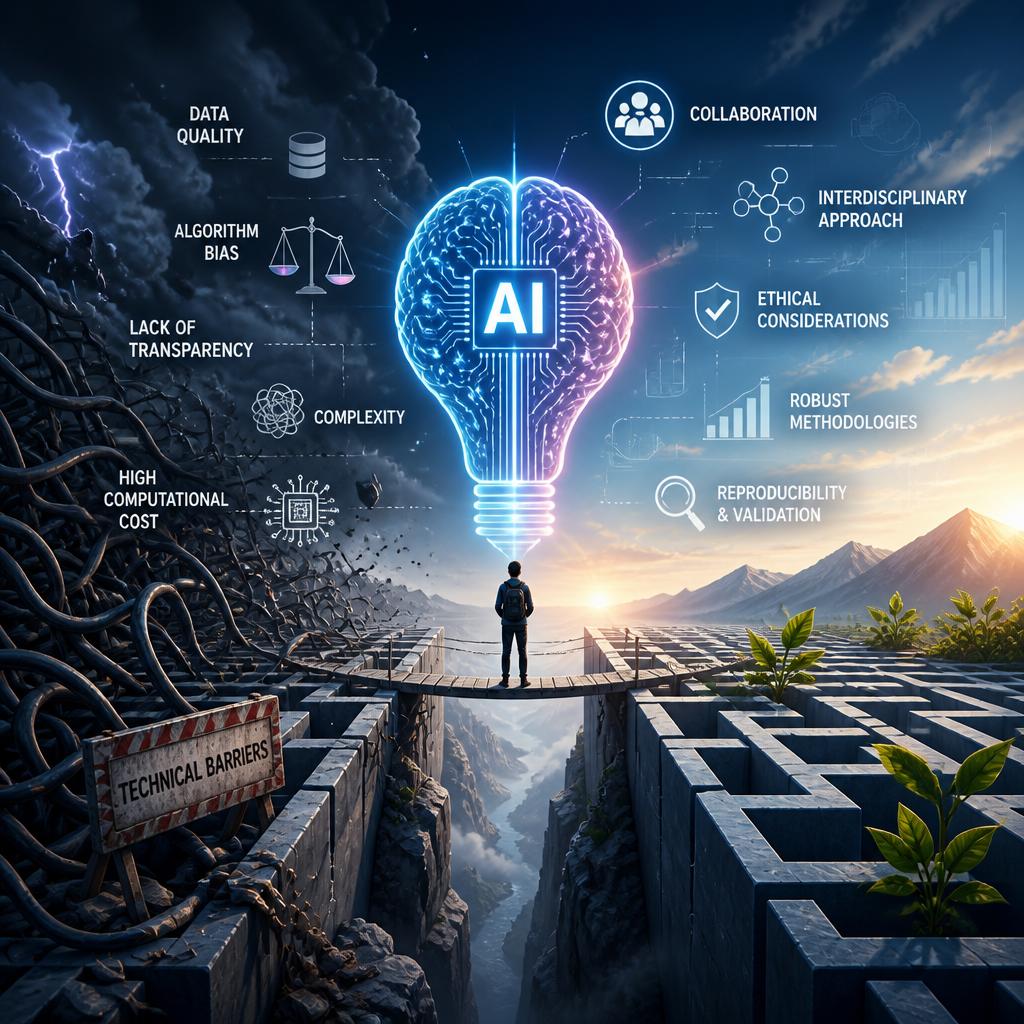
Analyzing the Challenges of Integrating AI into Research Methodologies
Integrating AI into research methodologies promised revolutionary shifts in data analysis and hypothesis generation, yet the reality has unveiled a series of complex obstacles. One major challenge is contextual understanding. AI systems, while adept at processing vast datasets, often lack the nuanced comprehension required to interpret subtle scientific variables that influence outcomes. This deficiency leads to misaligned hypotheses and conclusions that do not fully account for underlying scientific principles. Furthermore, AI’s dependency on historical data introduces biases that skew research results, creating a feedback loop where flawed data perpetuates flawed outputs.
Another significant hurdle lies in the collaborative dynamic between human researchers and AI tools. Effective scientific inquiry requires critical thinking and adaptive reasoning skills – qualities that AI cannot independently replicate. The absence of intuitive judgment in machines hampers the iterative nature of experimentation, where hypotheses are refined through trial and error. Moreover, integration challenges arise from the technical complexity of embedding AI within established workflows, often requiring extensive customization and cross-disciplinary expertise. These barriers highlight the need for cautious, deliberate application rather than wholesale reliance on AI-driven research processes.
Understanding the Importance of Human Expertise in Scientific Innovation
Despite incredible advancements in artificial intelligence, replicating the intuitive leaps and nuanced understanding that human researchers bring to the scientific process remains elusive. Human expertise is indispensable for framing hypotheses, interpreting ambiguous data, and navigating ethical considerations that require judgment beyond raw computation. Unlike AI, which relies heavily on existing data patterns, human scientists can think abstractly, embrace uncertainty, and challenge assumptions-capabilities fundamental to breakthroughs and innovation.
- Contextual insight: Experienced researchers integrate vast multidisciplinary knowledge and real-world understanding, enabling them to recognize subtle patterns and potential flaws AI might miss.
- Creative intuition: Innovation often arises from unconventional thinking and serendipitous discoveries, elements difficult for AI to emulate without human guidance.
- Ethical discernment: Research demands constant ethical evaluation that goes beyond algorithmic logic, requiring empathy and responsibility.
| Aspect | AI Capability | Human Expertise |
|---|---|---|
| Data Interpretation | Pattern recognition within datasets | Contextual analysis with real-world application |
| Hypothesis Formation | Limited to existing data trends | Innovative, abstract conceptualization |
| Ethical Judgment | Algorithmic decision-making only | Empathy-driven moral considerations |
Recommendations for Effective Collaboration Between AI Systems and Researchers
Collaboration between AI systems and researchers must be strategically aligned to harness the strengths of both humans and machines. Clear communication channels are essential, ensuring that researchers can interpret AI-generated data insights effectively while feeding qualitative expertise back into the system. It is critical to implement iterative feedback loops, where AI outputs are continuously reviewed and refined by human experts to prevent errors from propagating and to enhance the contextual relevance of findings.
To optimize this partnership, fostering an environment that values transparency and explainability in AI decision-making is imperative. Researchers should have access to the underlying reasoning processes of AI tools to make informed judgments and maintain scientific rigor. Additionally, integrating multidisciplinary teams that combine domain expertise with AI technical knowledge can significantly improve outcome accuracy and innovation pace.