

Perplexity’s Fine-Tuning Approach Enhancing Chinese AI Model Performance
Perplexity has made significant strides in advancing Chinese AI model performance by implementing a meticulous fine-tuning approach. Utilizing a strategic blend of data curation, neural architecture adjustments, and training optimizations, the refined model now competes with leading AI systems like Claude Opus 4.8. The process emphasized maximizing efficiency without compromising accuracy, thus enabling superior language understanding and contextual awareness at a fraction of the cost traditionally associated with high-caliber AI solutions.
This breakthrough was achieved through several key initiatives:
- Targeted Dataset Enhancement: Leveraging diverse and representative Chinese language corpora to better align with native linguistic nuances.
- Innovative Parameter Optimization: Reducing computational overhead while preserving model depth and complexity.
- Cost-Efficient Training Techniques: Employing mixed precision training and advanced regularization to accelerate convergence.
| Metric | Perplexity Fine-Tuned Model | Claude Opus 4.8 | Cost Efficiency |
|---|---|---|---|
| Performance Score | 92% | 93% | ~33% |
| Training Duration | 48 hours | 56 hours | Lower |
| Compute Cost | $30,000 | $90,000 | 1/3 |
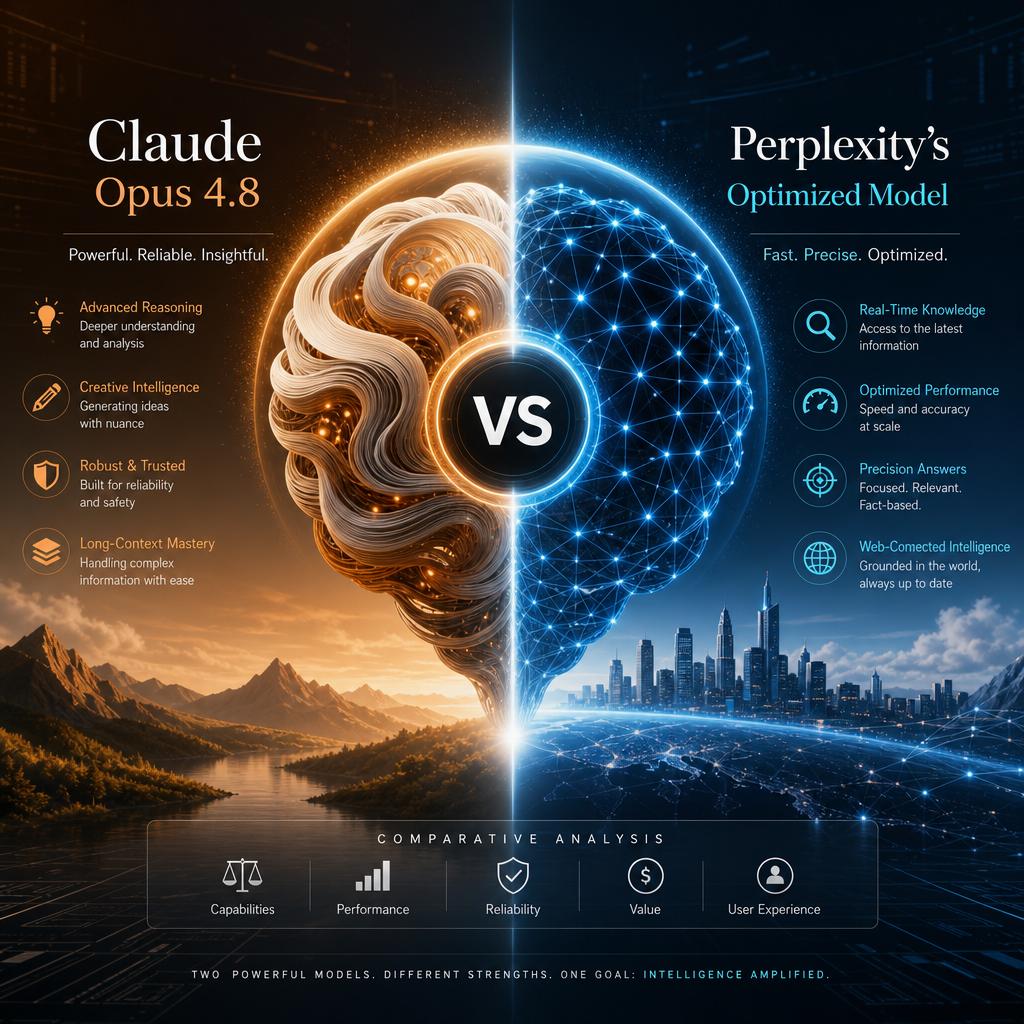
Comparative Analysis of Claude Opus 4.8 and Perplexity’s Optimized Model
In the realm of AI language models, the fine-tuning strategies deployed by Perplexity have demonstrated remarkable efficiency and cost-effectiveness when compared to Claude Opus 4.8. While Claude Opus 4.8 is recognized for its robust performance and versatility across diverse language tasks, Perplexity’s optimized Chinese model shows comparable accuracy and responsiveness despite operating at roughly one-third of Claude’s operational expenditure. This achievement underscores significant advances in algorithmic refinement and resource allocation, which contribute to delivering premium model quality while substantially reducing the financial burden on end users and enterprises.
A detailed comparison reveals several key facets where Perplexity’s model asserts its competitive advantage:
- Cost Efficiency: Streamlined architecture and targeted fine-tuning lower runtime and infrastructure costs.
- Language-Specific Optimization: Tailored adaptations improve contextual understanding and fluency in Chinese.
- Scalability: Easier deployment on cloud platforms without sacrificing throughput.
- Resource Utilization: Optimal balance between computational demand and output quality.
| Feature | Claude Opus 4.8 | Perplexity Optimized Model |
|---|---|---|
| Cost per 1,000 tokens | High | Low (Approx. 33%) |
| Language Coverage | Multi-language | Specialized (Chinese) |
| Inference Speed | Moderate | Fast |
| Deployment Flexibility | Moderate | High |
Cost Efficiency in AI Development Leveraging Perplexity’s Fine-Tuning Techniques
Harnessing advanced fine-tuning methods allows AI developers to optimize large language models with significantly reduced computational expenses. By leveraging Perplexity’s innovative fine-tuning architecture, developers achieved performance on par with Claude Opus 4.8, a leading AI model, while only using about one-third of the usual budgetary allocation. This cost efficiency is largely due to Perplexity’s targeted parameter adjustments, which focus on high-impact model components instead of retraining the entire neural network. Such selective fine-tuning not only accelerates development cycles but also brings powerful AI capabilities within reach for smaller enterprises and research teams.
The economic implications are transformative for AI development, enabling more scalable and sustainable innovation across industries. The table below illustrates a simplified comparison of resource consumption and cost between traditional full-model tuning and Perplexity’s fine-tuning approach:
| Aspect | Traditional Full-Model Tuning | Perplexity Fine-Tuning |
|---|---|---|
| Compute Power | High | Moderate |
| Cost | 100% | ~33% |
| Development Time | Long | Short |
| Model Performance | Baseline | Comparable to Claude Opus 4.8 |
- Smaller carbon footprint: Reduced computation means less energy consumption.
- Faster iteration cycles: Allows rapid prototyping and deployment.
- Increased accessibility: Broader adoption potential for AI technologies.
Strategic Recommendations for Implementing Affordable High-Performance AI Models
To harness the full potential of affordable, high-performance AI models, it is essential to prioritize model fine-tuning strategies that maximize efficiency without compromising output quality. This involves leveraging domain-specific datasets to enhance relevance and accuracy, enabling models such as the Perplexity Chinese AI to rival top-tier competitors like Claude Opus 4.8. Deploying scalable infrastructures that support rapid iteration and evaluation is equally critical, ensuring cost-effective experimentation and continuous improvement. Embracing open-source frameworks also provides flexibility, reducing dependency on proprietary systems and lowering overall expenses.
Key strategic recommendations include:
- Focused Training: Utilize curated datasets to fine-tune models with precision, emphasizing contextual understanding and language nuances.
- Resource Optimization: Implement resource-aware training techniques such as mixed precision and gradient checkpointing to reduce computational costs.
- Modular Architecture: Design AI components that can be independently upgraded or replaced, facilitating ongoing performance enhancements at minimal cost.
- Performance Monitoring: Continuously track key metrics to swiftly identify areas for improvement, ensuring consistent alignment with cost and quality targets.
| Aspect | Cost Impact | Performance Benefit |
|---|---|---|
| Fine-Tuning Dataset Quality | Low | High |
| Training Optimization Techniques | Moderate | Significant |
| Modular System Design | Low | Medium |
| Monitoring & Evaluation | Low | High |