
The article examines Bitcoin as a form of peer-to-peer electronic cash that challenges traditional financial gatekeepers by operating on open, censorship-resistant code. It frames the protocol as a tool that allows individuals to transact directly, without relying on central authorities.
By highlighting how cryptographic rules replace institutional trust,the piece situates Bitcoin within broader debates over economic autonomy and digital rights. It presents the technology as part of a radical shift in how value can be created, held and transferred in the online era.
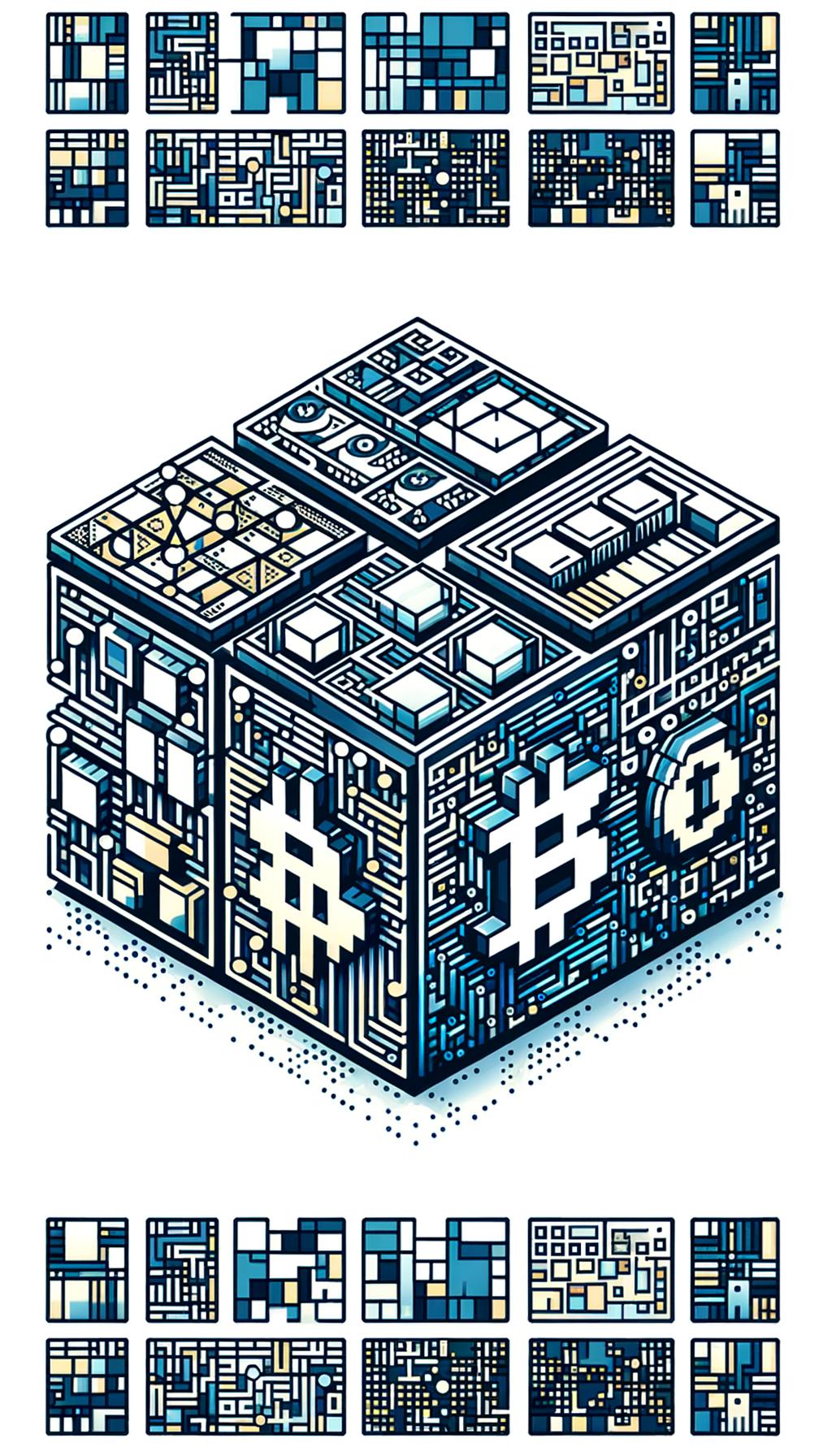
Peer to Peer cash How bitcoin Cuts Out Intermediaries and Empowers Direct Transactions
At the heart of Bitcoin’s design is a system that allows value to move directly between users without relying on banks, payment processors, or other financial intermediaries. Instead of a central entity verifying and recording transfers, the Bitcoin network uses a public ledger known as the blockchain, maintained collectively by participants across the globe. Each transaction is broadcast to the network, validated under obvious rules, and than grouped into blocks that are cryptographically linked together. this structure enables users to send and receive funds using their own digital wallets, with transaction records secured by the network’s consensus process rather than by a single institution.
This peer-to-peer model has drawn attention from market observers because it can change how people think about access to and control over their money. By allowing individuals to transact directly, Bitcoin can reduce reliance on traditional gatekeepers, potentially lowering some types of fees and providing an alternative in situations where conventional rails are slow, costly, or difficult to access. Simultaneously occurring, the absence of intermediaries also means users bear greater obligation for securing their own assets and navigating a landscape that remains subject to technical, regulatory, and market uncertainties. As investors and analysts watch Bitcoin’s next possible move,this balance between increased autonomy and added responsibility remains a central element in how the asset is understood and used.
Freedom Forged in Code Why censorship Resistance Makes Bitcoin a political and Economic Lifeline
Supporters of Bitcoin frequently frame the network as a safeguard for expression in the digital age, arguing that its design makes it difficult for authorities or intermediaries to silence transactions or block participation. Because Bitcoin operates on a decentralized ledger maintained by a distributed network of nodes rather than a single company or government, no central party can unilaterally refuse service to individuals based on their views or identity. In this context, moving value on Bitcoin can function as a form of dialog, allowing people to fund causes, support dissidents or transact across borders even when traditional payment rails are restricted or surveilled.
At the same time, this censorship resistance comes with trade-offs that are increasingly central to the political and economic debate around Bitcoin. The network’s openness and pseudonymous design can complicate law-enforcement efforts and raise concerns among policymakers about illicit finance, even as advocates stress that all transactions remain publicly visible on the blockchain. Governments and regulators are still testing how far thay can go in overseeing exchanges, wallets and on-ramps without undermining the core properties that make Bitcoin attractive to users seeking financial autonomy. The outcome of this tension will help determine whether Bitcoin is treated primarily as a tool of economic self-determination, a regulatory challenge, or both.
A Radical Break From Legacy Finance How Bitcoin Challenges Central Banks and Traditional Monetary control
Unlike traditional monetary systems, which are issued and managed by central banks and intermediated by commercial banks, Bitcoin operates on a decentralized network maintained by a distributed group of participants. This structure removes a central authority from core functions such as issuing new units, validating transactions, and maintaining the ledger of who owns what. For critics of the existing system, that design is significant: it offers an alternative to policy tools like interest-rate adjustments and balance-sheet expansion, which can influence the supply and value of government-issued currencies. Bitcoin’s fixed issuance schedule and transparent rules are seen by some market participants as a direct challenge to the discretionary nature of modern monetary policy, even as regulators and central banks continue to monitor and respond to its growth.
At the same time, Bitcoin’s challenge to legacy finance is not absolute and remains constrained by practical and regulatory realities. Most users still access the asset through centralized exchanges, custodians, and payment providers, which reintroduce manny of the familiar intermediaries and compliance obligations present in traditional finance. Central banks retain control over legal tender, banking infrastructure, and macroeconomic policy, while Bitcoin functions alongside, rather than in place of, national currencies. Analysts note that this creates a hybrid environment: Bitcoin tests the boundaries of monetary control and offers an alternative transaction and savings channel, but it also depends on existing financial rails, consumer protections, and legal frameworks that can limit or shape how far its most disruptive features extend.
From Theory to Action Practical steps for Using Bitcoin as Everyday Peer to Peer Money
turning the idea of Bitcoin as everyday,peer-to-peer money into lived reality begins with basic infrastructure rather than market speculation. Individuals who choose to transact directly with one another typically start by securing a non-custodial wallet, software that allows them to hold and send Bitcoin without relying on an intermediary. From there, the practical focus shifts to simple use cases: paying trusted contacts, settling informal invoices, or experimenting with small-value transactions to understand how fees, confirmation times and address formats work in practice. For merchants and freelancers, the transition often involves adding Bitcoin as one more payment option alongside existing methods, using point-of-sale applications or invoicing tools that can display prices in local currency while settling in Bitcoin. These steps are incremental by design, allowing users to test processes, assess record-keeping needs and evaluate how Bitcoin fits into existing financial routines.
Yet using Bitcoin as everyday money also exposes practical constraints that shape how far and how fast adoption can move. Price volatility, the cost and speed of on-chain transactions, and varying levels of regulatory clarity all influence how cozy users feel relying on Bitcoin for routine payments. Peer-to-peer activity therefore tends to develop where participants already share a degree of trust or a common interest in censorship-resistant transfers, rather than as a wholesale replacement for established payment rails. At the same time, ongoing technical developments in the wider Bitcoin ecosystem, including tools designed to facilitate smaller and more frequent payments, are being closely watched by both users and service providers. For now, the story remains one of cautious experimentation: a gradual layering of practical experience on top of theory, as individuals and businesses test where Bitcoin can realistically function as a day-to-day medium of exchange and where traditional systems still dominate.
Q&A
Q: What does the phrase “peer‑to‑peer cash” mean in the context of Bitcoin?
A: “Peer‑to‑peer cash” refers to a monetary system where individuals can send value directly to one another without banks, payment processors, or governments acting as intermediaries. In Bitcoin’s design, transactions are broadcast over a decentralized network and recorded on a public ledger, allowing users anywhere in the world to transact without seeking permission from a central authority.
Q: The article calls bitcoin “freedom forged in code.” What kind of freedom is being described?
A: The freedom is primarily financial and informational.By encoding the rules of money-such as issuance, supply cap, and transaction validation-into open‑source software, Bitcoin aims to remove discretionary control from governments and corporations. Supporters argue this creates freedom from censorship, arbitrary account freezes, and inflationary monetary policy.
Q: How does Bitcoin function as a radical alternative to traditional money?
A: Bitcoin challenges several core assumptions of the existing financial system. It is borderless, operates 24/7, and is not issued by a state. Its supply is capped at 21 million coins, contrasting with fiat currencies that can be expanded at will. This combination makes Bitcoin a radical experiment: money that is native to the internet, governed by code and consensus rather than central banks.
Q: in what sense is Bitcoin linked to freedom of speech?
A: Bitcoin transactions are, at their core, pieces of data propagated across a communications network. Advocates argue that transmitting this data is a form of expression, akin to publishing code or cryptographic messages. Attempts to ban or censor Bitcoin transactions, they say, risk colliding with principles that protect free speech and the free flow of information.
Q: Why do some see Bitcoin as a tool against financial censorship?
A: Traditional payment rails can block donations, halt transfers, or close accounts based on political pressure, sanctions, or opaque risk assessments. Bitcoin, by contrast, allows anyone with a digital wallet and internet access to send or receive funds. Because no single entity can veto a valid transaction, activists, dissidents, and ordinary users in restricted regimes view it as a shield against financial blacklisting.
Q: What makes this vision of Bitcoin “radical” from a policy viewpoint?
A: Bitcoin questions the monopoly of states over money creation and control. If widely adopted, it could weaken tools like capital controls, targeted financial sanctions, and monetary stimulus via money printing. To its critics, this is destabilizing; to its supporters, it’s a necesary check on concentrated power. Either way, it represents a profound shift in who gets to define and manage money.
Q: How does the protocol enforce rules without a central authority?
A: Bitcoin relies on a distributed network of nodes that verify transactions according to a publicly known set of rules. Miners compete to add new blocks of transactions to the blockchain by expending computational power. Nodes reject blocks that break the rules, such as those that create coins out of thin air. The alignment of incentives-miners earn rewards for playing by the rules-helps secure the system without a central referee.
Q: The article mentions ”freedom forged in code.” Isn’t code still written by humans with their own biases?
A: Yes. Bitcoin’s code was initially written by one or more human authors, but its governance now depends on open review, community debate, and voluntary adoption. Any proposed change must be accepted by a critical mass of users, miners, and businesses. While this does not eliminate bias, it disperses power: no single actor can unilaterally rewrite the rules that everyone else is running.
Q: What are the main criticisms of treating Bitcoin as a vehicle for freedom?
A: Critics point to extreme price volatility, unequal early distribution, and the use of Bitcoin in illicit markets as reasons to be cautious. Environmental concerns around energy‑intensive mining and the potential for tax evasion or regulatory arbitrage also feature prominently. Skeptics argue that without robust consumer protections, the promise of “freedom” can quickly become exposure to fraud, theft, and speculative bubbles.
Q: How do Bitcoin proponents respond to those concerns?
A: Advocates counter that every transformative technology-from the printing press to the internet-has been used for both beneficial and harmful purposes. They argue that Bitcoin’s open ledger enables unprecedented clarity, that mining is increasingly powered by renewable or stranded energy, and that market volatility is a function of early‑stage monetization. Ultimately, they say, the risks are the price of building an open, neutral money system.
Q: What role does privacy play in this vision of peer‑to‑peer cash?
A: Bitcoin is pseudonymous rather than fully anonymous: wallets are represented by addresses, not real names, but all transactions are public. Privacy‑minded users rely on best practices and additional tools to avoid linking addresses to their identities. Supporters claim that some degree of financial privacy is essential to democratic societies, while regulators warn that excessive opacity can shield criminal activity.
Q: Can Bitcoin truly act as “cash for everyone,” given its technical barriers?
A: Access frequently enough hinges on education,infrastructure,and user‑pleasant tools. While Bitcoin’s underlying protocol is complex,everyday usage increasingly occurs through smartphone apps,custodial services,and simplified hardware wallets. Critics worry that this reintroduces intermediaries; advocates say the option for self‑custody remains, preserving the core promise of direct, peer‑to‑peer control over funds.
Q: How might widespread Bitcoin adoption affect people living under authoritarian regimes?
A: For citizens in countries with capital controls, hyperinflation, or aggressive surveillance, Bitcoin can serve as a parallel financial rail. It allows savings to be held outside the local banking system and moved across borders more easily.However,governments can still criminalize usage,pressure exchanges,and control internet infrastructure. The struggle between code‑based freedom and state power thus becomes a live political contest.
Q: What does the article suggest about bitcoin’s future trajectory?
A: The piece frames Bitcoin not as a finished product, but as an evolving social and technological experiment. It suggests that the coming years will test whether an open, borderless, peer‑to‑peer cash system can coexist with existing financial regulations-or whether it will force a renegotiation of the relationship between citizens, states, and money. In this view, Bitcoin’s story is less about price charts and more about the long‑term contest over freedom in the digital age.
The Way Forward
as Bitcoin continues to evolve from niche experiment to global talking point, its core proposition remains starkly simple: peer‑to‑peer cash, freedom forged in code. To supporters, it represents a radical check on centralized monetary power and a new frontier for financial self‑determination. To critics, it raises unresolved questions about regulation, volatility and systemic risk.
What is clear is that the protocol has moved beyond theory. From dissidents routing value across borders to institutions testing digital reserves, Bitcoin is now embedded in a widening range of economic and political debates. Whether it ultimately reshapes money or is absorbed by existing structures, its trajectory will test how far societies are willing to let software, rather than states, define the boundaries of financial freedom.