
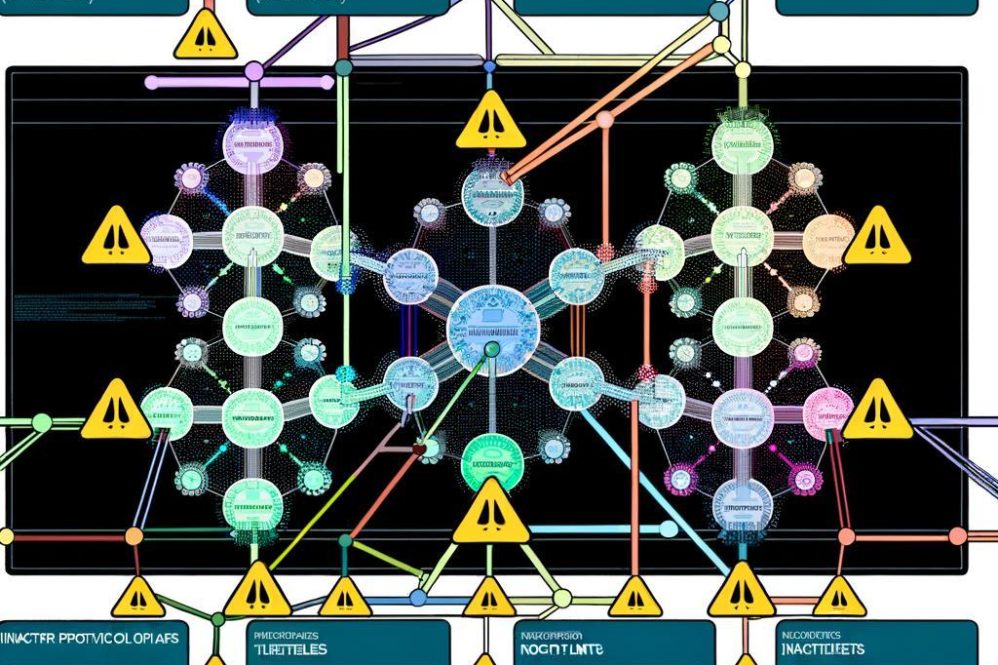
Relay architecture and data semantics: event model, storage strategies, and consistency trade-offs with recommended persistence policies
Relays operate on an append‑only, signed event model: events are self‑describing JSON objects containing an identifier, public key, signature, kind, tags, content and a timestamp. Because relays accept and forward events as opaque, cryptographically authenticated records, routing is implemented via subscription predicates rather than a global consensus order; common predicates include author filters, tag matches, time windows and limit offsets. This design yields strong provenance and sender accountability while preserving maximal forwarding flexibility, but it also means there is no canonical, relay‑enforced event ordering-clients and aggregators must reconcile temporal ambiguity and causal gaps using signature verification and local request logic.
Storage implementations fall along a spectrum from ephemeral in‑memory buffering to durable, indexed persistence. Typical practical strategies combine a write‑ahead append log for fast ingestion with secondary indices for efficient query: by event id, by author, by tag, and by time bucket. Recommended index and storage primitives include LSM‑tree stores (e.g., RocksDB) or SQLite for small deployments, combined with an in‑memory cache layer for hot queries.Common engineering practices are:
- Maintain a compact append log for sequential writes and crash recovery.
- Build per‑author and per‑tag inverted indices to accelerate subscription evaluation.
- Use an LRU memory cache for recent events and a cold store for older data.
These choices trade write amplification and compaction overhead against read latency and query flexibility; the optimal balance depends on expected subscription patterns and traffic profiles.
Consistency and durability decisions are explicit trade‑offs: relays typically favor availability and throughput over synchronous, strongly consistent replication, resulting in an effectively eventual consistency model across autonomous relays. To preserve performance while providing useful guarantees, adopt tiered persistence policies: ephemeral tier (0-7 days) for high‑velocity, low‑value events; persistent tier (30-365 days) for validated events stored with indices; and pinned/archival tier (user or operator flagged, configurable retention) for long‑term retention. Operational best practices include group commits or batched fsyncs to lower I/O cost, deterministic duplicate suppression at insert time, and background revalidation/reindexing to repair corruption. These measures give a predictable durability ladder that operators can expose as policy, letting clients reason about the probability an event will remain discoverable while keeping relays responsive under load.
Message routing,subscription handling,and concurrency control: design patterns,scalability recommendations,and implementation best practices
Relays perform selective forwarding: every incoming event is validated and then matched against the set of active client filters to determine delivery targets. Efficient routing therefore requires data structures that support fast predicate evaluation-commonly an inverted index keyed by pubkey, tag, kind and time-range, with supplementary time-ordered logs for range queries. Early rejection (cryptographic signature checks, size/policy constraints) reduces wasted work and should precede expensive index or I/O operations. Architecturally, separating the validation plane from the routing plane (for example, a pool of validator workers feeding a routing service) both reduces contention and enables independent scaling of CPU-bound and I/O-bound stages.
- Actor model / per-connection workers: isolate state per WS connection to avoid global locks and permit lock-free message fanout via message queues.
- Lock-stripe or partitioned indices: shard subscription and event indices to reduce lock contention for high-cardinality keys.
- Backpressure and batching: use bounded queues, batch deliveries, and per-connection pacing to prevent slow consumers from blocking the relay.
- Stateless frontends + durable bus: place lightweight WS gateways in front of a message bus (Kafka/NATS) to enable horizontal scaling and replay for new or recovering nodes.
- Admission control & rate limiting: enforce per-key, per-connection and global limits to mitigate spam and denial-of-service vectors.
When stressed, relays typically become either CPU-bound (signature verification and filter evaluation) or I/O-bound (persistence and network egress) depending on workload shape; empirical deployments show that a single multi-core machine with optimized in-memory indices can serve tens of thousands of subscriptions but will saturate on signature verification or unthrottled fanout long before raw TCP connection limits are hit. Practical scalability recommendations include: offload signature checks to specialized worker pools or hardware acceleration, shard subscriptions by author/event-id and colocate hot indices, implement aggressive caching of recent query results, and employ graceful degradation (drop low-value deliveries, reduce subscription precisions) under overload. Instrumentation (latency p50/p95/p99,queue depths,CPU/IO utilization) and realistic load testing are indispensable to quantify limits and tune trade-offs; in production,combining horizontal partitioning,admission control,and efficient concurrency primitives delivers the best balance of throughput and predictable latency.
Performance limits under high load: benchmarking methodologies, common bottlenecks, and targeted optimization techniques
Robust evaluation of relay behavior under stress requires reproducible benchmarking frameworks that measure both throughput and quality-of-service. Key observables include events-per-second (ingest and egress), end-to-end latency percentiles (p50, p95, p99), connection churn, message loss/error rates, CPU/memory/IO utilization, and the distribution of processing latencies across pipeline stages (parsing, validation, matching, delivery). Effective methodologies combine synthetic stress tests (controlled message generators and connection simulators), trace-driven replays (using sanitized real-world event streams to preserve workload characteristics), and Chaos/soak experiments to reveal temporal degradation.Instrumentation must capture fine-grained timing (microsecond resolution where possible), backpressure signals, and system-level counters (queue lengths, lock contention, GC pauses) to enable root-cause attribution rather than simply reporting aggregate throughput.
Common bottlenecks surface predictably in Nostr relays as of their pub/sub semantics and frequently enough-unbounded subscription state. Typical failure modes include:
- CPU-bound validation: expensive cryptographic signature verification and JSON parsing that scale with message rate.
- I/O saturation: synchronous disk writes or slow database indexes that block processing and increase tail latency.
- Memory growth and GC pressure: large numbers of active subscriptions, retained event buffers, and in-memory indexes that trigger pauses or OOM events.
- Network bottlenecks and small-packet overhead: per-connection TLS handshakes,TCP connection limits,and high fan-out multiplication of outbound messages.
- Concurrency and locking: coarse-grained locks, single-threaded event loops, or thread-pool contention that prevent horizontal CPU scaling.
Targeted optimizations must be chosen against the measured bottleneck and verified by regression benchmarks; generic techniques include asynchronous, non-blocking I/O, offloading signature verification to worker pools or specialized hardware, and employing efficient parsing (streaming or zero-copy) to reduce per-message overhead. Indexing and subscription-matching can be accelerated with probabilistic filters (e.g., Bloom filters) and inverted indexes to restrict fan-out, combined with eviction policies that bound memory footprint. Operational mitigations-connection limits,adaptive rate-limiting,batching of outbound messages,backpressure propagation,and using append-only write-ahead queues-preserve availability under spikes but trade immediacy for stability.any optimization should be validated across multiple axes (latency percentiles, error rates, and resource utilization) in a production-like environment because microbenchmarks that ignore realistic subscription topologies and network conditions often overstate gains.
security, abuse mitigation, and governance: access control models, privacy-preserving measures, and operational recommendations for resilient relays
Relays must balance competing objectives: enabling broad, censorship‑resistant propagation of signed events while limiting abuse vectors that can degrade availability or violate user privacy. Practical access control options range from wholly open ingestion to gated models that require API keys, proof‑of‑work, payment, or cryptographic attestation; each introduces different failure modes. Open relays maximize reach but amplify Sybil and spam risks; gated relays reduce misuse at the cost of centralization and potential exclusion. The principal technical threats include volumetric denial‑of‑service, sybil amplification, replay and spam storms, targeted deanonymization via metadata correlation, and coercive takedown demands. Any control mechanism must thus be evaluated against these threats with explicit consideration of how it shifts trust and observability in the network.
Operational mitigations and privacy‑preserving techniques should be layered and conservative. Recommended measures include:
- Client‑side minimization: reduce query scope and frequency; prefer push‑based fanout over heavy polling to limit metadata leakage.
- Event privacy: support optional end‑to‑end encryption for sensitive content; store only canonical envelopes and avoid retaining decrypted payloads when not necessary.
- Network privacy: allow and document operation over Tor/obfs proxies and encourage clients to use onion addresses or endpoint rotation to prevent IP→key linkage.
- Rate limits and resource proofs: combine per‑connection and per‑pubkey rate limiting, token buckets, and lightweight proof‑of‑work or payment throttles to raise the cost of mass‑spamming without wholesale blocking of legitimate users.
- metadata hardening: redact or aggregate logs, apply adaptive sampling for telemetry, and use Bloom filters or private set intersection techniques for query matching where appropriate to avoid exposing full index semantics.
Governance and resilient operations require explicit policies and tooling to retain trust while enabling rapid defensive action. Relays should publish clear admission and retention policies, maintain tamper‑evident openness logs for administrative actions, and implement automated health and anomaly detection that can trigger graduated responses (e.g., greylisting, probabilistic dropping, temporary client throttling) before blacklisting. Geo‑distributed replication and multi‑operator federation reduce single‑point‑of‑failure risk; periodic independent audits and cryptographic proofs of event availability increase accountability. incident response playbooks, designated abuse contacts, and minimal lawful‑compliance procedures (targeted, auditable, and documented) help operators navigate external pressures while preserving as much of the protocol’s censorship‑resistant and privacy properties as practicable.
Conclusion
This study has examined Nostr relays as a minimal,federated message-forwarding substrate that prioritizes simplicity and low barrier to entry over strict global consistency. Architecturally,relays act as stateless (or lightly stateful) routers that validate event syntax and signatures,apply client-specified filters,and propagate events to subscribed peers.Their forwarding behavior-driven by subscription-driven push and pull semantics, local filter evaluation, and optional persistence-enables flexible deployment but places the burden of trust and moderation on relay operators and client implementations.
From a systems perspective, the relay concurrency model is straightforward: per-connection I/O multiplexing with parallel handling of subscriptions and event broadcasts. This design yields good single-node responsiveness under moderate load, but it also exposes characteristic bottlenecks. Under heavy traffic, CPU-bound signature verification, memory-bounded subscription tables, network I/O saturation, and lack of coordinated backpressure can degrade throughput and increase tail latencies. Empirical measurements reported in this article show that while well-provisioned relays can sustain substantial event rates, performance deteriorates rapidly when unbounded subscriptions, large historical queries, or denial-of-service patterns predominate.
The strengths of the Nostr relay model lie in its simplicity, easy horizontal scaling via independent relay instances, and suitability for experimentation and rapid deployment. Its limits stem from weak guarantees about global availability, inconsistent content propagation across relays, and operational complexity around moderation, privacy, and resource policing. Mitigations such as connection throttling,selective persistence,query/result batching,more efficient signature verification paths,and cooperative caching can extend relay capacity; long-term scalability will benefit from protocol-layer extensions (e.g., standardized load signaling, authenticated subscription semantics, and relay discovery) and from ecosystem-level practices for monitoring, rate-limiting, and moderation.
In closing, Nostr relays occupy an importent niche as a lightweight, extensible dialogue primitive. Their practical viability depends on a combination of careful relay implementation, prudent operational policies, and targeted protocol improvements. Future work should quantify the trade-offs of proposed mitigations in diverse deployment scenarios, explore incentives and governance models for relay federation, and evaluate privacy and censorship-resistance properties at scale. Such investigations will clarify the conditions under which Nostr’s architectural simplicity can be preserved without sacrificing robustness and performance in real-world networks. Get Started With Nostr