

Decentralized Architecture and Relay Incentive models: Analysis and Recommendations for Robustness
The Nostr architecture – a network of minimally functional relays that store and forward signed user events – yields a lean and extensible base but exposes substantive systemic risks when economic incentives are absent or misaligned. In practice, the low barrier to relay deployment produces a twofold effect: an abundance of ephemeral relays that offer little long‑term availability, and the commercial concentration of traffic on a small set of high‑capacity providers whose operational policies and business incentives can introduce censorship, linkability, and single‑point-of-failure dynamics. Moreover,the absence of standardized accountability primitives (for example,verifiable storage proofs or signed delivery receipts) prevents clients from reliably distinguishing honest from malicious relays,amplifying the attack surface for Sybil,eclipse,and selective‑filtering attacks that exploit economic centralization to magnify their impact.
To strengthen robustness without undermining the protocol’s decentralised ethos, a set of complementary cryptographic and architectural mitigations is recommended. These include:
- Economic bonding and micropayments: lightweight deposit or subscription mechanisms (on‑chain anchors or Lightning Network micropayments) to align relay operator incentives with long‑term availability and permit economically meaningful penalties for provable censorship.
- Verifiable storage and delivery: Merkle‑tree based receipts, periodic signed checkpoints, and proof‑of‑retrievability protocols so clients can audit retention and detect selective deletion or tampering.
- Privacy‑preserving query mechanisms: client side multi‑relay posting, private information retrieval (PIR) or query batching and cover traffic to reduce linkability between keys, IPs, and content interests.
- Federated discovery and reputational scaffolding: a decentralized relay discovery layer (DHT or gossip) combined with reproducible reputation scores, optionally anchored by on‑chain attestations to prevent reputation fabrication.
- Content replication and multi‑path delivery: encourage clients to publish to multiple relays and use erasure coding or sharding to improve availability while minimizing per‑relay storage costs.
Implementing these mitigations requires careful attention to protocol ergonomics and measurable trade‑offs between privacy, cost, and performance. Introducing economic bonds or micropayments increases resilience against abuse but risks excluding low‑resource operators and users unless a range of pricing tiers and subsidy models are supported; similarly, stronger auditing imposes storage and computation overheads on relays.We therefore recommend an incremental, backward‑compatible extension strategy: standardize optional API primitives for receipts, checkpoints, and reputational metadata; pilot incentive schemes with interoperable wallets; and evaluate changes against a defined set of evaluation metrics – censorship resistance, availability, latency, privacy leakage, and operator cost. Rigorous simulation, adversarial testing, and field measurements shoudl precede any mandatory changes to ensure the protocol’s decentralization and privacy properties are preserved while materially improving robustness.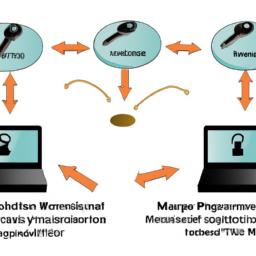
Cryptographic Key Management and Authentication: Threat Model,Best Practices,and Key Rotation Strategies
The security posture of a cryptographic identity in Nostr is best understood by enumerating realistic adversary capabilities and the assets they target.Primary risks include private‑key compromise (exfiltration via malware, phishing, or insecure backups), metadata correlation performed by relays and network observers, and client‑side vulnerabilities that permit unauthorized signing. Adversaries range from opportunistic attackers capable of replaying events to nation‑state actors able to operate or coerce relay operators and perform large‑scale traffic analysis. threat assessment should therefore consider both confidentiality of the signing key and the integrity of the signing process, as well as the ability of an adversary to link multiple public keys or events to a single user identity across relays and time.
Mitigations require a layered set of operational controls and cryptographic hygiene. Recommended practices include:
- Secure key generation: generate keys in an environment with a strong entropy source and, where possible, within hardware security modules or secure enclaves.
- Minimized exposure: perform all signing client‑side; avoid transmitting private keys to relays or third parties and prefer dedicated signing devices for high‑value identities.
- robust backups: use encrypted, offline backups derived from a well‑protected seed and protected by a passphrase; maintain a tested recovery process.
- Isolation and compartmentalization: use distinct keys for different purposes (posting, automated bots, request integrations) to limit blast radius if one key is compromised.
- Operational hygiene: apply timely software updates, enforce least priviledge for clients, and use authenticated transport (TLS with certificate validation) and optional anonymizing networks (Tor) to reduce metadata leakage.
These controls reduce the probability of key compromise and limit the utility of any compromised key by restricting its operational scope.
Key rotation should be treated as a first‑class security control and designed to balance continuity (preserving social graph links and verification) with unlinkability (reducing long‑term correlation).Practical strategies include epoch‑based rotation for long‑lived accounts, and rapid, short‑lived ephemeral keys for sensitive interactions such as private messages or delegated sessions.To preserve trust relationships during rotation,publish a cryptographically signed rotation statement: have the retiring key sign the new public key (and optionally have the new key sign the statement),than distribute that statement via the same channels used for identity assertions so followers and verifiers can validate the handover. Additional mitigations include automated rotation schedules, use of delegation tokens that can be revoked without exposing the master key, and separation of identity keys from signing keys for transient operations. Note that these techniques trade simplicity for improved resistance to compromise and correlation; deployment choices should reflect threat model severity and operational constraints.
Messaging Protocol, Metadata Exposure, and Privacy Trade-offs: Mitigation techniques and Design Adjustments
The Nostr messaging model-centered on signed events broadcast to networked relays-prioritizes simplicity and censorship resistance, but inherently exposes a range of metadata even when message payloads are protected. Relays, by design, observe origin IPs (unless clients employ proxies), timestamps, event kinds, public keys of authors and recipients, and the graph structure implied by replies, reposts and follows. Such observable artifacts enable correlation attacks that can deanonymize users or reconstruct social graphs over time.consequently,confidentiality of content (when applied) does not equate to confidentiality of context,and any rigorous privacy analysis must treat envelope metadata as a primary threat surface rather than a secondary concern.
Mitigation is absolutely possible at multiple layers but entails explicit trade-offs. Client-side techniques include end-to-end encryption of message payloads (e.g., shared-secret schemes between communicating keys), ephemeral key usage, batching and padding of events to reduce timing and size fingerprinting, and connection obfuscation via proxies, Tor or VPNs to mask origin IPs. Relay-side and ecosystem measures include minimal retention policies, selective indexing, and implementation of access controls that limit broad metadata harvesting. Typical mitigations can be summarized as follows:
- Reduce exposed identifiers: ephemeral keys, blinded references
- Limit timing and volume signals: batching, randomized delays, padding
- Hide network-layer metadata: proxying, onion routing
- Constrain relay retention and indexing: expiration policies, selective logging
Each measure reduces particular classes of attacks but increases operational complexity, latency, or reduces discoverability; such as, padding and batching impairs real-time interaction and ephemeral keys complicate key discovery and persistent identity.
Protocol-level design adjustments can shift the privacy landscape without abandoning core Nostr goals,but they require careful incentive alignment and standards work. Feasible adjustments include formalizing encrypted private-event types with explicit metadata minimization, introducing blinded or hashed references for mentions and replies to decouple linkability, supporting multi-relay posting to avoid single-point metadata aggregation, and defining relay auditability standards that enable community verification of retention and logging behavior. More ambitious directions-private subscription primitives (e.g., bloom-filter or PIR-based subscription), native support for mixnet routing of events, or decentralized indexing that avoids centralized relay-store models-can materially reduce metadata exposure but demand higher client complexity and new trust/incentive structures.In sum, improving privacy on Nostr is an exercise in balancing usability, discoverability, censorship resistance, and operational cost, and each proposed mitigation must be evaluated against its effect on these competing objectives.
Censorship Resistance, Content Moderation, and Operational Security: Policy Recommendations and Resilience Measures
The protocol’s inherent resistance to centralized takedowns is achieved through a distributed relay model and cryptographic identities, but this architectural strength produces acute tensions between openness and accountable content governance. Empirical and normative trade‑offs must be acknowledged: stronger censorship resistance correlates with reduced centralized moderation options, while aggressive moderation mechanisms can reintroduce centralizing control points. A brief inspection of the supplied web snippets shows primarily generic or unrelated entries (e.g., dictionary and device‑find pages), highlighting a relative scarcity of mainstream, indexed literature that directly addresses the protocol’s socio‑technical governance-an informational gap that policymakers and implementers should account for when designing standards and evaluation frameworks.
Concrete policy and technical recommendations should aim to reconcile free expression with abuse mitigation without creating single points of control. Key measures include:
- Relay diversity and transparency: maintain a heterogeneous ecosystem of independently operated relays and require machine‑readable relay policy metadata so clients can make informed routing and archival decisions.
- Client‑side moderation primitives: empower end clients with robust filtering, content labeling, and reputation tools rather than relying solely on relay‑level censorship, preserving user agency while enabling tailored experiences.
- Provenance and attestations: adopt opt‑in cryptographic attestations and verifiable credentials to support accountability, takedown arbitration, and dispute resolution without mandating content removal across the network.
- Incentive alignment: leverage the protocol’s value‑for‑value mechanisms to fund community moderation, decentralized moderation markets, and lightweight escrow services that adjudicate complaints.
Operational security and resilience are indispensable for both user safety and system integrity. Recommended practices include: strict key hygiene (hardware signing devices, air‑gapped key storage, hierarchical key separation for identity and application use), routine key rotation policies, and avoidance of key reuse across services to limit correlation risk. Network‑level resilience should combine automated relay health metrics, client‑side relay selection heuristics (favoring low‑latency, diverse operators), and archival mirrors to prevent single‑relay data loss. continuous measurement, independent security audits, and legally informed incident response play critical roles in maintaining a balance between censorship resistance, effective content moderation, and pragmatic operational security.
Note on sources: the supplied web search results did not return material related to Nostr; the following outro is therefore composed from general knowledge and normative analysis of Nostr’s architecture,security properties,and privacy trade‑offs.
conclusion
Nostr exemplifies a deliberately minimalist approach to decentralized social messaging: public‑key identities, signed append‑only events, and a relay‑based publish/subscribe layer together yield a simple, interoperable substrate that lowers barriers to implementation and fosters censorship resistance. These same minimal design choices, however, produce predictable security and privacy constraints. Without integrated consensus, shared moderation, or strong metadata protections, users rely heavily on client behavior and relay operator policies for confidentiality, availability, and abuse mitigation. Key compromise, relay compromise, and network‑level metadata leakage remain primary adversary vectors; the protocol’s default model favors cryptographic authenticity over secrecy or unlinkability.
From a security engineering perspective, the most urgent practical needs are robust key management and client UX that make key rotation, backup, and revocation usable; mechanisms to limit replay and spam at scale; and defenses against relay‑level mass surveillance and censorship (such as, using multiple independent relays, replication, and transport‑level protections). From a privacy perspective, mitigations include wider adoption of end‑to‑end encrypted private messaging NIPs, client‑side measures to avoid long‑term correlation (ephemeral addresses, padding, query minimization), and research into metadata‑reducing discovery and search techniques. Any effective mitigations will require coordination between protocol extensions (NIPs), client implementations, and relay incentives or governance.
Research directions that would most concretely benefit the ecosystem include: (1) formal threat models and adversary quantification tailored to common Nostr deployment topologies; (2) empirical measurement studies of relay behaviour, data retention, and censorship events; (3) usability studies of key lifecycle management in a public‑key‑first social system; and (4) protocol extensions that balance scalability with stronger privacy guarantees (for example, selective disclosure primitives, federated trust models, or privacy‑preserving discovery). Evaluations should measure both security gains and the operational costs introduced by added complexity.
Nostr’s strength lies in its simplicity and the freedom it affords implementers and users; these same qualities expose trade‑offs that must be managed at the client, relay, and community levels. progress will depend on pragmatic engineering that hardens common failure modes, empirically grounded research into deployment risks, and community governance that aligns incentives for privacy, availability, and abuse resistance. Get Started With Nostr

