

architectural Overview of Nostr Clients: Decentralized Relay Topology, peer Discovery, Synchronization Behavior, and Design Recommendations
The protocol’s operational fabric is a distributed set of independent storage and forwarding nodes (commonly called relays), producing an emergent, redundant topology rather than a single canonical server. Clients typically form a many-to-many relationship with relays: they open persistent or semi-persistent connections to a selective subset of relays, publish signed events to one or more relays, and subscribe to filtered event streams. This arrangement yields partial replication and probabilistic availability-no single relay contains the complete truth-so client behavior must explicitly encode its trust assumptions and replication strategy (e.g., how many relays must acknowledge a published event to consider it durably propagated).
Peer discovery and synchronization are implemented as cooperative, asynchronous processes whose effectiveness depends on metadata, filtering, and local indexing. Common discovery vectors include curated relay lists,user-shared relay URIs,heuristics based on contact graphs,and discovery via relay-provided tags or indexes.Synchronization behavior is characterized by subscription-based streaming, on-demand backfill, and eventual consistency; clients reconcile event sets using event IDs, timestamps, and signature verification. Typical mechanisms used by clients include:
- Subscription filtering: declarative queries that reduce bandwidth and focus synchronization on relevant events.
- Backfill and pagination: incremental retrieval to recover historical events when joining a relay or reconnecting.
- Deduplication and ordering: local algorithms to remove repeats and present a stable, causally sensible timeline despite out-of-order arrival.
Thes mechanisms together enable clients to achieve a coherent local view without requiring global consensus among relays.
From an engineering outlook, several design recommendations improve resilience, privacy, and usability. Clients should maintain connections to multiple relays (preferably diverse operators) and treat relay responses as probabilistic signals rather than authoritative state; implement exponential backoff and adaptive rate-limiting to avoid overloading relays; and perform strict signature verification and event schema validation locally to preserve data integrity. Equally significant are local strategies for storage and index management (bounded caches, incremental reindexing, and efficient tombstone handling) and UX signals that communicate data completeness and provenance to users. offering exportable relay preferences, support for ephemeral relay sessions, and configurable publication acknowledgement thresholds helps align client behavior with diverse user privacy and durability goals while remaining consistent with the protocol’s decentralized principles.
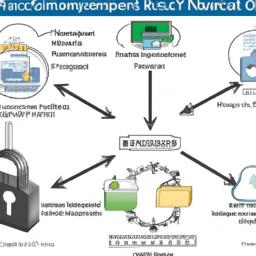
cryptographic Key Management in Nostr: Deterministic Key Derivation, Rotation and Backup Policies, Secure Storage Techniques, and Implementation Best Practices
Deterministic derivation should be treated as the primary mechanism for key generation and recovery in decentralised Nostr clients. Implementations that build on a cryptographic seed (e.g., BIP‑39 style mnemonics with a hardened derivation scheme) provide recoverability while enabling per‑account or per‑purpose key branches that reduce key reuse and cross‑linkage. it is indeed advisable to adopt a clearly documented derivation path namespace that includes an application identifier and hardened indices for any sensitive branches; this enables interoperability between clients and supports delegated or ephemeral keys without exposing the long‑term signing key. when exposing public identifiers (npub) and private exports (nsec), clients must preserve the mapping between human‑readable formats and the underlying secp256k1 material, and should incorporate key fingerprinting and provenance metadata to allow users and auditors to verify continuity without leaking seed material.
Key lifecycle management must combine scheduled rotation with event‑driven responses to compromise and delegation changes. Recommended policies include periodic rotation of ephemeral keys (hours to days) and annual review/rotation of long‑term keys, immediate rotation on suspected compromise, and documented procedures to propagate a key change across federated relays while minimising linkability. Practical rotation techniques use cryptographically signed proclamation events: the old key signs a short statement attesting to the new public key (and optionally a revocation token), enabling recipients to verify continuity without requiring a central authority. Backups should be dual‑layered: encrypted offline storage of the seed plus geographic distribution using threshold schemes (e.g., Shamir Secret Sharing) for high‑value accounts; periodic restoration tests must be performed to validate recovery integrity and retention policies (how long old keys, revocation statements, and backups are retained) should be documented to balance auditability and privacy.
Secure storage and implementation best practices reduce exposure to common operational threats. use hardware‑backed key stores (secure elements, hardware wallets, or OS key vaults) for long‑term keys and isolate signing to minimal‑privilege processes or devices; prefer native or WASM bindings to well‑audited cryptographic libraries (for example, libsecp256k1) and ensure constant‑time operations where applicable. Additional recommended measures include:
- Minimise in‑memory lifetime for private keys, explicitly zeroing memory after use and avoiding inadvertent serialization to logs or crash dumps.
- Enforce strong RNG and entropy sources with continuous health checks and deterministic‑seed protection via an additional passphrase/salt.
- Apply least‑privilege APIs for signing (scoped signing tokens, transaction previews) and perform threat modelling and code audits for any component that touches keys.
Operational controls such as rate‑limiting key use, multi‑factor authentication for backup restoration, transparent logging of key‑management events, and a tested incident response plan are equally important to harden deployments and preserve both security and privacy in practice.
Confidentiality and Metadata Risks: Analysis of Message Encryption, Metadata Leakage, Limitations of current E2EE Approaches, and Practical Mitigations
The protocol’s application-layer confidentiality model typically encrypts only the event payload while leaving addressing and routing fields in cleartext; common implementations derive symmetric keys via elliptic-curve Diffie-Hellman on secp256k1 and then protect the ”content” field with a symmetric cipher. This approach yields strong protection of semantic content against passive eavesdroppers, but it dose not provide forward secrecy or robust deniability when long-lived identity keys are used for both signing and key agreement. Moreover, key-distribution and group-key management are only partially specified, wich forces many clients to adopt ad hoc patterns (shared static keys, reusing recipient identifiers) that broaden the attack surface for active adversaries and relay-level observers.
Even when payloads are encrypted, a dense set of auxiliary artifacts remains observable and exploitable; the following categories illustrate typical leakage vectors:
- Persistent identifiers: author public keys and recipient tags that enable long-term linkability;
- Graph signals: reply/mention tags and event references that reveal social topology and conversation structure;
- Temporal and routing metadata: timestamps, sequence of submissions to relays, and relay selection patterns that facilitate correlation and traffic analysis.
These metadata dimensions allow powerful inference attacks (profiling, network-wide de-anonymization, and targeted censorship) even when the message body itself remains confidential.
Practical mitigations require a mix of cryptographic, protocol, and operational changes. At the cryptographic layer, adopt ephemeral key agreement or ratcheting to achieve forward secrecy, and support blinded or hashed tags to reduce direct identifier exposure; at the protocol layer, standardize opaque recipient references and group-key management primitives to avoid ad hoc key reuse. Operational measures include randomized posting patterns and multi-relay dissemination to reduce single-relay correlation, mandatory transport-layer obfuscation (e.g., Tor/TLS tunneling) for clients that require privacy, and client-side padding/batching to mitigate timing leaks. Each mitigation carries trade-offs in complexity, latency, or usability, so a pragmatic deployment strategy combines lightweight metadata minimization by default with opt‑in stronger protections (ephemeral sessions, mixnet routing) for high-risk communications.
Scalability, Relay Incentivization, and Resilience: Performance Trade-offs, relay selection Algorithms, rate‑limiting Strategies, and Operational Recommendations
The design of high-throughput relays necessitates explicit acknowledgment of core performance trade-offs between consistency, availability, and resource efficiency. Systems that maximize fan‑out and full replication minimize read latency and improve resilience at the cost of increased storage, network egress, and CPU utilization; conversely, sharded or indexed architectures reduce per‑relay load but increase coordination complexity and potential read amplification. Practical scaling techniques include selective subscription pruning, compact event indexing, and prioritized delivery queues.These approaches should be implemented with attention to deterministic deduplication and lightweight metadata to avoid unbounded state growth.
- Full replication – low read latency, higher resource use.
- Sharding/indexing – lower per‑node cost, higher coordination overhead.
- Selective retention - curation for storage efficiency, potential visibility loss.
Incentivization and relay selection require a hybrid of economic and algorithmic mechanisms to align operator behavior with network health. Effective designs combine micropayment channels or subscription fees with cryptographically verifiable reputation scores so clients can weight relay choice by latency, reliability, fee, and historical completeness. Relay selection algorithms benefit from multi‑criteria scoring and diversity maximization (selecting relays in different administrative domains and geographies) to mitigate correlated failures and censorship risk. Algorithms should be adaptive: continuously update scores from telemetry and on‑chain or off‑chain payments, and allow user policy overrides for privacy or trust constraints.
- Score components: uptime, mean latency, event completeness, cost.
- Selection strategies: top‑K diversified selection, weighted randomized sampling, failover chaining.
- Economic levers: micropayments, deposits, subscription tiers, reputation penalties.
Operational resilience depends on robust rate‑limiting, backpressure, and observability to prevent amplification and denial‑of‑service. Implement layered controls: per‑connection and per‑subscription rate limits, global queue watermarks, adaptive windows that tighten under overload, and token buckets for burst tolerance. Backpressure mechanisms (explicit BUSY signals, truncated result sets, or incremental cursors) preserve core liveness while protecting critical resources; pairing these with exponential backoff and jitter on the client side reduces synchronized retry storms. Recommended operational practices include proactive capacity planning, geographically distributed relay clusters, detailed metrics (ingest rate, fan‑out, tail latency, memory pressure), and chaos testing to validate recovery procedures.
- Rate controls: token buckets per client,per‑IP,and per‑subscription filters.
- Backpressure: truncated responses, incremental cursors, explicit BUSY signals.
- Operational checklist: monitoring+alerting, replication diversity, automated failover, periodic load testing.
Note on sources: the search results provided with the query did not pertain to the Nostr protocol and where therefore not used in composing this conclusion.
Conclusion
This study has examined the Nostr protocol client through the lenses of decentralized architecture, cryptographic key management, and message encryption practices. Nostr’s simple relay-based federation and key-pair model afford several practical advantages: low barrier to client implementation, censorship-resilience derived from relay multiplicity, and cryptographic authenticity tied directly to private keys. Simultaneously occurring, the current design exposes persistent challenges. Reliance on public relays produces metadata leakage (including publisher-relay associations and subscription patterns),key custody rests largely with end users absent robust default tooling,and the protocol’s basic message-encryption primitives lack native support for forward secrecy and scalable group confidentiality.
From an engineering and research perspective, pragmatic improvements would raise the protocol’s privacy and security baseline without fundamentally altering its decentralized ethos. Priority recommendations include: (1) strengthening client-side key-management UX and offering optional hardware-backed or threshold key storage; (2) integrating or standardizing ratcheting or ephemeral-session mechanisms to provide forward secrecy for direct messages; (3) developing interoperable NIPs for group message encryption and for minimizing metadata exposed to relays; and (4) exploring relay-level mitigations for spam and Sybil attacks coupled with privacy-preserving auditing mechanisms. Complementary network-layer measures (e.g., use of anonymizing transports) and formal threat modeling will further clarify trade-offs.
In closing, Nostr presents a compelling instance of a minimal, decentralized messaging model that privileges simplicity and user-centric identity. Realizing its potential at scale will depend on targeted cryptographic enhancements, improved key-custody solutions, and a coordinated standardization effort that balances usability, privacy, and resilience. Continued empirical evaluation and cross-disciplinary collaboration are recommended to validate proposed mitigations and to guide the protocol’s evolution. Get Started With Nostr