

Rethinking Application Architecture: The Minimalist Nostr Protocol and its Implications for Decentralized Software Design
The protocol’s design reduces the application surface to a small set of composable operations-event creation, signing, and relay-based distribution-thereby foregrounding cryptographic identity and message immutability as the primary coordination mechanisms. This reductionism enforces a clear separation between transport and policy: relays act as anonymous carriers while clients implement policy, presentation, and persistence. By privileging minimalist primitives over feature-rich servers,the model recasts many responsibilities traditionally handled by centralized backends (indexing,moderation,long‑term storage) as client-side or social-layer problems,wiht measurable consequences for interoperability and system complexity.
The implications for software design are both structural and practical.From an architectural perspective, designers must reconceptualize application boundaries, favoring small, stateless components and explicit data provenance. Practically, this produces several engineering trade-offs:
- Decentralized trust: authentication via public keys reduces reliance on identity providers but requires robust key‑management UX.
- Data availability: reliance on volunteer relays necessitates strategies for replication and archival to prevent data loss.
- Indexing and search: lack of a canonical global index shifts the burden to federated or client‑assisted indexing schemes.
- Governance and moderation: policy enforcement migrates to clients and social protocols,complicating automated moderation.
these trade-offs reshape testing, deployment, and maintenance practices, emphasizing resilient client designs and interoperable interfaces over server-side monoliths.
Contrasted with centralized ecosystems-where platform operators control review flows, distribution channels, and persistent user data-the decentralized model introduces new vectors for innovation and risk.Central platforms provide convenient,centralized services (e.g., unified search histories, curated app stores, and moderated review systems) that simplify some developer and user expectations but concentrate control; by contrast, the minimalist protocol fosters user autonomy and composability while demanding explicit solutions for discovery, usability, and long‑term data stewardship. Addressing these demands will require new libraries, standards for relay behavior, and empirical studies of usability and resilience to translate the protocol’s theoretical advantages into lasting, production‑grade software systems.
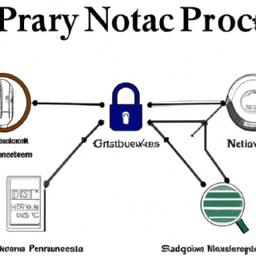
Ensuring Data Integrity and Privacy in Nostr Networks: Key Management, Relay Selection, and Recommended Cryptographic Practices
Cryptographic authenticity and tamper resistance in decentralized messaging require rigorous handling of identities and event digests. Public keys function as persistent identifiers and must map deterministically to event hashes and signature verifiers; any ambiguity in canonicalization or serialization undermines integrity checks. Implementations should therefore rely on a single, well-specified canonical form for events and use collision‑resistant hashes (e.g., SHA‑256) before signing. Support for multiple curve families (for example, ECDSA‑style curves such as secp256k1 and Ed25519) can improve interoperability, but each curve introduces distinct signing and verification semantics that clients must treat consistently to avoid cross‑curve replay or verification failures. In all cases, signatures must be verified by recipients before accepting or relaying content to maintain an end‑to‑end chain of custody.
Operational key management is the primary determinant of user privacy and platform resilience. Keys should be generated using audited libraries and stored according to a threat model that presumes client compromise, rogue relays, and network surveillance. Recommended practices include client‑side isolation of private material, hardware or enclave‑backed signing where available, deterministic backups (seed phrases with secure derivative paths), and periodic key rotation for non‑persistent identities. Sensitive communications should leverage ephemeral or application‑scoped keys to limit long‑term correlation; private keys must never be published to relays and exportable formats should be minimized. Practical mitigations against credential theft also include multi‑factor protections for key backups and revocation strategies that combine revocation events with relay pruning to reduce the window of misuse.
Relay selection and cryptographic primitives together shape the privacy surface exposed by a Nostr network.Clients should adopt a multi‑relay publication model and distribute event storage across providers with diverse jurisdictional and operational characteristics to reduce single‑operator inference. Use the following baseline controls:
- Relay diversity: publish to multiple,policy‑self-reliant relays to avoid centralized metadata aggregation.
- End‑to‑end encryption: encrypt message payloads client‑side; use hybrid schemes (asymmetric key agreement + authenticated symmetric encryption such as ChaCha20‑Poly1305 or AES‑GCM) for confidentiality and integrity.
- Authenticated channels: use TLS for transport to mitigate active network attackers and employ certificate validation to guard against man‑in‑the‑middle attacks.
Additionally,minimize metadata leakage by separating identity keys used for public posts from keys used for private conversations,avoid including unnecessary contextual fields in event objects,and prefer pseudonymous identifiers when plausible. Regular audits of cryptographic libraries, adherence to protocol specifications for signing and canonicalization, and clear operational policies for relay trust and data retention are essential to secure, privacy‑preserving adoption.
scaling, Performance, and Resilience: Strategies for Optimizing Relay Topology, Client behavior, and Resource Allocation
Designing a relay topology requires purposeful trade-offs between coverage, latency, and storage overhead. Empirical evaluation favors hybrid topologies that combine localized clusters for low-latency peers with cross-cluster replication to preserve availability under node failure. Partitioning by keyspace or content type (sharding) coupled with lightweight indexing on each relay reduces query fan‑out and supports faster subscription resolution; conversely, over‑sharding increases coordination cost and should be mitigated by adaptive rebalancing policies.Measurement-driven placement-using latency heatmaps, peer reliability scores, and request hotness metrics-enables targeted replication of high‑value partitions while keeping cold data on less expensive nodes.
Client-side behavior is equally central to system performance and stability. Clients must implement disciplined subscription management, exponential backoff with jitter for reconnections, bounded local caching, and conservative re-subscription strategies to limit unnecessary load. The following operational tactics have been validated in decentralized messaging contexts:
- Subscription pruning: limit live subscriptions per client and aggregate similar filters at a proxy layer.
- Adaptive fetch windows: request only incremental event ranges when resuming after disconnects.
- Rate shaping: enforce client-level quotas and progressive backpressure signals from relays.
- Local deduplication: avoid redundant processing and retransmission of identical events.
These measures reduce relay churn, lower tail latency, and preserve CPU and bandwidth for critical operations.
Optimizing resource allocation demands automated, observable control loops that translate operational goals into action. Implementing autoscaling policies tied to meaningful service indicators (e.g., 95th percentile end‑to‑end latency, event ingestion rate, disk‑backlog size) prevents both underprovisioning and wasteful overprovisioning. Resilience is improved through intentional degradation strategies-such as graceful load shedding of nonessential queries, prioritized replication of authoritative events, and fast failover of ephemeral relays-supported by runbooks and automated recovery playbooks. Sustained reliability further requires continuous telemetry, clearly defined SLOs, and periodic chaos testing to validate that topology, client algorithms, and resource allocation policies interact robustly under realistic failure modes.
Governance, moderation, and User Autonomy: Policy Frameworks and Technical Mechanisms to Balance Safety and decentralization
Decentralized networks reconfigure governance from hierarchical decree to distributed norm formation, producing both opportunities for autonomy and risks of fragmentation. In such environments, authority accrues through social and technical affordances rather than centralized edict: cryptographic identity schemes anchor accountability, client software enforces local policy, and relay operators instantiate content availability choices. These mechanisms create a layered governance topology in which user autonomy is preserved by default (clients choose what to display or relay) while collective safety depends on interoperable signals and incentives that shape actor behavior across nodes.
To operationalize a balance between safety and decentralization,systems can combine policy frameworks with technical primitives. Effective designs are modular and opt-in, offering heterogeneous communities the ability to adopt diffrent norms without imposing a single global regime. Practical instruments include:
- Client-side filtering: End-user filters, blocklists, and keyword heuristics executed locally to protect users without requiring network-wide enforcement.
- Relay policy signaling: Explicit metadata from relays describing their moderation stance, allowing clients to select or avoid relays based on policy alignment.
- Reputation and attestation systems: Decentralized reputation indicators (signed attestations,badges,or endorsements) that provide context for trust decisions while remaining voluntary.
- Transparent audit logs: Append-only, signed records of moderation actions and relay policies to enable public scrutiny and accountability.
Trade-offs are inherent: stronger safety measures often reduce spontaneous autonomy or increase coordination overhead, whereas maximal decentralization can impede rapid response to harm. A pragmatic posture prioritizes clarity, configurability, and composability-tools that let users and communities tailor safety to their risk models while preserving interoperability. It is also important to note that the supplied web search results pertain to general Google support pages (device sharing, Gmail sign-in, and Maps reviews) and do not directly inform the governance mechanisms specific to decentralized protocols; therefore recommendations above rely on principles and technical literature relevant to distributed systems governance rather than those unrelated support documents.
In sum, conceiving Nostr as a form of ”choice programming” foregrounds a shift from monolithic, server-centric application architectures toward minimal, event-driven protocols that privilege cryptographic identity, peer-to-peer relaying, and composable interaction patterns. The platform’s lightweight semantics-events signed by private keys and propagated via independent relays-demonstrate how a small protocol surface can enable a broad range of social and application-level behaviors while preserving user autonomy and increasing resistance to single-point censorship.
At the same time,empirical and practical limitations temper immediate adoption as a wholesale replacement for established centralized systems.Outstanding challenges include relay economics and incentives, spam and abuse mitigation, client and developer tooling, user experience constraints tied to key management, and questions of discoverability and interoperability with other decentralized ecosystems. These constraints point to the need for system-level design work,coordinated standards,and longitudinal studies that assess performance,security,and social outcomes in deployed settings.
Looking forward, rigorous research and pragmatic engineering must proceed in parallel: formal analyses of protocol properties, experiments in governance and incentive mechanisms, improvements in privacy-preserving features, and the development of robust SDKs and libraries for higher-level composition. Nostr’s minimalist ideology offers a promising substrate for rethinking how applications are specified and composed; its broader impact will depend on interdisciplinary efforts that balance decentralization’s normative goals with the operational realities of scale, safety, and usability. Get Started With Nostr