
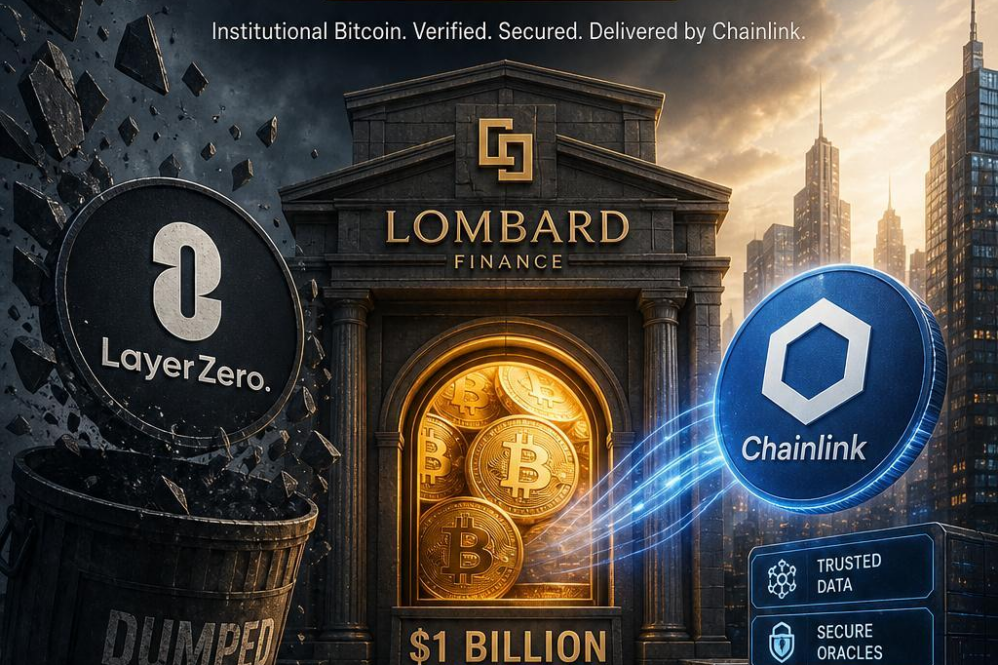
Lombard Finance Shifts Strategic Focus from LayerZero to chainlink for Enhanced Security and Reliability
Lombard Finance has recently redirected its strategic focus away from LayerZero, opting instead to integrate Chainlink solutions to enhance the security and reliability of its platform. This shift reflects the company’s prioritization of robust and trusted oracle services in response to the critical need for secure data feeds in decentralized finance (DeFi) environments. Chainlink is widely recognized for its decentralized oracle network that securely provides real-world data to smart contracts, enabling more reliable and tamper-resistant operations compared to some choice systems. By transitioning to Chainlink, lombard Finance aims to leverage these inherent security features to strengthen the infrastructure underlying its financial products and services.
The decision to move away from LayerZero also signals an evaluation of interoperability and security trade-offs inherent in cross-chain communication protocols.While LayerZero facilitates cross-chain messaging to enhance asset and data transfers across blockchains, concerns over potential vulnerabilities and the complexity of maintaining reliable interactions may have influenced Lombard’s strategic readjustment. Emphasizing Chainlink’s well-established track record in secure oracle data feeds, Lombard Finance appears to address potential risks associated with cross-chain technologies, focusing more on the reliability of validated external data. This repositioning highlights a broader trend in the industry where security and data integrity are becoming paramount considerations for DeFi projects amid increasing market scrutiny.
Analyzing the Impact of Chainlink Integration on the Management of Bitcoin Assets
The integration of Chainlink into Bitcoin asset management leverages Chainlink’s decentralized oracle network to enhance the reliability and accuracy of external data feeds. Oracles are systems that provide blockchains with data from outside their own networks, essential for executing smart contracts based on real-world information. By connecting Bitcoin assets with Chainlink’s oracles, blockchain-based applications managing these assets can access verified data such as price feeds, market events, and other critical inputs. This connection can improve automated processes and decision-making mechanisms involved in asset management, potentially increasing operational efficiency and openness.
However, while the integration offers notable advantages, it also presents inherent limitations. The prosperous implementation of Chainlink oracles depends on the security and decentralization of its network,which,though robust,is not impervious to vulnerabilities.Additionally, Bitcoin’s original blockchain lacks native smart contract functionality, which means that asset management solutions utilizing Chainlink oracles typically rely on secondary layers or platforms compatible with Bitcoin assets.This reliance on external structures can introduce complexity and potential points of failure. Therefore, understanding both the technical enhancements and the contextual constraints is critical when assessing the impact of Chainlink integration on Bitcoin asset management.
Strategic Recommendations for Financial Firms Transitioning to Chainlink for Asset Management Solutions
Financial firms considering a transition to Chainlink for asset management solutions should first undertake a comprehensive evaluation of their existing infrastructure and specific operational needs. chainlink operates as a decentralized oracle network that enables smart contracts on various blockchains to securely access real-world data and external APIs. For asset managers, this means enhanced capabilities for automating portfolio management, risk assessment, and real-time price feeds. However, integration requires understanding both the technical requirements and the governance framework underpinning Chainlink’s network, ensuring compatibility with existing systems and regulatory obligations. Firms are advised to conduct thorough due diligence in collaboration with technology partners to align Chainlink’s solutions with their compliance strategies and operational workflows.
Moreover, financial institutions should carefully balance the benefits of Chainlink’s decentralized data provision against its limitations. While chainlink can offer improved data reliability and tamper resistance compared to centralized sources, its performance depends on the quality and availability of its oracle nodes and data providers. Firms must also consider the implications of smart contract immutability and the factors influencing network costs, which may affect the scalability and adaptability of asset management operations. Monitoring ongoing developments in Chainlink’s protocol and ecosystem will be crucial for adapting strategies as the technology evolves. Engaging with the Chainlink community and participating in governance discussions may further enhance firms’ ability to leverage the platform effectively within a regulated financial environment.