

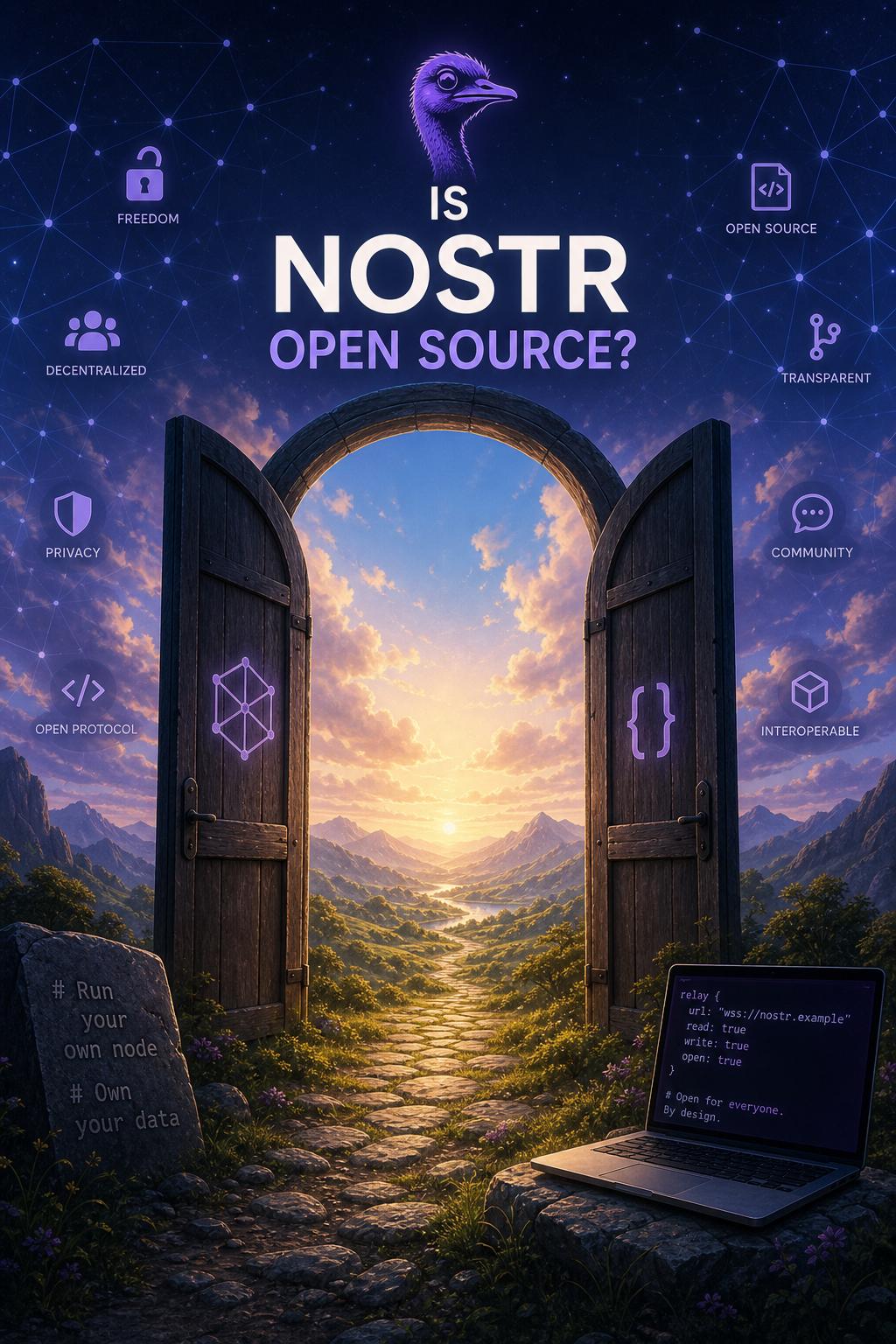
Nostr positions itself as an open-source, decentralized protocol, designed to empower users with control over their data and interactions. Though, the notion of being “open source” extends beyond the availability of code repositories. While the core specification of Nostr is publicly accessible, enabling anyone to develop clients or relays, the ecosystem’s open-source nature hinges on transparency and community contribution.
Several key factors contribute to evaluating Nostr’s openness:
- Public Protocol Specification: The Nostr protocol’s documentation is openly maintained and encourages public discourse, fostering an inclusive progress environment.
- Client and Relay Codebases: Multiple clients and relay implementations are available on platforms like GitHub,promoting forkability and collaborative enhancement.
- Community Governance: Unlike customary centralized platforms, decision-making and feature evolution in Nostr rely heavily on community consensus rather than single entities.
Nonetheless, not all components within the Nostr ecosystem are uniformly open, and some projects built atop the protocol could adopt proprietary elements or closed services. This hybrid stance means Nostr as a protocol is fundamentally open source, but the broader ecosystem may contain a mix of open and closed-source software, which users should critically assess.
| Aspect | Open Source status | Impact on Users |
|---|---|---|
| Protocol Documentation | fully Open | Ensures transparency and adaptability |
| Reference Clients | Mostly Open Source | Encourages customization and security audits |
| Third-party Services | Varies | May limit full openness depending on provider |
Create your Nostr Profile