

—
The Growing Role of AI in Military Strategies
As technology progresses, the incorporation of artificial intelligence (AI) into military strategies is becoming increasingly unavoidable. Nations are turning to AI to bolster their military capabilities in ways never before imagined. While AI offers meaningful advantages such as predictive analytics and improved decision-making, it also poses profound ethical challenges that governments must address with care.
The Ethical Dilemma of AI in Nuclear Defense
The deployment of AI in defense, especially concerning nuclear weapons, raises serious ethical concerns. The idea of autonomous systems making decisions about launching a nuclear strike based on algorithms and machine learning models is deeply unsettling to many security experts. Ensuring human oversight over such critical decisions is paramount. Below is a table that highlights the key differences between human-operated and AI-assisted nuclear security protocols, underscoring the necessity of continued human involvement.
| Aspect | Human Operated | AI Assisted |
|---|---|---|
| Decision-making | Contextual, nuanced | Algorithmic, data-driven |
| Accountability | Clear, attributable | Blurred, ambiguous |
| Versatility | High adaptability | Potential rigidity |
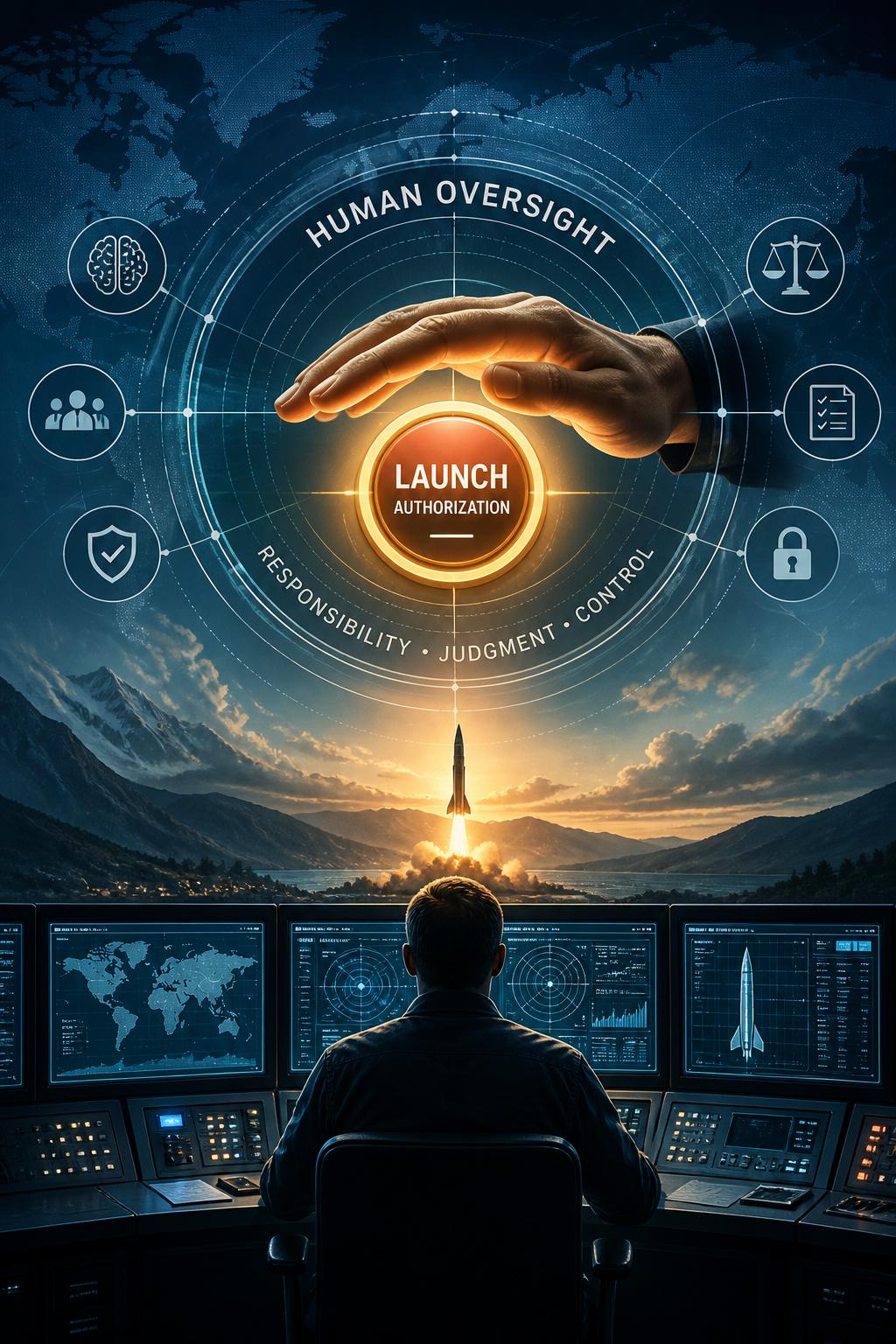
Maintaining Human Oversight in Nuclear Command and Control
Ensuring human oversight in nuclear command and control is vital for maintaining international stability. Security experts advocate for stringent rules that mandate human judgment and intuition in decisions about deploying nuclear weapons. Human-operated systems mitigate the risk of catastrophic errors due to algorithmic misunderstandings or misjudgments. Proponents argue that the human-in-the-loop approach guarantees accountability and moral responsibility in crises.
| Control System | Key Features | Primary Benefit |
|---|---|---|
| Human-Centric Systems | Robust authentication protocols, manual overrides. | Morally accountable, adaptable decision-making. |
| Automated Systems | Efficient execution, rapid response times. | Potential for reduced error rates, but lacks moral oversight. |
These systems aim to strike a balance between technological efficiency and the ethical imperative of human decision-making in the realm of nuclear warfare.
Global Efforts to Regulate AI in Nuclear Security
Security experts worldwide are urging for strict guidelines to prevent AI from controlling nuclear arsenals. International cooperation is essential to ensure that advancements in AI technology do not compromise nuclear security. Governments need to engage in transparent dialogues to build trust and address concerns before they escalate.
| Country | Priority Areas |
|---|---|
| Note: Alliances should address these areas collaboratively for maximum effectiveness. | |
| US | Developing AI ethics guidelines |
| China | Fostering international AI research communities |
| Global | |
| International | Harmonizing AI regulatory frameworks |
By participating in global forums and initiatives, nations can foster a cooperative habitat where AI innovation complements, rather than threatens, nuclear safety. Collaboration will require flexibility and a willingness to share resources and expertise.
The Urgency of Legislation to Prevent AI-Controlled Armaments
As AI advances, the international community is at a critical juncture in determining how autonomous systems will interact with strategic military assets. Security experts are urgently calling for legislation to prevent the use of AI in controlling nuclear weapons. This not only addresses an immediate threat but also sets a precedent for responsible AI governance on the global stage. Policymakers must balance innovation and security, ensuring that the benefits of AI do not come at the cost of human oversight in critical areas.
To address this challenge, lawmakers must consider both immediate and long-term implications. An international agreement is needed to establish clear ethical boundaries for deploying AI in defense systems. This agreement should outline specific protocols for human intervention and oversight, ensuring that ultimate authority over life-and-death decisions remains firmly in the hands of capable human leaders. Collaboration between the US and China is particularly critical, given their leading roles in technological development and global security architecture. While such cooperation presents diplomatic hurdles, the option of unchecked proliferation of AI-controlled armaments is far more perilous.