

Recently, the world has been abuzz with talk of a monumental financial revolution: digital currency. While seen by some as incendiary, the concept of digital currency has simultaneously galvanized and befuddled the modern world. As technology challenges the economy, one digital currency, Bitcoin, is taking center stage. In this article, we will explore the implications of this innovative currency, the advantages it offers, and what its future may look like.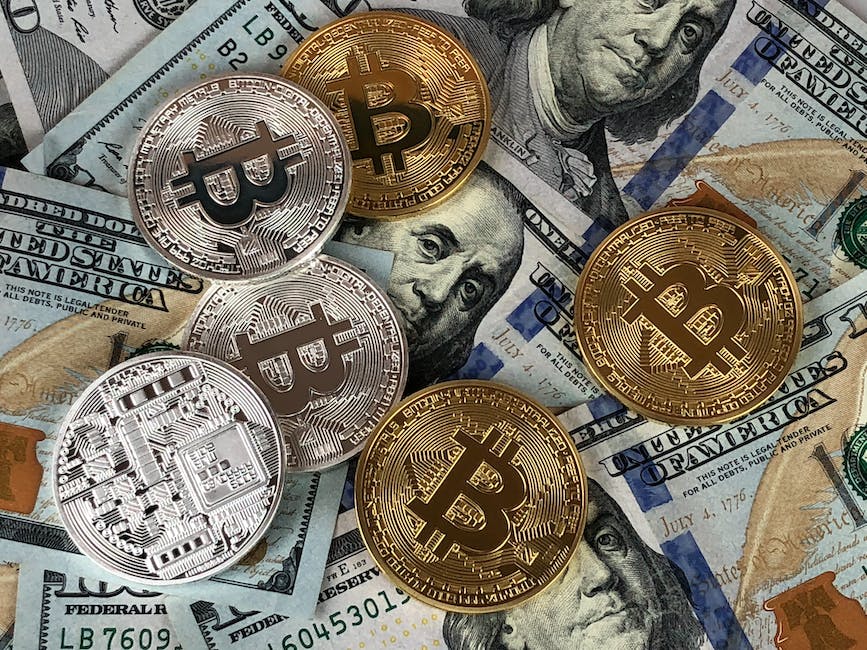
I. Introduction to Bitcoin
Bitcoin is a decentralized digital currency which allows individuals, businesses and organizations to transfer money over the Internet with negligible transaction fees. It is created and held electronically, and can be used to purchase goods and services from any person willing to accept the currency. This article will provide an overview of Bitcoin, highlighting its features, benefits and potential applications.
Bitcoin has many features which make it attractive to users. Firstly, it is free to set up an account and begin transacting. Secondly, transactions are anonymous, keeping user data confidential. Furthermore, transactions are secured by powerful encryption, making Bitcoin a secure transfer method. Finally, Bitcoin transactions are global, meaning that funds can be sent and received anywhere in the world in a matter of minutes.
- Decentralized: Bitcoin is a decentralized network, meaning that all transactions are stored in an open ledger.
- Low Fees: Bitcoin transactions are usually accompanied by extremely low transaction fees.
- Confidential: Bitcoin transactions are anonymous, meaning that users can keep their data private.
- Secure: Transactions are secured by powerful encryption, making Bitcoin a secure transfer method.
- Global: Funds can be sent and received anywhere in the world in a matter of minutes.
II. Exploring the Benefits of Digital Currency
Advantages in Payments and Transactions
Digital currencies have become an attractive option for those looking to access payments and investments in an efficient and cost-effective manner. Transactions are processed and confirmed in a matter of minutes, taking out the costly fees associated with banking systems. Moreover, digital currencies are quickly gaining recognition as legitimate forms of payment in the wider economy, allowing for more convenience in making transactions.
Advanced Security Features
In addition to cost savings and faster transaction times, digital currency can also provide a higher level of security. Transactions are conducted over a de-centralized network, meaning that information is not stored in any one place or vulnerable to theft or crashing. Also, many digital currencies come with built-in security features such as multi-signature authentication, meaning that transactions must be approved by multiple individuals before they are authorized.
III. Challenges in Implementing Bitcoin
One of the main challenges when implementing Bitcoin is scalability and transaction fees. With the growing number of users worldwide, Bitcoin’s network cannot handle more than a few transactions per second. This makes scalability a major limitation.
In order to process more transactions faster, the Bitcoin network needs to increase the block size. However, increasing the block size also increases the space needed for transaction data. This leads to higher miner fees, which can be a deterrent for users looking to use Bitcoin as a means of payment.
Other challenges include:
- Security – Hackers could gain access to private keys and wallets, leading to the loss of Bitcoin;
- Regulation – Bitcoin is seen as a form of decentralized currency, so governments need to create rules and regulations to govern its use and to prevent fraud;
- Mass Adoption – The lack of understanding of Bitcoin and its underlying technology by the general public is another barrier to its wide-scale adoption.
IV. Future of Bitcoin
Impact of Bitcoin
The impact of Bitcoin on the global economy is undeniable. As the cryptocurrency continues to gain credibility and acceptance, it is becoming increasingly attractive to both businesses and individuals around the world. Not only does it allow for fast, secure, and low-cost transactions, it also provides a platform for decentralized exchange and also opens up a world of potential investments. As the currency continues to grow, it will also serve as a hedge against volatility in traditional markets due to its non-inflationary nature.
Bitcoin’s Future
The future of Bitcoin is an exciting prospect for many. As awareness and adoption continues to grow, more merchants are likely to accept payments in the currency and more investors will flock to the currency in the hopes of capitalizing on its potential returns. It is also possible that the currency will be integrated into more sophisticated technologies such as blockchain and smart contracts as the technology continues to develop, leading to further growth of the cryptocurrency’s value. With these developments, it is expected that Bitcoin will become increasingly accepted as a viable alternative for payments and investments in the near future.
- Fast, secure, and low-cost transactions
- Open up a world of potential investments
- Integration into blockchain and smart contracts
- Become increasingly accepted for payments and investments
In conclusion, Bitcoin has become an increasingly popular and revolutionary form of digital currency. It’s rapid success and alluring potential as an investment has made it a viable option for those looking to trade and invest. As technology develops and Bitcoin gains more recognition, its value is expected to continue to rise.