
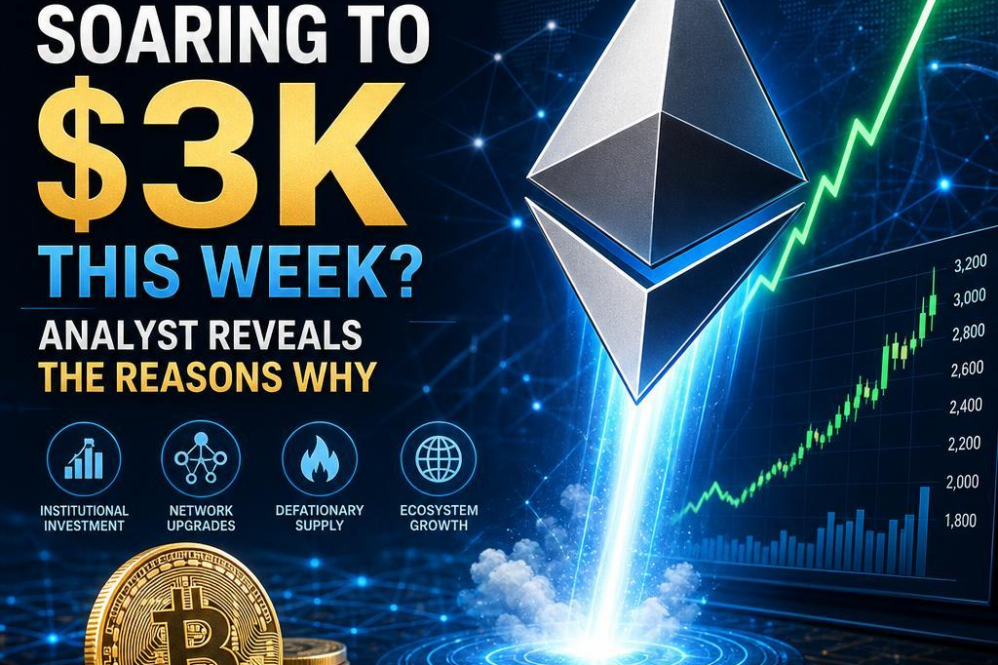
The Surge in Ethereum’s Value: What’s Behind the Momentum?
The recent surge in Ethereum’s value can be attributed to the growing interest in decentralized finance (DeFi) and non-fungible tokens (NFTs). As more users and developers engage with the Ethereum network to explore these innovative sectors, the demand for Ether (ETH) increases, driving its price higher. This trend underscores a broader shift towards digital ownership and financial inclusivity, powered by Ethereum’s unique features and robust infrastructure.
Another key driver of Ethereum’s rise is the anticipated transition to a proof-of-stake (PoS) consensus mechanism, known as Ethereum 2.0. This upgrade aims to address scalability and energy efficiency issues,making the network more sustainable and efficient. The introduction of sharding, a new protocol, will enable Ethereum to handle millions of daily transactions without compromising security or decentralization. Even though the full benefits of Ethereum 2.0 are yet to be realized, the promise of these improvements has already bolstered investor confidence.
The broader cryptocurrency market’s upward trend has also contributed to Ethereum’s price increase.As institutional investors continue to show interest in cryptocurrencies, major players are incorporating Ethereum into their portfolios, driving its value as a complementary asset to Bitcoin. However, Ethereum still faces challenges such as network congestion and scalability issues, which could affect short-term growth. Despite these challenges, the combination of innovative use cases and anticipated technological advancements positions Ethereum for continued relevance in the evolving digital economy.
Why Ethereum Could Reach $3,000 in the Near Future
Ethereum, the second-largest cryptocurrency by market capitalization, has caught the attention of investors and analysts due to its ongoing network improvements and strategic partnerships. The recent surge in usage metrics and transaction fees indicates growing demand,perhaps setting the stage for further price appreciation. The network’s transition to Proof of Stake (PoS) with the merge of Ethereum 2.0 represents a pivotal moment, addressing scalability and efficiency concerns.
Market dynamics suggest that Ethereum’s current trajectory is influenced by both speculative interest and fundamental developments. Increased adoption among developers and businesses for DeFi applications and NFTs has driven Ethereum’s protocol to process more transactions and handle higher value transfers. This growing utility not only signals broader acceptance of the technology but also reinforces the perception of Ethereum as a foundational layer for the evolving digital economy.
However, reaching a price target of $3,000 faces numerous hurdles, including the overall volatility of the cryptocurrency market and potential regulatory actions that could impact the broader environment. Investors should remain vigilant and analytical, understanding that the path to higher prices involves navigating both favorable and unfavorable market conditions. The decentralized nature of Ethereum means it is closely tied to the performance of the entire cryptocurrency ecosystem, which can amplify both opportunities and risks.
Strategic Recommendations for Investors
As investors look to capitalize on Ethereum’s potential price surge, several strategic recommendations emerge. One key suggestion is to diversify holdings within the Ethereum ecosystem. This includes exposure to projects built on the Ethereum blockchain, such as DeFi platforms and NFTs. These ancillary investments can provide additional revenue streams and reduce risk associated with a single asset.
Another essential consideration is staying informed about network updates and technological advancements. As an example, Ethereum 2.0, the transition to a proof-of-stake consensus mechanism, promises to improve scalability and reduce transaction costs. Understanding these developments allows investors to position themselves in a manner that aligns with the network’s progress and potential growth vectors. However, it’s crucial to temper expectations by acknowledging that such implementations often face delays or unforeseen challenges.
Along with technical insights, investors should also monitor macroeconomic indicators and broader market trends. Economic conditions and regulatory updates can substantially influence cryptocurrency markets,including Ethereum. Changes in monetary policy, geopolitical events, or increased regulatory scrutiny can impact investor sentiment and asset prices. By integrating this broader context into their strategy, investors can better navigate the complexities of the market and adapt to shifts in demand and supply dynamics.
The Impact of Technological Innovations on Ethereum’s Growth
The role of technological innovations in driving Ethereum’s price growth is significant. Advancements such as layer-two scaling solutions and the transition to proof-of-stake (PoS) technology are instrumental in addressing scalability and energy efficiency concerns. These innovations directly influence investor confidence and market perception, driving potential growth in Ethereum’s value.
Layer-two solutions like the Optimism and Arbitrum networks introduce significant improvements in transaction throughput and cost reduction. This enhancement not only attracts more users and decentralized applications (DApps) to the Ethereum network but also reduces congestion, making transactions faster and more affordable. However, it’s crucial to acknowledge that while these solutions are promising, they also introduce a layer of complexity and risk that must be managed carefully to maintain trust and stability.
The migration from proof-of-work (PoW) to proof-of-stake is another pivotal growth, set to profoundly impact Ethereum’s sustainability and security. PoS reduces the environmental footprint and operational costs, while making the network more resistant to attacks by requiring validators to stake ETH rather than relying on computational power. This shift not only aligns with broader industry trends towards sustainability but also sets a new standard for blockchain technology.It’s vital to note, though, that challenges in execution and security vulnerabilities must be vigilantly addressed to ensure a smooth transition.