
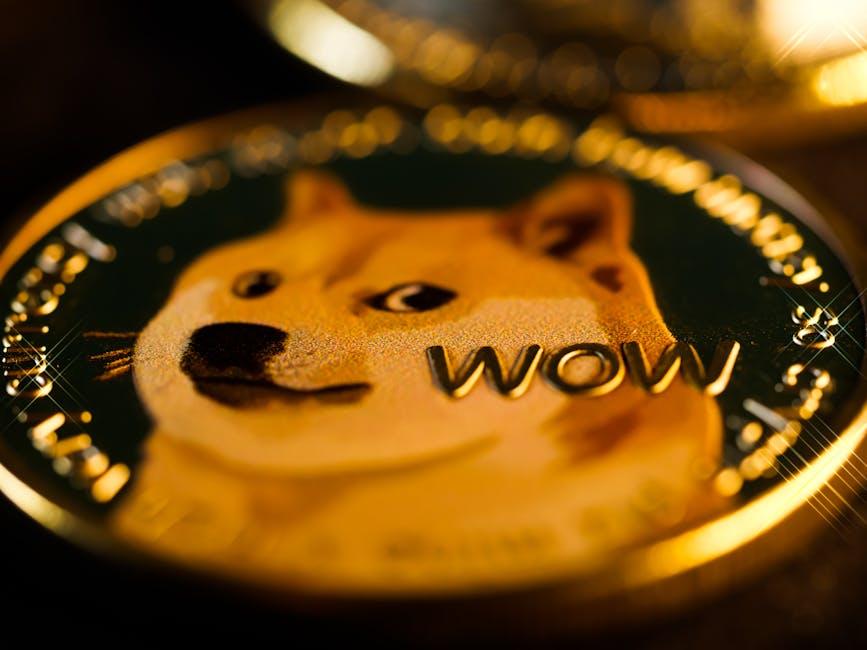
Examining Dogecoin’s 10% Surge and Its Separation from Bitcoin Trends
Dogecoin, the prominent meme-inspired cryptocurrency, recently experienced a notable 10% surge in its value, diverging from the broader trends observed in Bitcoin’s performance. This movement highlights the distinct dynamics within the cryptocurrency market, where altcoins like Dogecoin can respond too unique catalysts separate from the flagship asset. While Bitcoin often sets the tone for overall market sentiment due to its dominant market capitalization, Dogecoin’s uptick underscores how community-driven narratives and social media influences can propel price action independently. Such separations illustrate the market’s maturity, allowing for varied investor reactions to external factors without uniform correlation.
Examining this divergence reveals crucial context about correlation patterns in crypto assets. Typically, Dogecoin has shown a historical tendency to follow Bitcoin’s lead during major bull or bear phases, but instances of decoupling, as seen here, point to evolving investor behaviors and diversification strategies. This 10% rise invites analysis of underlying market structures, where liquidity and trading volume play key roles in amplifying short-term movements. For market participants,understanding these separations emphasizes the need for nuanced approaches to portfolio management,recognizing that while interconnected,cryptocurrencies can exhibit autonomous volatility influenced by their specific ecosystems.
Open Interest Peaks at Yearly High: Decoding the Surge in Trader Activity
In the cryptocurrency derivatives market, open interest-the total number of outstanding derivative contracts, such as futures or options, that have not been settled-has reached its highest level in a year. This metric serves as a key indicator of market participation and liquidity, reflecting the aggregate positions held by traders across exchanges. When open interest climbs to such peaks, it frequently enough signals heightened engagement from both institutional and retail investors, as they establish new positions rather than closing existing ones. This surge underscores a period of sustained interest in Bitcoin and related assets, potentially driven by evolving market dynamics, though it does not inherently point to bullish or bearish sentiment without further context from trading volumes and price action.
The increase in open interest highlights a notable uptick in trader activity, where more participants are entering the market to hedge risks or speculate on future price movements. In Bitcoin’s ecosystem,this can amplify liquidity,facilitating smoother trade execution and tighter spreads,which benefits the overall market efficiency. However, while such peaks suggest robust activity, they also introduce elements of caution; elevated open interest may heighten volatility during periods of news-driven shifts, as leveraged positions could lead to cascading liquidations if market conditions change abruptly. Analysts view this development as a reflection of the maturing derivatives landscape in crypto, yet emphasize the need to monitor complementary indicators like funding rates and exchange flows for a fuller picture of trader behavior.
fundamental Drivers Behind Dogecoin’s Independent Momentum
Dogecoin’s trajectory in the cryptocurrency landscape has frequently enough diverged from broader market patterns, especially those tied to Bitcoin’s fluctuations. This independent momentum stems from its origins as a lighthearted meme-inspired asset, which has fostered a dedicated community that propels its visibility and adoption independently of conventional market cycles.Unlike more utility-focused cryptocurrencies, Dogecoin’s appeal lies in its accessibility and humor, allowing it to gain traction through grassroots efforts rather than institutional backing alone. This community-driven dynamic enables sustained interest, even when larger market forces exert pressure on other assets.
Key to this independence are the underlying mechanisms that differentiate Dogecoin from its peers, such as its inflationary supply model, which contrasts with Bitcoin’s capped issuance and encourages ongoing participation without the scarcity-driven volatility. Conceptual frameworks in cryptocurrency economics highlight how such designs can support micro-transactions and tipping cultures on social platforms, reinforcing Dogecoin’s role in everyday digital interactions. While these factors contribute to resilience, they also underscore limitations, including vulnerability to sentiment shifts and regulatory scrutiny, emphasizing the need for balanced interpretation of its market behavior.
Expert strategies for Capitalizing on Dogecoin’s Market Breakout
Dogecoin, originally created as a lighthearted parody of Bitcoin in 2013, has experienced periods of meaningful price volatility, often influenced by social media trends and community enthusiasm. A market breakout in this context refers to a scenario where the cryptocurrency’s price surpasses key resistance levels, potentially signaling increased investor interest and liquidity. Experts emphasize the importance of understanding Dogecoin’s underlying mechanics,such as its unlimited supply model,which contrasts with Bitcoin’s capped issuance and can affect long-term value perceptions. This foundational knowledge allows investors to interpret breakout signals within the broader altcoin ecosystem, where external factors like market sentiment play a pivotal role.
Strategies for engaging with such a breakout typically involve disciplined risk assessment and portfolio management, as volatility in meme-inspired assets like Dogecoin can amplify both gains and losses. Professionals advocate for setting predefined entry and exit points based on technical indicators, such as moving averages or volume analysis, to navigate potential upward momentum without overexposure. While these approaches can help capitalize on short-term opportunities,limitations arise from the asset’s susceptibility to hype-driven corrections,underscoring the need for diversification across more stable cryptocurrencies or traditional investments to mitigate risks inherent in speculative markets.