

DeepSeek’s Vision for Developing an Independent Claude Code Framework
DeepSeek’s initiative to develop an independent Claude code framework epitomizes a strategic commitment to technological sovereignty and innovation. in a landscape where external dependencies can introduce vulnerabilities, DeepSeek is architecting a self-reliant foundation designed to control every layer of its AI stack.This approach not only enhances security and performance but also ensures that proprietary advancements remain protected, fostering an surroundings ripe for cutting-edge research and customized solutions unique to their operational ethos.
By prioritizing autonomy in core algorithmic design, DeepSeek is positioning itself against the backdrop of intense geopolitical and technological competition, notably in areas influenced by Beijing’s ambition to dominate every segment of the AI supply chain. This independent framework enables:
- Customizable integration tailored to specific applications and user requirements.
- Robust scalability to handle growing data complexity without sacrificing efficiency.
- Enhanced compliance with international standards amid evolving regulatory landscapes.
Such capabilities will serve as pillars supporting DeepSeek’s vision of a resilient, fully controllable AI ecosystem that can adapt swiftly and securely within a dynamic global context.
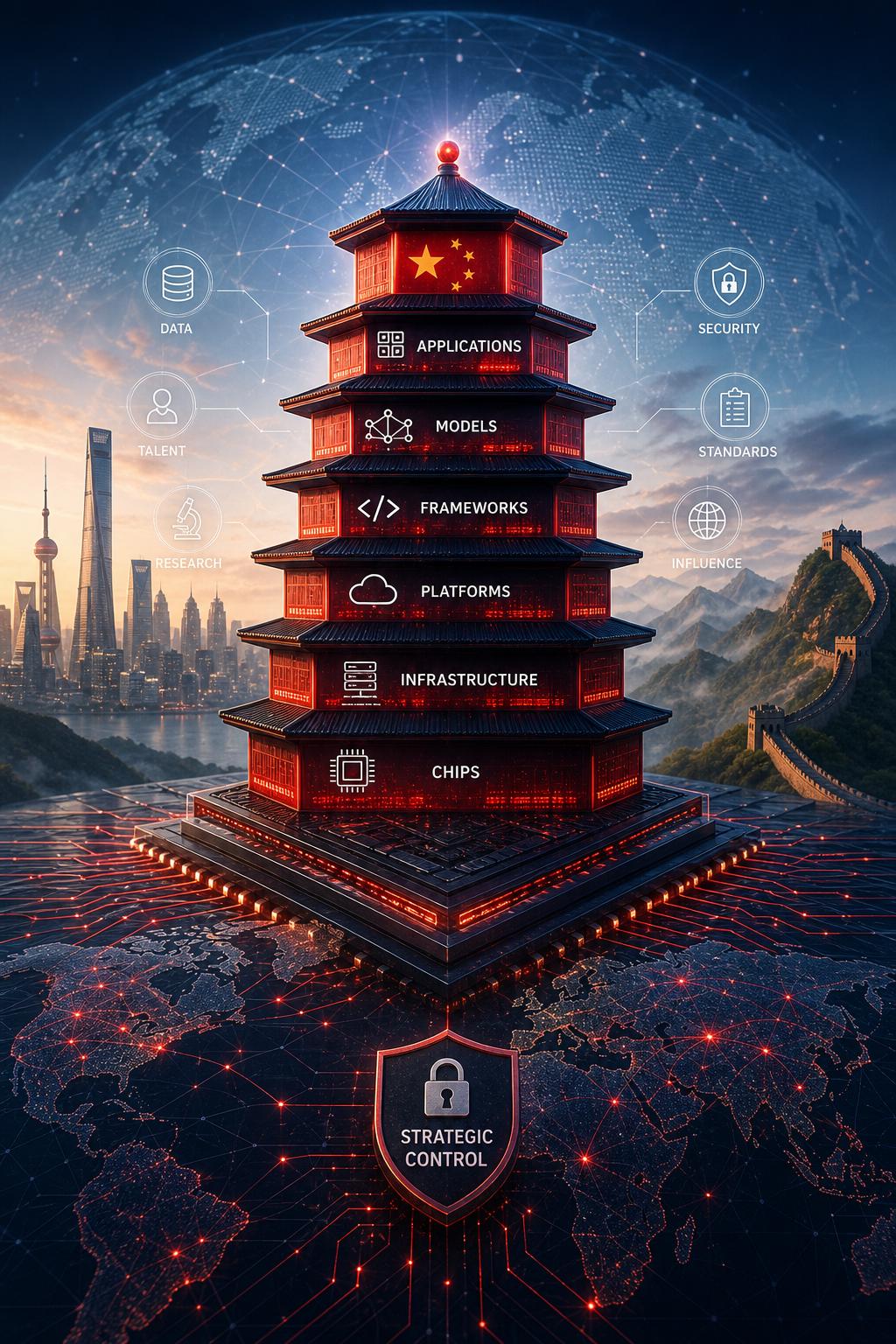
Strategic Implications of Beijing’s Drive for Full-Stack AI Control
Beijing’s aggressive push to dominate the entire AI technology stack reflects a strategic imperative far beyond mere technological leadership. By controlling everything from data acquisition and algorithm design to hardware manufacturing and deployment, the Chinese government aims to eliminate dependency on foreign innovations and reduce vulnerabilities in international supply chains. This complete control supports national security objectives and enhances China’s ability to set global AI standards, effectively reshaping the international technology landscape to favor its geopolitical interests.
Key strategic implications include:
- Technological Sovereignty: Complete in-house AI progress ensures resilience against export restrictions and geopolitical tensions, safeguarding China’s innovation continuity.
- Global Influence: Controlling foundational AI technologies empowers Beijing to influence global regulatory frameworks,data governance norms,and ethical AI guidelines.
- Economic Advantage: Vertical integration can accelerate commercialization cycles, reduce costs, and stimulate domestic AI ecosystems, positioning China as a dominant AI exporter.
| Aspect | Implication | Potential Impact |
|---|---|---|
| Hardware Control | Reduces reliance on foreign chips | Enhanced supply chain security |
| Algorithm Development | Custom AI models tailored to national agenda | Greater state oversight and influence |
| Data Management | Access to vast proprietary datasets | Competitive training advantages |
Technical Components and Innovations Underpinning DeepSeek’s Claude Code
At the core of DeepSeek’s Claude Code lies a robust architecture designed to optimize large language model performance, integrating advanced natural language processing techniques with scalable machine learning algorithms. The project prioritizes modularity, allowing seamless updates to neural components without disrupting the overall system. Key innovations include state-of-the-art transformer optimizations,memory-efficient attention mechanisms,and enhanced multi-modal data processing capabilities,establishing a new benchmark in model responsiveness and contextual understanding.
Technical highlights include:
- Custom Transformer Layers: Tailored for efficient parallelization and reduced latency during inference.
- Dynamic Tokenization System: Adapts to diverse linguistic inputs, improving accuracy across languages and dialects.
- Hybrid Training Paradigm: Combines supervised learning with reinforcement strategies to fine-tune contextual relevance.
- End-to-End Encryption: Ensures data integrity and user privacy throughout model interaction and training cycles.
| Component | Function | Innovation |
|---|---|---|
| Transformer Module | Efficient data encoding | Memory-efficient attention |
| Tokenizer Engine | Input processing | Dynamic vocabulary adaptation |
| Training Framework | Model optimization | Hybrid learning techniques |
| Security Layer | Data protection | End-to-end encryption |
Policy Recommendations for Navigating AI Sovereignty and Global Collaboration
In the evolving landscape of AI sovereignty, it is imperative for policymakers to prioritize **clear governance frameworks** that balance national security interests with the benefits of international cooperation. Governments should implement standards that protect intellectual property while encouraging innovation through open dialog across borders. This includes establishing clear regulations on data sovereignty,interoperability protocols,and ethical AI development,ensuring that technological advancements do not become tools of unilateral dominance but serve as shared assets in a global digital ecosystem.
To bolster global collaboration without compromising sovereignty, countries must invest in multilateral agreements that facilitate secure data sharing and joint research initiatives. Key policy actions might include:
- Creating international AI ethics committees that oversee cross-border tech deployment.
- Developing shared infrastructure platforms with agreed-upon security measures.
- Implementing reciprocal technology transfer mechanisms to prevent monopolistic control.
- Supporting capacity-building programs in emerging markets to democratize AI access.
| Policy area | Key Action |
|---|---|
| Data Sovereignty | Localized data protection laws |
| Interoperability | Standardized AI protocols |
| Ethics | Global oversight boards |
| Innovation | Cross-border R&D funding |