
Understanding Bitcoins Valuation: The Infinite Symbolism of ₿ = ∞/21M
The valuation of Bitcoin is often discussed through the lens of its capped supply of 21 million coins, which serves as a striking contrast to traditional fiat currencies that can be printed indefinitely. This framework invites investors to contemplate the inherent scarcity of Bitcoin, positioning it as a digital asset that may defy inflationary pressures typical of more common currency systems. As more individuals engage in the Bitcoin ecosystem, the increasing demand can drive valuation higher, suggesting that the potential value of Bitcoin may be only limited by the imagination of its holders.
Moreover, the equation encapsulates a broader philosophical debate regarding value itself in a digital age. Unlike physical assets that are bound by tangible existence, Bitcoin represents an abstract ideal, and through this lens, its valuation can be interpreted as representing a kind of infinite potential. Investors might perceive Bitcoin not merely as a currency, but as a hedge against traditional financial systems and a safeguard of wealth in times of economic uncertainty. In essence, the symbolism of “₿ = ∞/21M” illustrates the juxtaposition of limitless possibility alongside the finite nature of the asset, spurring continual discourse on its valuation.
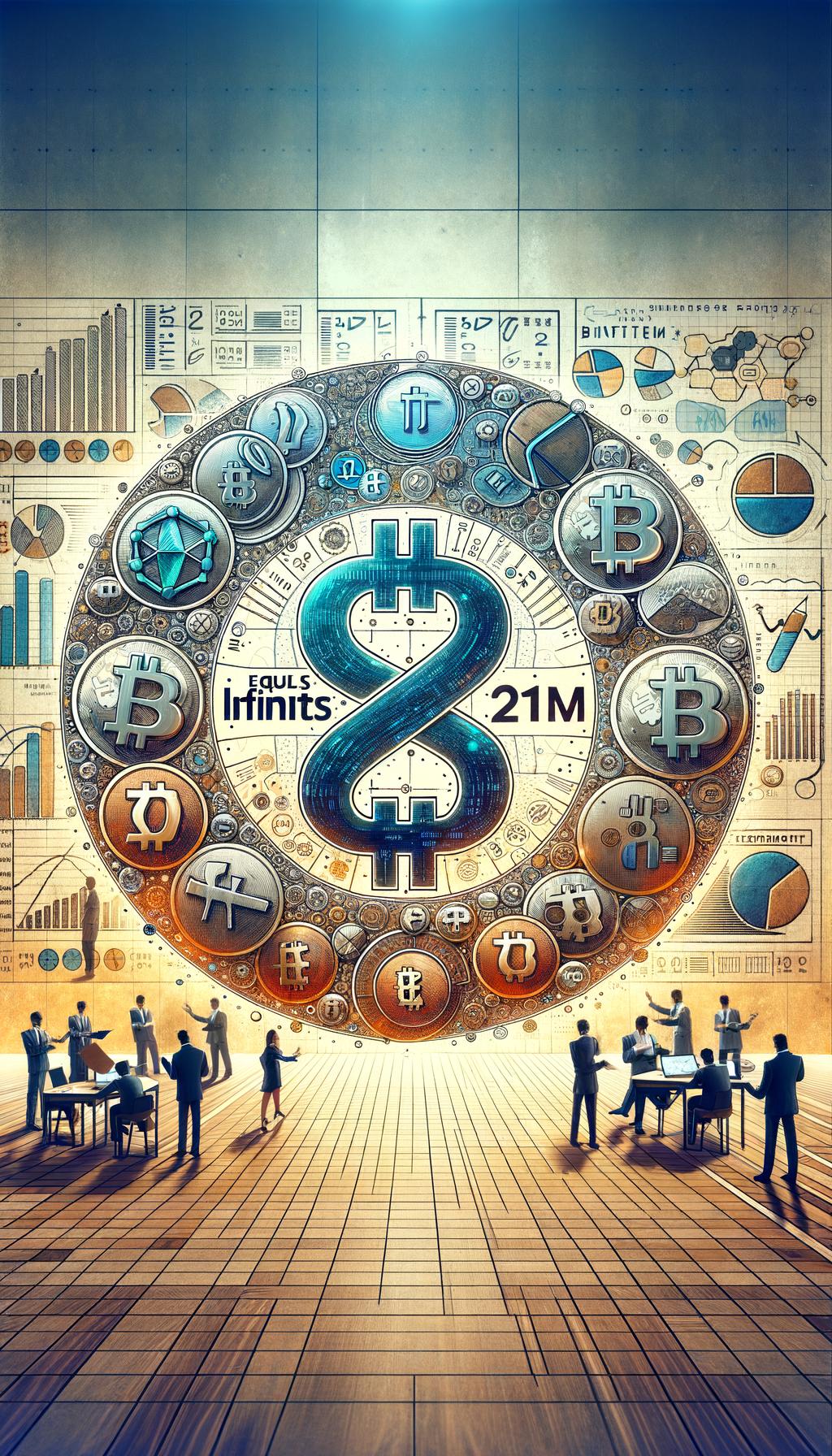
The Economic Implications of Bitcoins Fixed Supply: What ₿ = ∞/21M Means for Investors
The fixed supply of Bitcoin, capped at 21 million coins, introduces a unique dynamic to its economic model that diverges from traditional fiat currencies. This scarcity creates a foundational principle in value perception, heavily influencing investor behavior. A finite supply implies that as demand increases, the price trajectory of Bitcoin could potentially soar, making it an attractive asset for long-term investment. With each halving event that reduces the rate at which new bitcoins are mined, investors may expect heightened volatility, but ultimately greater returns over extended periods.
Moreover, the implications of this fixed supply extend into broader economic concepts, such as deflation and store of value. Unlike fiat currencies that can be printed in response to economic strategies, Bitcoin’s design prevents inflationary pressures typically associated with currency debasement. Investors may recognize Bitcoin not just as a currency but as a hedge against inflation, influencing their asset allocation strategies. Consequently, the following factors merit consideration:
- Speculative Demand: The allure of potential appreciation may drive speculative investment, often leading to market cycles.
- Institutional Adoption: As more institutional investors embrace Bitcoin, the consideration of its limited supply could further solidify its role in diversified portfolios.
- Store of Value Narrative: Bitcoin is increasingly viewed as “digital gold,” appealing to those seeking stability amidst economic uncertainty.
the implications of Bitcoin’s fixed supply resonate through various economic perspectives, compelling investors to reassess its role within their financial strategies. As the market matures, understanding these dimensions will be critical for navigating the evolving landscape of digital assets.
the equation ₿ = ∞/21M encapsulates the unique economic narrative that Bitcoin presents, distinguishing it from traditional monetary systems. By embracing a fixed supply of 21 million coins, Bitcoin transcends conventional limitations, symbolizing not just a new form of currency but a revolutionary paradigm shift in how we conceive value and scarcity. As we navigate the complexities of this digital asset, understanding its inherent symbolism may provide us with insights into the future of finance and the ongoing interplay between technology and economics. As Bitcoin continues to evolve, it poses critical questions about the nature of money, investment, and the very foundations of our financial systems—questions that will undoubtedly shape discussions among economists, policymakers, and investors alike.