Polkadot (DOT)
$1.11
- Market Cap $1.90 B
- Volume $141.29 M
- Available Supply 1.71 B DOT
- ATH $54.98
- ATH(% Change) -97.98%
- ATH Date 2021-11-04

Loading Data
Please wait, we are loading chart data
| Date | Price | Volume | MarketCap |
|---|
Polkadot current price is $1.11 with a marketcap of $1.90 B. Its price is -4.92% down in last 24 hours.
Polkadot is a platform that allows diverse blockchains to transfer messages, including value, in a trust-free fashion; sharing their unique features while pooling their security. In brief, Polkadot is a scalable heterogeneous multi-chain technology.Polkadot is heterogeneous because it is entirely flexible and makes no assumption about the nature or structure of the chains in the network. Even non-blockchain systems or data structures can become parachains if they fulfill a set of criteria.Polkadot may be considered equivalent to a set of independent chains (e.g. a set containing Ethereum, Ethereum Classic, Namecoin and Bitcoin) except with important additions: pooled security and trust-free interchain transactability.Many of the native parachains of Polkadot will be written using a Polkadot Runtime Environment SDK (e.g. Parity Technologies' Substrate).
# Understanding Parachains: Polkadot's Secret Weapon in Blockchain Technology
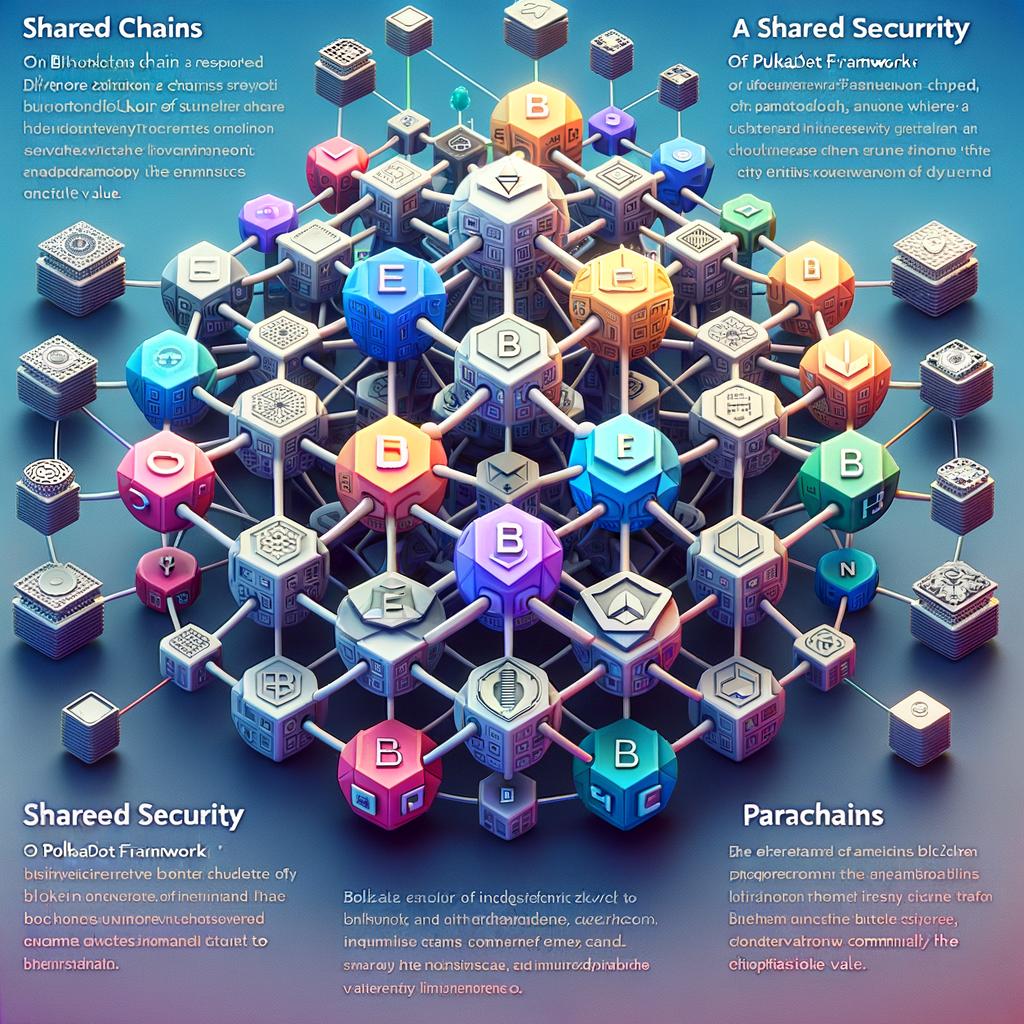
In the realm of blockchain technology, the concept of parachains is emerging as a groundbreaking innovation that could redefine how decentralized applications and services are built and integrated. Parachains are unique to the Polkadot ecosystem, a platform designed to facilitate a network of diverse blockchains that can communicate and share resources seamlessly. By leveraging shared security and interoperability, Polkadot aims to create a scalable, heterogeneous multi-chain environment, offering unprecedented flexibility for developers and users alike.
## What are Parachains?
At their core, parachains are independent, specialized blockchains that operate within the Polkadot network. Unlike traditional blockchains, which often operate in isolation, parachains are interconnected, allowing them to exchange messages and value in a secure, trustless manner. Each parachain has its own set of rules, validators, and economies, giving developers the freedom to create tailored solutions that address specific needs or industries.
This architecture can be likened to a collection of different computers, each capable of performing unique functions while still communicating with one another to enhance overall efficiency and performance. The use of parachains enables projects to focus on their specific use cases without compromising on speed, security, or decentralization.
## Polkadot: The Foundation for Parachains
Polkadot itself is a multi-chain platform that allows various blockchains - or parachains - to exist and operate simultaneously. Its heterogeneity is one of its standout features, as it makes no assumptions about the structure or nature of the chains in its network. As a result, even non-blockchain data structures can theoretically become parachains if they meet specific criteria.
In essence, Polkadot serves as an ecosystem where multiple independent blockchains, such as Ethereum, Bitcoin, and Namecoin, can coexist with additional benefits. Key features of Polkadot include:
1. **Pooled Security**: All parachains benefit from the shared security model of the Polkadot relay chain. This means that new parachains can rely on the security provided by the relay chain rather than having to establish their own from scratch.
2. **Interoperability**: Parachains can communicate with each other easily, facilitating the transfer of data and value across various blockchain projects without the need for complex bridges or intermediaries.
3. **Scalability**: By enabling multiple chains to operate simultaneously, Polkadot can accommodate more transactions and users without experiencing the congestion issues that often plague single-chain networks.
## Development Using Parachains
Many of the native parachains within the Polkadot ecosystem will be developed using the Polkadot Runtime Environment (PRE) SDK, particularly using Substrate, a framework created by Parity Technologies. Substrate provides developers with the tools needed to build their own customized blockchains efficiently, streamlining the process of blockchain creation and deployment.
With Substrate, developers can focus on the unique features of their application or service, integrating functionality that aligns with their vision while benefiting from the robust infrastructure provided by Polkadot. Furthermore, parachains created with Substrate can easily connect to the Polkadot ecosystem, gaining access to the collective advantages of pooled security and interoperability.
## Unlocking Innovation and Collaboration
The modular architecture of Polkadot and its parachains opens up a world of possibilities for innovation and collaboration across different sectors and industries. New business models can emerge as developers create specialized chains that cater to specific markets, enable novel applications, and improve existing systems.
For instance, decentralized finance (DeFi), non-fungible tokens (NFTs), and Internet of Things (IoT) applications can all be tailored to leverage parachains, maximizing efficiency and user experience. The ability to interconnect these specialized applications without the bottlenecking issues often associated with monolithic blockchains could lead to vast improvements in how people and businesses utilize blockchain technology.
## Conclusion
Parachains represent a fundamental shift in blockchain design and functionality, allowing for flexibility, scalability, and user-driven innovation. As Polkadot continues to evolve and its ecosystem expands, the potential for parachains to lead the way in decentralized applications becomes increasingly apparent. By combining the strengths of pooled security, innate interoperability, and modular development, Polkadot is not just introducing parachains; it is redefining the future of blockchain technology. Embracing these innovations could mark the beginning of a new era in the blockchain landscape, where collaboration and customization take center stage.
Parachains are specialized, independent blockchains within the Polkadot ecosystem, designed to facilitate seamless communication and resource sharing among various blockchains. They enable decentralized applications and services to exchange messages and value in a secure and trustless manner. Each parachain operates with its own rules, validators, and token economies, allowing developers to create tailored solutions for specific industries without compromising on decentralization or speed.
Polkadot serves as a scalable, heterogeneous multi-chain platform that enhances the capabilities of these parachains through pooled security and interoperability. It allows different blockchains, including non-blockchain systems, to coexist and communicate effectively, avoiding typical single-chain congestion issues.
Many parachains are developed using the Polkadot Runtime Environment SDK, particularly through the Substrate framework, which simplifies the process of blockchain creation. This modular architecture encourages innovation and collaboration across sectors, enabling the development of diverse applications such as decentralized finance (DeFi), non-fungible tokens (NFTs), and Internet of Things (IoT) solutions. Overall, parachains represent a significant advancement in blockchain design, promoting flexibility and user-driven innovation within the Polkadot ecosystem.
### Key Features of Parachains in Polkadot
- **Independent Blockchains**: Parachains are specialized and independent blockchains that operate within the Polkadot ecosystem.
- **Interconnected Communication**: They can exchange messages and transfer value in a secure and trustless manner.
- **Customization**: Each parachain has its own rules, validators, and token economies, allowing for tailored solutions specific to various industries.
- **Pooled Security**: Parachains benefit from the shared security model of the Polkadot relay chain, eliminating the need for individual security setups.
- **Interoperability**: They can easily communicate with each other, facilitating seamless data exchange across diverse blockchain projects.
- **Scalability**: Multiple parachains can operate simultaneously, accommodating more transactions and users without congestion issues typical of single-chain networks.
- **Development Tools**: Many parachains are created using the Polkadot Runtime Environment (PRE) SDK, particularly through the Substrate framework, which streamlines blockchain creation.
- **Flexibility**: Polkadot's heterogeneous nature allows even non-blockchain data structures to become parachains if they meet specific criteria.
- **Innovative Applications**: Parachains unlock potential for new business models and specialized applications in sectors like decentralized finance (DeFi), non-fungible tokens (NFTs), and Internet of Things (IoT).
- **Modular Architecture**: This design promotes collaboration and innovation across various sectors, enabling the development of diverse and efficient applications.
### Conclusion
Parachains are set to revolutionize blockchain technology by enabling flexibility, scalability, and user-centric innovation within the Polkadot ecosystem. They represent a significant advancement, paving the way for a new era of collaboration in the blockchain landscape.