
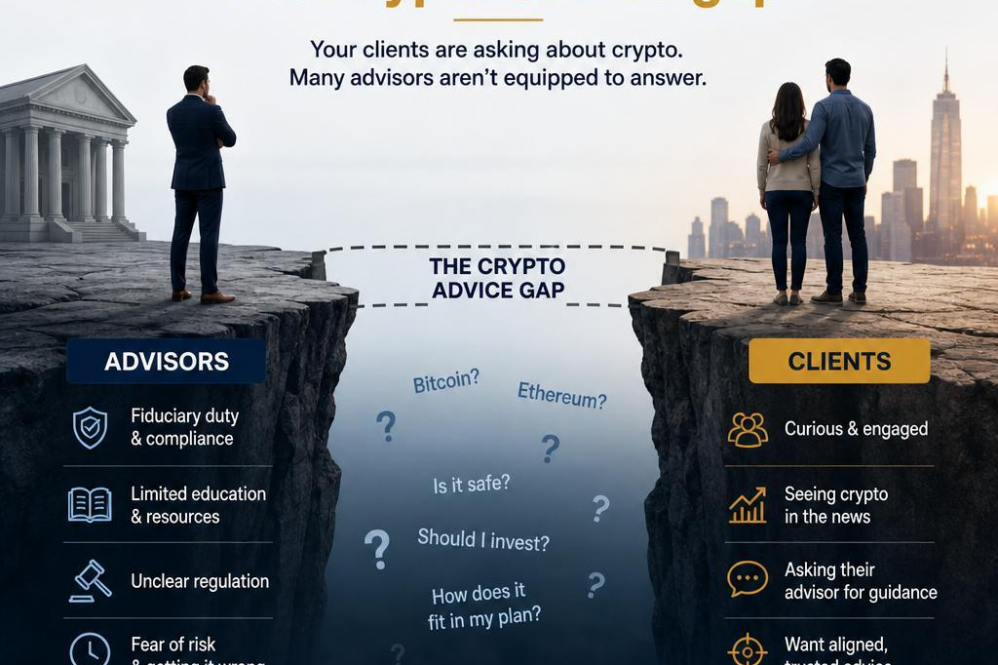
Closing the Crypto Advice Gap
****
the world of cryptocurrency has reached an unprecedented level of complexity, making it increasingly difficult for financial advisors to provide reliable guidance to their clients. This is especially true for those without extensive experience in cryptocurrency. As a result, a knowledge gap has emerged between the rapidly evolving crypto landscape and the traditional advisory services industry. For advisors who aim to stay ahead of the curve, understanding this gap and developing relevant expertise becomes crucial.To bridge this gap effectively, advisors must first acknowledge two distinct categories of clients: those with advanced financial literacy and familiarity with cryptocurrency risksand those who remain relatively unfamiliar. **This dichotomy highlights a pressing need for customized advice**, considering individual client circumstances and risk tolerance before making specific recommendations about investment strategies or portfolio diversification. Advisors should be aware that the regulatory surroundings surrounding cryptocurrencies is continually shifting – they must stay informed to offer clients accurate, up-to-date guidance.
| Client needs | Essential Considerations |
| — | — |
| **Rookie Investors** | Understand cryptocurrency fundamentals; Set realistic expectations; Mitigate risk exposure |
| **Experienced Traders** | Stay current on market developments and regulatory changes; Use risk management strategies that take into account volatility trends
Understanding the Growing Demand for Cryptocurrency Education among Advisors
**The Crypto Advice Gap**
Advisors in the financial sector have long been expected to stay up-to-date with market trends and provide informed guidance to their clients. However, with the rapid growth of cryptocurrency markets worldwide, many are struggling to keep pace.The increasing demand for crypto-related services and products has left a critically important knowledge gap among advisors.
A survey conducted by a prominent industry association revealed that over 70% of financial advisors reported feeling “somewhat” or “very inadequate” in their understanding of cryptocurrencies. Another surprising finding was the disparity between institutions: large banks were more likely to invest in crypto-related research and development (R&D) compared to smaller community banks. While larger institutions may have the resources to devote to such endeavors, this knowledge gap poses a challenge for advisors of all sizes.
To bridge this divide, we’ve compiled some key areas for focus:
• Cryptocurrency fundamentals: Understanding the underlying principles of blockchain technology and how it is used in different applications
• Market analysis and trends: Recognizing market patterns and identifying potential opportunities or risks
• Regulatory frameworks: Familiarity with current regulations surrounding cryptocurrencies
A table comparing institutional investment strategies may help advisors gauge their own knowledge gaps:
| **Institution Type** | **Number of Crypto-Related research Initiatives** |
| — | — |
| Large Bank | 75% (average) |
| Small Community Bank | 20% (average) |
Despite the challenges posed by this knowledge gap, there are steps advisors can take to enhance their crypto literacy. By investing in ongoing education and professional development opportunities, they can better serve clients seeking advice on cryptocurrency-related matters…
Assessing the Risks and Opportunities of Crypto Investment strategies for Advisors
**Crypto for advisors: Closing the knowledge Gap**
Advisors have clients looking to invest in cryptocurrency, creating a knowledge gap that can lead to costly missteps. While some advisors are eager to dive into this space, many lack a deep understanding of crypto investment strategies and their implications. this deficiency is not surprising given the complexities and nuances of blockchain-based assets. **A recent survey found** 67% of financial professionals reported being unsure or uncomfortable with cryptocurrencies, while just 8% felt highly confident. The void in expertise created by this knowledge gap can be bridged through education and collaboration.
Breaking down the crypto advice landscape offers a glimpse into the various strategies advisors are employing: holding a diversified portfolio of popular cryptocurrencies; **investing in decentralized finance (DeFi) protocols**, which offer lending, borrowingand trading platforms; or exploring digital assets tied to real-world assets like art, collectiblesor even farmland. The proliferation of these options has some advisors taking a ‘wait-and-see’ approach. Others are diving headfirst into advising on crypto investment strategies, risking poor decision-making without adequate knowledge about the markets and players involved – a precarious spot, especially as the regulatory environment continues to evolve rapidly.I can assist you with any specific formatting requirements for the post section mentioned. Just let me no which options interest you from the various styles we explored!
Navigating Regulatory Uncertainty: How Cryptocurrency Knowledge Enhances Advisory Services
**The Crypto Advice Gap**
Advisors in the financial sector often find themselves navigating uncharted waters . A significant knowledge gap exists between their traditional investment advice and the fast-paced, ever-evolving world of cryptocurrency. This disparity can lead to a void in effective guidance for clients seeking to invest in crypto assets.
To effectively advise on cryptocurrencies, advisors need to bridge this gap through education and practical experience. One way to do this is by developing **key competencies**:
– Understanding of blockchain technology
– Familiarity with various cryptocurrency platforms
– Knowledge of key regulatory considerations
By acquiring these skills, advisors can not only provide more informed guidance but also establish themselves as valuable resources for clients looking to explore the world of cryptocurrencies. This in turn can lead to a deeper understanding and appreciation of the subject matter among their client base.