
—
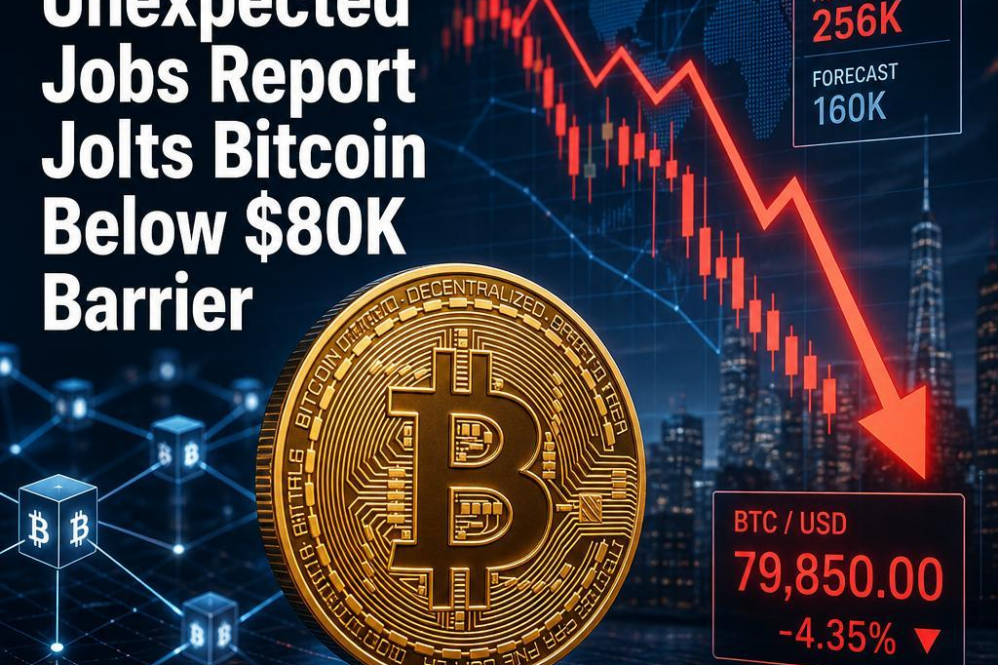
Surprise Employment Report Shifts Bitcoin Market Sentiment
The unexpected strength in August’s Nonfarm Payrolls report has dramatically altered investor perceptions of Bitcoin and other cryptocurrencies. With a significant uptick in employment, the report suggests a potential rise in interest rates and tighter monetary policy, leading to a reassessment of risk among investors. This economic shift has directly impacted the speculative nature of digital currencies.
It is essential to understand how this data influences cryptocurrencies. Typically, a robust economy can diminish interest in speculative assets like Bitcoin, as conventional financial instruments such as stocks and bonds become more attractive. However, Bitcoin’s reputation as a safe haven and hedge against inflation somewhat shields it from negative economic impacts, although this protective effect is still debated. Investors must navigate the intricate relationship between macroeconomic indicators and the allure of decentralized finance.
The immediate market reaction saw Bitcoin’s value decline as investors recalibrated their risk profiles. This downturn highlights the cryptocurrency market’s sensitivity to broader economic signals and underscores the importance of economic data in shaping trading strategies. Yet, it also demonstrates the market’s resilience, with sentiment shifting rapidly in response to new data, showing both vulnerability and adaptability.
Economic Indicators Signal Bearish Outlook for Crypto Markets
Economic indicators are increasingly pointing towards a bearish sentiment in the cryptocurrency market, reflecting a broader skepticism towards riskier assets. This trend is evident through declining trading volumes and institutional interest, which often signal a cooling market environment.Such conditions can impact sentiment and lead to increased price volatility as traders and investors adjust their strategies in response to these broader economic pressures.
The movement in traditional financial markets, such as equities and commodities, mirrors the dynamics in the crypto space. This interplay suggests that a cautious approach is advisable for those investing in cryptocurrencies. While economic indicators are significant, they are not the only factors influencing the market. Other influences, including regulatory developments and technological advancements, continue to shape the crypto landscape.
As bearish indicators become more prominent, it’s essential for market participants to reassess their risk tolerance and investment horizons. Understanding these signals can guide informed decisions, but it’s critically critically important not to rely too heavily on any single indicator. Diversification and a balanced portfolio remain key strategies for managing risk, especially during periods of economic uncertainty. Staying informed about the evolving regulatory landscape also provides valuable context for investors navigating bearish trends.
Bitcoin Experiences Volatility Due to Employment Data
Bitcoin has seen a noticeable retreat in recent trading sessions, reflecting the broader market’s response to the latest employment data from the U.S. Bureau of Labor Statistics. These economic indicators directly influence market sentiment and investor behavior, often leading to shifts in risk appetite. Employment figures are closely watched and serve as a critical signal for economic health, influencing the valuation of assets like Bitcoin.
The volatility in the cryptocurrency market can be attributed to the dual effects of economic data and speculative activities. Strong employment numbers might suggest an improving economic environment, potentially leading investors to favor traditional assets. Conversely, weak employment figures can create uncertainty, prompting risk-averse investors to seek safe-haven assets, a category Bitcoin sometimes falls into, despite its volatility. These fluctuations create an unpredictable trading environment for Bitcoin, as investors adjust their positions based on economic cues and future trends.
Understanding these market dynamics requires a nuanced approach. Analysts frequently enough look at the correlation between Bitcoin’s performance and macroeconomic factors to gauge investor sentiment. Though, the relationship between Bitcoin and traditional economic indicators is complex and can vary over time.While Bitcoin might correlate with economic data during certain periods,its unique characteristics as a decentralized,peer-to-peer currency mean its behavior can also be influenced by events specific to the crypto space. Investors should be cautious and informed, considering both broad economic trends and developments within the cryptocurrency community when making decisions.
Exploring the Impact of Labor Market Data on Crypto Prices
The labor market data can considerably influence cryptocurrency prices, particularly in the realm of decentralized finance (DeFi) and the broader digital asset ecosystem. Changes in employment figures, wages, and labor conditions reflect broader economic trends that can drive investor sentiment and market expectations. As a notable example, a robust employment report might bolster confidence in the economy, potentially leading to increased trading volumes and activity within crypto markets. Conversely, weak labor market data could lead to concerns about inflation or economic contraction, causing cautiousness or even declines in digital asset values.
Understanding how labor market data affects crypto prices involves recognizing the interplay between traditional economic indicators and the perceptions of the crypto community. However, it’s crucial to note that direct correlations are not always straightforward, as market movements can be influenced by a multitude of factors, including geopolitical events, technological advancements, and regulatory developments. While cryptocurrency markets are known for their volatility, the correlation with conventional economic metrics such as labor market statistics can provide valuable insights. Analysts frequently examine the reaction of crypto prices to labor market releases as a barometer of sentiment. For a comprehensive analysis,understanding both the traditional economic framework and the dynamics specific to digital assets is key.
—