
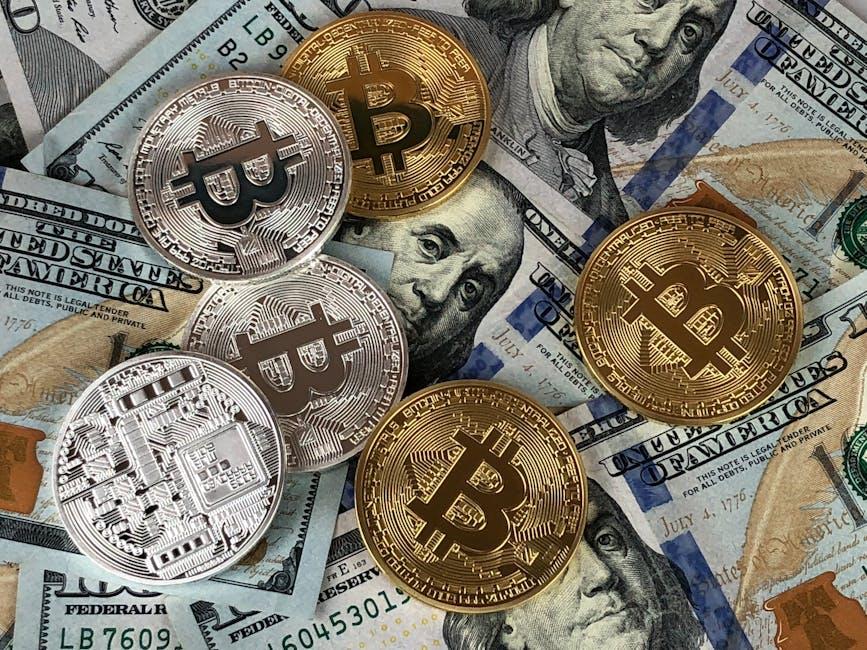
In a world chained by centralized monetary systems, Bitcoin is fast becoming both a symbol of resistance and a test case for an alternative financial order. Launched as a peer-to-peer electronic cash system, the cryptocurrency has attracted investors, technologists and regulators alike, igniting debates over monetary sovereignty, inflation hedging and the future role of banks.As governments tighten oversight and institutional investors cautiously expand exposure, markets and policymakers are watching closely to see whether bitcoin will mature from speculative asset to a durable component of the global financial system. This report examines the forces reshaping Bitcoin’s trajectory - from technological upgrades and market liquidity to regulatory clampdowns and shifting public trust – and asks what a decentralized monetary future might mean for everyday savers and the global economy.
Note: the provided web search results returned documentation for Google’s Find Hub (Android Help) and did not contain additional material on Bitcoin.
Analysis: Bitcoin’s challenge to centralized monetary systems and what citizens should know
In a world chained by centralized monetary systems, Bitcoin presents a technical and market-level challenge by combining a transparent, tamper-resistant ledger with a fixed issuance schedule: a maximum supply of 21 million coins and the most recent halving that reduced miner rewards to 3.125 BTC per block in 2024. Built on a proof-of-work consensus that has driven the network’s hashrate to sustained highs, Bitcoin’s model emphasizes censorship resistance, permissionless settlement, and programmatic scarcity - attributes that appeal to investors seeking an alternative to fiat inflation. In recent market context, institutional access via spot Bitcoin ETFs and growing layer‑2 activity (notably the Lightning Network) have increased liquidity and on‑chain throughput while shifting some price drivers from retail speculation to macro liquidity and ETF flow dynamics.For clarity, key features to weigh include:
- Censorship resistance: ability to send value without third‑party approval
- Predictable issuance: halving schedule and capped supply
- Openness: public UTXO ledger and open‑source protocol progress
- Divisibility: smallest units (satoshis) enable micro‑transactions
Moreover, citizens should balance opportunity with concrete risk management: Bitcoin is volatile, regulatory frameworks remain in flux across jurisdictions, and custody failures account for a substantial share of investor losses. Actionable steps for newcomers include using a trusted hardware wallet, protecting private keys, employing dollar‑cost averaging to reduce timing risk, and understanding the difference between custodial and non‑custodial services.Conversely, experienced participants should monitor on‑chain metrics (e.g., exchange net flows, MVRV, long‑term holder supply) and operational risk (miner economics after halving, mempool fee dynamics), consider multisignature custody or institutional custodians for large holdings, and evaluate Layer‑2 and batching strategies to reduce fees and improve settlement speed. becuase price movements often reflect macro liquidity, ETF flows, and real‑world adoption rather then pure speculation, citizens are advised to set clear investment objectives, maintain position sizing aligned to their risk tolerance, and keep abreast of regulatory developments that can materially affect access and tax treatment.
Explainer: Technical limitations,security risks and practical steps for safe Bitcoin use
In a world chained by centralized monetary systems,Bitcoin has emerged as an alternative settlement layer that combines an immutable,distributed ledger with economically enforced consensus. However, its design entails measurable technical constraints: the Bitcoin network processes roughly 3-7 transactions per second with an average block time near 10 minutes, and a base block capacity historically tied to the ~1 MB block structure (expanded in practice by SegWit and other optimizations). Consequently, on‑chain congestion can produce large fee variability during demand spikes, pushing small-value transfers to layer‑2 solutions such as the Lightning Network for micro‑payments and faster finality. At the same time, Bitcoin’s conservative scripting language and proof‑of‑work security model reduce smart‑contract surface area compared with programmable chains, which lowers some attack vectors but also limits native DeFi composability. Moreover, recent market dynamics – including growing institutional participation and the rollout of spot‑ETFs in major markets – have accelerated capital inflows and regulatory scrutiny, reinforcing the need to weigh throughput and privacy trade‑offs when evaluating Bitcoin’s role in diversified portfolios and payments rails.
Furthermore, security risks remain the primary operational threat to holders: unlike bank deposits, control of the private key equates to control of funds, and custody failures at exchanges or through social‑engineering attacks have historically resulted in losses measured in billions of dollars and high‑profile breaches (for example, the Mt. Gox insolvency involving ~850,000 BTC). To mitigate these risks for both newcomers and experienced users, adopt a layered custody and operational model and follow proven hygiene steps, such as:
- Use hardware wallets for cold storage and keep seed phrases offline in geographically separated backups;
- Employ multisig setups for large holdings to distribute risk across autonomous keyholders;
- Maintain a hot wallet with minimal balances for day‑to‑day use and enable strong authentication (U2F/2FA) for any custodial services;
- Verify transaction data out‑of‑band (avoid copy‑paste of addresses) and keep software updated to reduce exposure to wallet exploits;
- Document provenance and compliance to meet regulatory reporting and tax obligations as jurisdictional scrutiny increases.
These steps-paired with ongoing monitoring of fee markets, Lightning liquidity, and regional regulatory developments-help users translate Bitcoin’s technical guarantees into practical, resilient custody strategies without relying unduly on third‑party intermediaries.
Impact: How Bitcoin could reshape inflation, remittances and monetary policy and policy recommendations for governments
In a world chained by centralized monetary systems, Bitcoin introduces a programmable, scarce monetary good with a fixed supply of 21 million units and a predictable issuance schedule (a 50% reduction in miner rewards approximately every 210,000 blocks, or ~every four years). That architecture gives Bitcoin distinctive implications for inflation dynamics and monetary policy: unlike fiat systems where central banks use open market operations and interest-rate levers to target inflation, a material shift toward Bitcoin-denominated savings or payments could weaken the transmission of conventional policy and create partial dollarization-style constraints on national authorities. At the same time, Bitcoin’s price volatility and market microstructure-liquidity concentrated in major exchanges, periodic on-chain fee spikes, and substantial speculative flows-limit its near-term usefulness as a stable inflation hedge for everyday transactions. Still,in the remittances arena Bitcoin and layer-2 solutions such as the Lightning Network already demonstrate concrete cost and speed advantages versus legacy rails: global remittance fees average roughly 6-7% (world Bank estimates),while Lightning-enabled transfers can reduce costs to fractions of a percent and settle in seconds to minutes. For readers across the experience spectrum, practical takeaways include: newcomers should prioritize regulated on-ramps and custody with clear fee and tax disclosures, while experienced participants can reduce settlement friction and counterparty risk by using non-custodial wallets, Lightning channels, and hedging instruments to manage volatility exposure.
Policy responses should balance innovation, financial stability, and consumer protection; accordingly, governments and regulators can adopt the following measures to harness benefits while mitigating risks:
- Regulatory clarity: define licensing for custodians and OTC desks, and publish clear tax rules (events that trigger taxable realization) to reduce compliance uncertainty.
- Proportionate AML/KYC: focus on on/off ramps and large-value transfers rather than penalizing peer-to-peer, and require robust travel-rule compliance for intermediaries.
- Market transparency: mandate periodic proof-of-reserve disclosures and require reporting of key on-chain indicators such as exchange reserves and realized cap to monitor systemic risk.
- Innovation sandboxes and CBDC coordination: run pilot programs that allow regulated firms to test remittance corridors and interoperability with central bank digital currencies, preserving monetary sovereignty while improving cross-border settlement.
- Consumer protection and education: fund public education campaigns on private key management and provide free dispute-resolution pathways for retail users.
Transitioning from assessment to action, regulators should emphasize measured, data-driven interventions-using on-chain analytics, stress tests, and pilot corridors-so that policy supports low-cost remittances and financial inclusion without amplifying illicit flows or undermining macroeconomic tools.
Guidance: Institutional adoption, regulatory frameworks and investor best practices
In a world chained by centralized monetary systems, Bitcoin increasingly presents itself as a programmable, scarce digital asset that institutional players are assessing as both a speculative and strategic allocation. Recent regulatory progress in several jurisdictions – such as the EU’s Markets in Crypto‑Assets (MiCA) framework – and the emergence of regulated investment wrappers have lowered some entry barriers for asset managers, while clarifying obligations on AML/KYC and custody. Technically, Bitcoin’s value proposition rests on a globally distributed blockchain, proof‑of‑work consensus and a capped supply of 21 million coins, features that influence liquidity, market depth and on‑chain behavior. Simultaneously occurring, market participants must account for historically high realized volatility – annualized volatility has frequently enough exceeded 60% - and the operational complexity that comes with self‑custody, exchange custody, and institutional multi‑party custody solutions; thus, distinguishing between spot exposure and derivatives (futures, options) is essential for compliance and risk management.
Building on that context,prudent market participants should combine regulatory awareness with robust operational controls and clear allocation rules. For newcomers and experienced investors alike, practical steps include rigorous counterparty due diligence, tax and reporting readiness, and employing layered custody strategies – cold storage, hardware wallets, and institutional multi‑signature (multi‑sig) arrangements reduce single‑point failures. Additionally, adopt quantitative guardrails: many fiduciaries target a strategic allocation in the 1-5% range of investable assets (with more aggressive allocations up to 10% debated in some hedge funds and family offices), and always calibrate position sizing to expected volatility and liquidity needs. To translate these principles into practice consider the following checklist:
- Confirm regulatory status of products in the relevant jurisdiction (spot vs. derivatives).
- Require institutional‑grade custody with audited controls and insurance where available.
- Use on‑chain analytics and execution algorithms to monitor market impact and reduce slippage.
- Implement written policies for rebalancing, stress testing and incident response.
Taken together, these measures help balance the opportunity of Bitcoin exposure with concrete safeguards, ensuring that adoption is driven by informed, compliance‑focused investment decisions rather than hype.
Q&A
Q: What is Bitcoin and why is it being presented as an alternative to centralized monetary systems?
A: Bitcoin is a decentralized digital currency launched in 2009 by an unknown person or group under the pseudonym Satoshi Nakamoto. It operates on a public blockchain ledger and is designed to function without a central authority. Proponents say its fixed supply (capped at 21 million coins) and protocol-enforced rules make it an alternative to fiat currencies managed by central banks, especially amid debates over monetary policy like quantitative easing, low or negative interest rates, and currency debasement.
Q: What do critics of current monetary policy reform argue, and how does Bitcoin respond?
A: Critics argue that aggressive monetary interventions-large-scale asset purchases, prolonged low interest rates, and rapid money supply expansion-can erode purchasing power, create asset bubbles and increase inequality. Bitcoin’s advocates counter that a decentralized, algorithmic money supply limits discretionary policy and offers a check on what they see as inflationary or politicized central-bank actions.
Q: How does Bitcoin achieve decentralization and what technical features matter?
A: Bitcoin uses a distributed ledger (blockchain) maintained by a network of nodes and miners who validate transactions via cryptographic consensus (originally proof-of-work). Key features include transparency of transactions, immutability of confirmed blocks, and a protocol that halves the new-coin issuance approximately every four years, controlling inflation of the supply.
Q: Is Bitcoin immune to the effects of macroeconomic policy?
A: No. While Bitcoin’s supply rule is independent of central bank actions, its market price is influenced by macroeconomic conditions, investor sentiment, regulatory news, and liquidity in global financial markets. It can react strongly to policy announcements and market stress.
Q: Who stands to gain from broader Bitcoin adoption – and who might lose?
A: Potential beneficiaries include savers seeking alternatives to fiat inflation risk, tech entrepreneurs, and investors diversifying away from conventional assets. those potentially disadvantaged include incumbent financial intermediaries, institutions reliant on seigniorage (profits from issuing currency), and entities exposed to fiat-denominated liabilities or monetary policy-dependent business models.
Q: What are the main risks and criticisms of Bitcoin?
A: major criticisms include extreme price volatility, use in illicit finance, security risks for users (lost private keys, exchange hacks), and environmental concerns tied to energy-intensive mining (for proof-of-work systems). Regulators also warn about investor protection and market integrity issues.Q: Has Bitcoin’s environmental impact changed as the network and policy landscape evolved?
A: Environmental concerns drove debate and innovation. Critics highlighted high electricity consumption of proof-of-work mining. Industry responses include migration to more efficient hardware, increased use of renewables at some mining operations, and discussions about alternative consensus mechanisms. Broader financial and policy shifts – including moves to proof-of-stake for some other networks – have reshaped the conversation,but environmental scrutiny remains.
Q: how are governments and regulators reacting?
A: Reactions vary widely. Some countries welcome and regulate cryptocurrencies to promote innovation and investor protection; others ban or restrict them citing financial stability and illicit finance risks. A parallel trend is central banks exploring or piloting central bank digital currencies (cbdcs), which are centralized alternatives that address some concerns that drive crypto adoption.
Q: What is the mainstream financial sector’s stance?
A: The mainstream sector is mixed. Many banks, asset managers, and public companies have adopted crypto-related products or custody solutions, while others remain cautious. Institutional interest has grown for trading, custody, and investment products (e.g., ETFs), but concerns about volatility, regulation, and operational risk persist.
Q: Could bitcoin replace fiat currency or become a global reserve asset?
A: Replacement is unlikely in the near term. Bitcoin faces scalability, regulatory, and volatility hurdles that make full replacement of fiat impractical today. Some analysts envision it as a complementary asset or digital store of value for certain investors or jurisdictions, but not as a universal transactional medium replacing national currencies.
Q: How does Bitcoin affect everyday users – how can people use or hold it?
A: People can acquire Bitcoin through exchanges or peer-to-peer platforms, hold it in custodial or noncustodial wallets, and use it for goods and services where accepted. Noncustodial wallets require secure management of private keys; loss of keys typically means loss of funds. Custodial services simplify access but introduce counterparty risk.
Q: What should readers watch for in the coming years?
A: Key developments include regulatory frameworks worldwide, central bank responses (including CBDCs), institutional adoption trends, technological upgrades to scalability and privacy, and macroeconomic conditions affecting risk assets. Market infrastructure (custody, settlements, clearing) will also determine how integrated Bitcoin becomes with mainstream finance.
Q: Is there evidence the public search results provided for this article back up these points?
A: The search results supplied with the request were unrelated technical support pages from Google (Maps, Play Store, account recovery) and did not provide coverage or sources for Bitcoin or monetary policy topics.The Q&A above synthesizes widely reported themes and commonly cited facts about Bitcoin and monetary policy; readers should consult dedicated financial reporting, academic studies, and regulatory statements for authoritative sourcing.
Concluding note: As monetary policy debates intensify, Bitcoin remains a focal point of discussion - praised by some as a monetary alternative and critiqued by others for its risks. the balance between innovation, market forces and public policy will shape its role in the global financial system.
final Thoughts
In a world chained by centralized monetary systems, Bitcoin represents both a challenge to the status quo and an experiment in reshaping how value is stored and transferred. its promise of decentralization and censorship resistance is counterbalanced by regulatory scrutiny, market volatility and technical hurdles - factors that will shape whether it becomes mainstream money, a digital safe haven, or a specialized financial instrument. As lawmakers, investors and technologists navigate those trade‑offs, the coming months will be decisive for Bitcoin’s role in the global monetary landscape. We will continue to monitor policy moves, market developments and technological advances and report on how they influence the future of money.