

In a striking turnaround in German politics, the christian Democratic Union (CDU) has emerged victorious in the recent federal elections, securing its largest share of votes in over a decade. This notable win underscores a significant shift in public sentiment as the CDU reclaims its dominance amidst a fragmented political landscape. However, the election results also reveal a concerning rise of the Choice for Germany (AfD), which has surged ahead to become a formidable player in the Bundestag, capturing unprecedented support in various regions. As the nation grapples with the implications of these electoral results, questions loom over the future direction of German governance and the potential impacts on both national and European politics.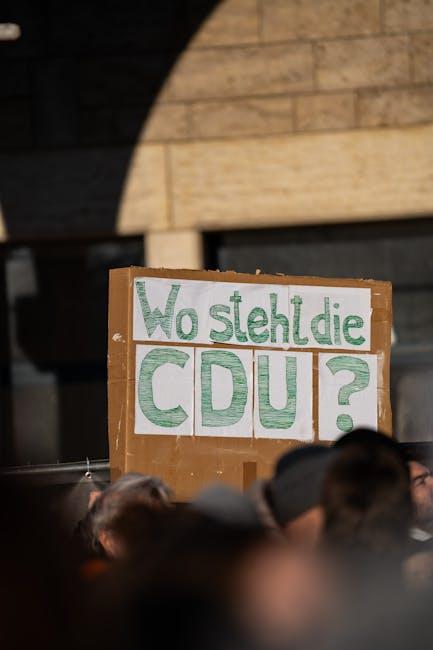
CDU Secures Historic Victory: Implications for German Politics
The Christian Democratic union (CDU) has clinched a historic victory in the recent elections, securing the largest share of votes as long-standing political changes began to reshape Germany. This electoral success marks a pivotal moment in which the CDU is poised to recalibrate its influence across all levels of government. Analysts highlight that the implications of this win could extend far beyond mere political power, potentially steering policies on immigration, economic recovery, and social issues in a markedly different direction. Key considerations include:
- Strengthened Coalition Dynamics: The CDU’s ample vote allows for the possibility of more robust coalition formations.
- Impact on Far-right Influence: With the Alternative for Germany (AfD) gaining traction, the CDU faces pressure to address voter concerns, preventing further rightward shifts.
- Policy Repositioning: The CDU may return to more traditional conservative stances, especially on economic reforms and social welfare programs.
this election also serves as a litmus test for the future of the German political landscape, as it reflects a populous grappling with socioeconomic challenges. The CDU’s strategy moving forward will likely focus on unifying various factions within Germany’s diverse political spectrum while simultaneously addressing the anxieties that have fueled the AfD’s rise. Engaging electorates with clear policy proposals could prove essential in re-establishing confidence in center-right politics, thus recalibrating public trust in governance. The potential outcomes of these shifts remain to be fully realized, but they undoubtedly promise to shape Germany’s political conversations in the years ahead:
| Potential Outcomes | Expected Effects |
|---|---|
| Increased CDU Portrayal | More influence in legislative processes |
| Strengthening Ties with Moderates | Coalition building with centrist parties |
| Policy Reforms on Immigration | aiming to address public concerns thoroughly |
AfD’s Surge: Analyzing the Rising Influence of the Right-Wing Party
The recent electoral outcomes in Germany have ushered in a dramatic shift in the political landscape, as the right-wing party, AfD (Alternative für Deutschland), continues to gain momentum among voters. Their appeal appears to stem from a combination of factors, including a growing discontent with traditional parties, heightened concerns over immigration, and a rising skepticism towards the European Union. The AfD’s ability to capitalize on these sentiments has led to significant gains in recent polls, making them a formidable player in German politics.
Key factors contributing to the AfD’s increasing prominence include:
- Economic Discontent: A pervasive sense of economic uncertainty and the burden of inflation have driven voters towards parties that promise radical change.
- Immigration Concerns: Striking a chord with segments of the population worried about cultural shifts and integration issues, the AfD has positioned itself as a staunch advocate for stricter immigration policies.
- Populist Rhetoric: Their messaging effectively challenges the status quo, appealing to a voter base that feels overlooked by established political factions.
- Communication strategies: Leveraging social media and grassroots campaigns, the AfD has adeptly mobilized support, particularly among younger demographics disillusioned with traditional politics.
As the electoral race continues, the rise of the AfD poses critical questions for Germany’s political stability and democratic values. Observers note that if the trend continues, the political establishment might potentially be forced to address the underlying issues that fuel such populism or risk further alienation from a significant portion of the electorate.

Strategic Recommendations for CDU: Navigating the New Political landscape
As the CDU navigates the aftermath of a significant electoral victory, it must strategically position itself in a rapidly changing political environment marked by a resurgent AfD. To maintain momentum and consolidate support, the CDU should focus on strengthening its core message while addressing the concerns that led to the AfD’s gains. Key actions include:
- Reinforcing Economic Policies: Emphasize pro-growth strategies that resonate with voters,especially in economically disadvantaged regions.
- Engaging with Grassroots Movements: Foster stronger connections with local communities through town hall meetings and direct engagement.
- Addressing Immigration and Security: Offer thorough policies that ensure public safety while promoting integration.
Additionally,the CDU needs to enhance its communication strategy to effectively counter the AfD’s narrative and present a united front. This can be achieved by:
- Utilizing Digital platforms: expand its online presence to reach younger voters and combat misinformation.
- building Coalitions: Work collaboratively with centrist allies and even disillusioned voters from other parties to form a broad base of support.
- Promoting Clarity: Increase transparency in political processes to build trust and differentiate from populist tactics.
wrapping Up
As Germany prepares for a new political landscape following the CDU’s significant electoral victory, the implications of these results will be closely scrutinized in the coming weeks. The rise of the AfD, now a formidable presence in the Bundestag, signals a shift in voter sentiment that could reshape the country’s political dialog and policy direction. With the CDU poised to lead,the challenge will be to address the diverse concerns of the electorate while navigating the complexities of coalition-building in a fragmented parliament. As these developments unfold, all eyes will be on how the new government tackles pressing issues, from economic recovery to immigration policies, and how it seeks to bridge the divides that have emerged within German society. The future of German politics hangs in the balance as the newly elected representatives begin their work in an increasingly polarized environment.


