

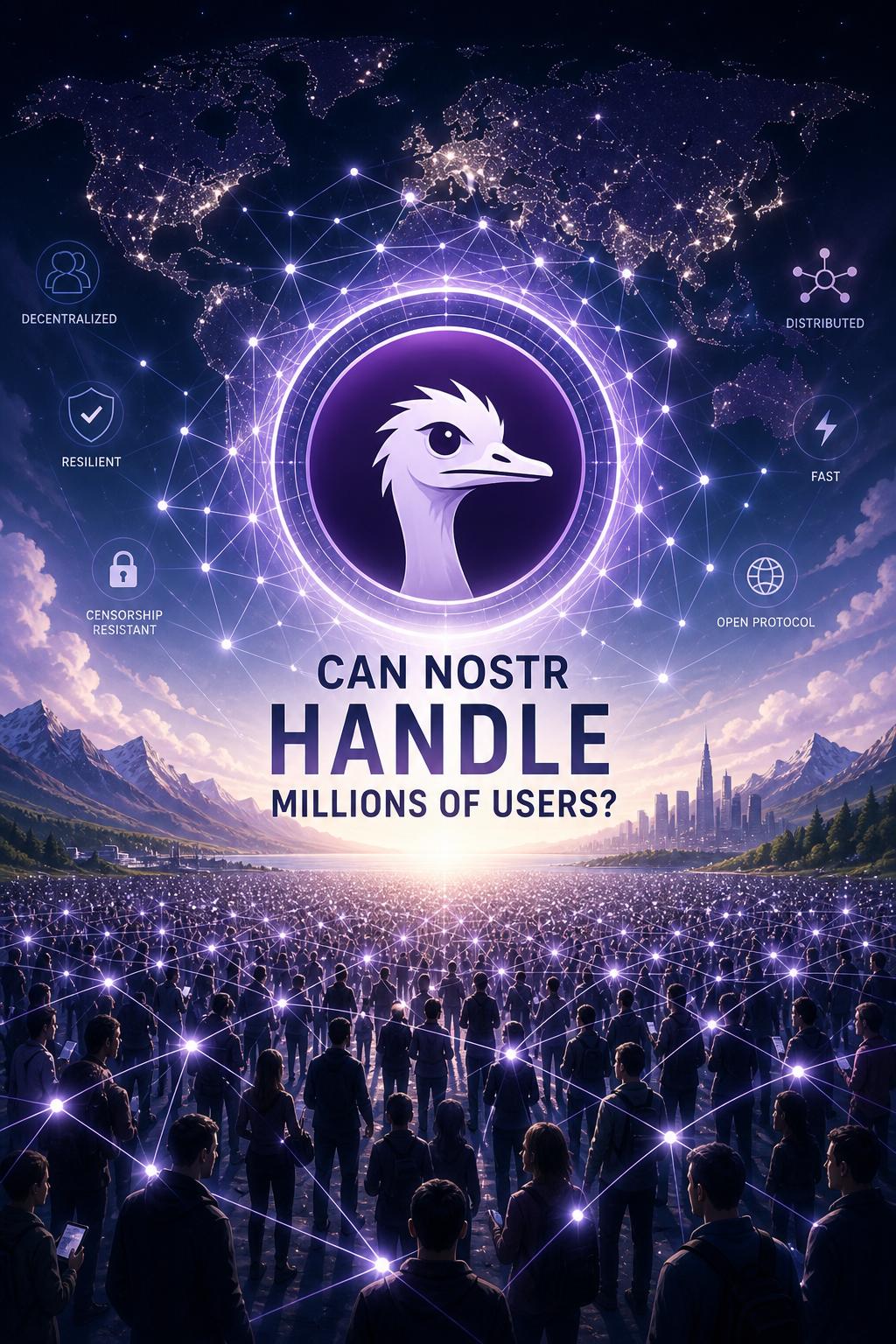
Scaling a decentralized protocol like Nostr to accommodate millions of users is a complex challenge that hinges on its unique architecture.Unlike customary social media platforms built on centralized servers, Nostr relies on a distributed network of relays, where users publish adn fetch content. This model inherently avoids single points of failure, but it also introduces questions about performance, data consistency, and resource management at massive scales.
Key factors influencing Nostr’s scalability include:
- Relay Capacity: Each relay acts as a node that stores and distributes events. The ability of relays to efficiently index and serve content determines throughput and latency, especially when handling billions of events generated by millions of users.
- Client Optimization: Clients need to intelligently query relays, employing filters and caching mechanisms to minimize bandwidth and processing overhead. Effective client-side strategies help reduce redundant data retrieval and enhance user experience.
- Network Growth: The expansion of relay networks and the incentivization mechanisms for relay operators can greatly influence horizontal scaling,effectively distributing load across numerous servers worldwide.
| Scalability Aspect | Challenges | Potential Solutions |
|---|---|---|
| Event Storage | rapid growth in event size and count | Sharding and archive relays for older data |
| Relay Bandwidth | High data transmission demands | Client-side filtering and subscription limits |
| Data Consistency | Synchronizing event state across relays | optimized event propagation protocols |
while current implementations demonstrate promising scalability on smaller to medium-sized networks, the full capability of Nostr to handle millions seamlessly remains a work in progress. Continued innovation in relay technology, consensus on data handling standards, and enhanced client functionalities will be crucial to unleashing Nostr’s potential as a truly global and resilient social network.
Create your Nostr Profile