
Itaú’s approach to tokenization
Brazil’s largest lender, Itaú, is moving further into tokenization as the country’s digital-asset market takes shape. Through Itaú Digital Assets, the bank has placed tokenized products alongside custody and digital-asset services, suggesting it sees the technology as part of its broader financial offering rather than a separate crypto experiment.
The idea is straightforward: a token can represent ownership of,or rights connected to,an underlying asset. But the technology alone is not enough. For tokenized assets to work in a regulated market, investors still need clear ownership records, reliable custody, compliance controlsand a defined process for settlement and transfers. Those are areas where an established bank can play a meaningful role.
For Brazil’s capital markets, the appeal is not necessarily to replace conventional investments. It is to give familiar products a more programmable digital format. Depending on the product and applicable rules, that could make it easier to issue, hold, administerand transfer certain assets while retaining the protections investors expect from regulated financial institutions.
Itaú’s measured position reflects a broader reality in digital finance: institutional adoption depends on trust as much as new technology. The most practical uses of tokenization are likely to focus on everyday market problems, including documentation, settlement, administrationand access to investments, rather than speculation alone.
What tokenized assets could mean for Itaú clients
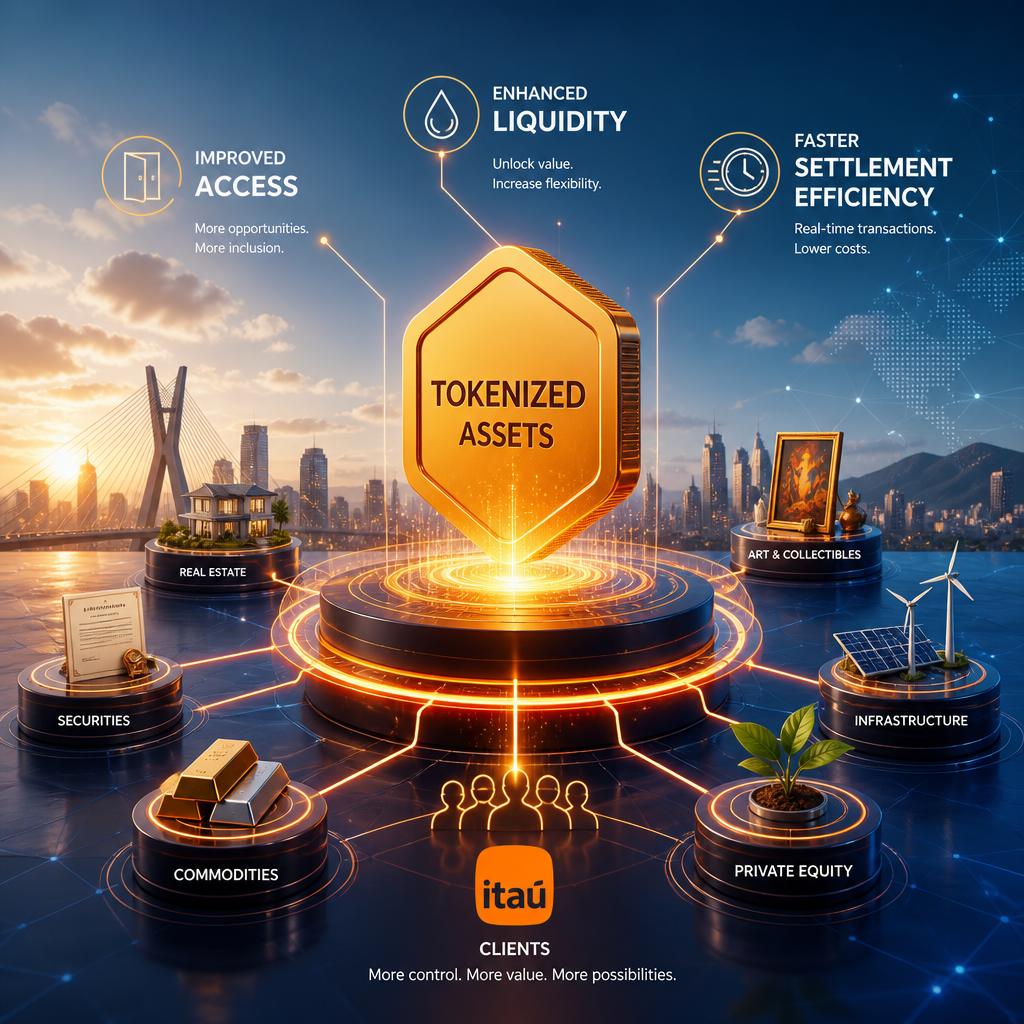
For Itaú clients, tokenized assets may offer a more flexible way to access eligible financial products. Representing an asset or contractual right in digital form could support smaller investment amounts in some cases and provide a clearer record of ownership and transfers.
That does not mean tokenization automatically creates liquidity. A market still needs willing buyers and sellers, suitable product designand appropriate trading arrangements. What tokenization can do is reduce some of the friction around issuing assets, updating ownership records, processing transfers, and producing reports.
The potential benefit is a shorter, more transparent path from a client’s investment decision to final settlement. Traditional transfers can involve several systems, document reviews, custodial updates, and delayed confirmations. A tokenized structure may bring parts of that process closer together, while still requiring investor verification, suitability checks, custody safeguardsand audit trails.
In that sense, Itaú’s move deeper into tokenization is less about replacing the financial system than improving how parts of it operate. If the model develops successfully, the value will come from making established products easier to manage and more accessible without compromising the controls that regulated markets rely on.

