

Understanding the Fundamentals: Bitcoin and Fiat Currency Defined
At its core, bitcoin is a decentralized digital currency that operates on a technology known as blockchain.Unlike conventional currencies, which are issued and regulated by central banks, Bitcoin is created thru a process called mining, where powerful computers solve complex mathematical problems. This process not onyl secures the network but also adds new coins into circulation at a predetermined rate, ensuring a finite supply of 21 million coins. The decentralized nature of Bitcoin means it is not controlled by any government or institution, allowing for peer-to-peer transactions that occur directly between users without intermediaries.
In contrast, fiat currency refers to money that a government has declared to be legal tender, which means it must be accepted if offered in payment of a debt. Examples of fiat currencies include the US Dollar, Euro, and Japanese Yen. The value of fiat currency is largely based on public faith in the issuing governmentS ability to maintain economic stability, rather than a physical commodity like gold or silver. Central banks manage the supply of fiat money and can influence its value through monetary policy, including setting interest rates and engaging in open market operations.
The fundamental differences between Bitcoin and fiat currency highlight contrasting philosophies. While fiat currency reflects a centralized authority and is subject to inflationary pressures due to government decisions, Bitcoin aims to provide an option that is both deflationary and resistant to manipulation. Its blockchain technology establishes clarity and security, creating a trusted surroundings for transactions. As investors and users weigh these attributes,understanding the implications of both forms of currency becomes essential for navigating the financial landscape.
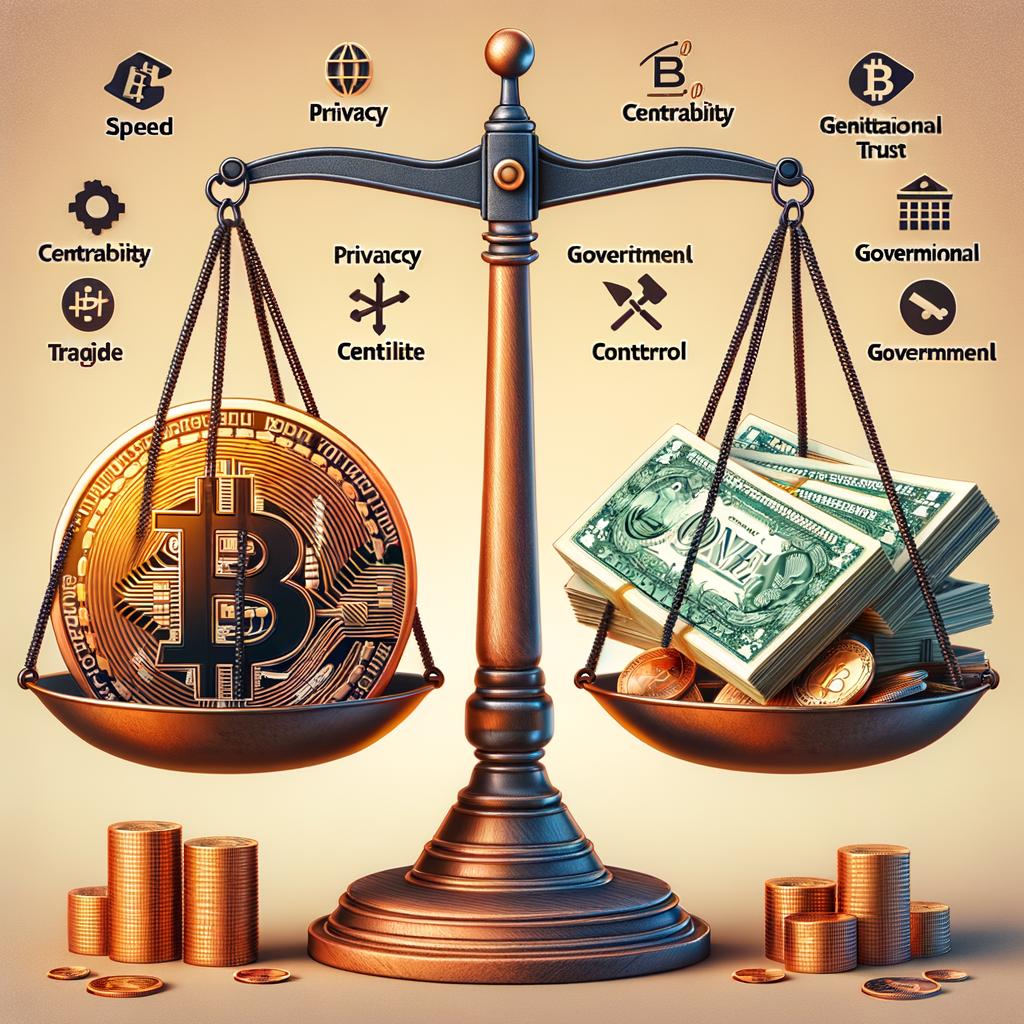
The Advantages and Disadvantages: A Comparative Analysis of Bitcoin and Traditional Money
Bitcoin and traditional money both offer unique advantages that cater to different needs and preferences. One of the primary advantages of Bitcoin lies in its decentralization, which eliminates the need for central authorities like banks or governments to validate transactions. This aspect enables enhanced privacy and security for users, who can conduct transactions without revealing personal information. Furthermore, Bitcoin operates on a global scale, allowing for borderless transactions that can be executed quickly and with lower fees compared to traditional banking systems.
However, Bitcoin is not without its disadvantages, especially regarding volatility. The value of Bitcoin can fluctuate dramatically in a short timeframe, making it a risky investment and a less stable medium of exchange for day-to-day transactions.In contrast, traditional money typically experiences less volatility, providing a more predictable value that consumers can rely upon for everyday purchases.Additionally, the regulatory uncertainty surrounding cryptocurrencies can deter some users, as they may be uncertain about the legal implications and future of digital currencies.
When it comes to accessibility and usability, traditional money has the upper hand. Cash transactions are instantly accessible to anyone, irrespective of their technological savvy, while bitcoin requires users to have some understanding of digital wallets and blockchain technology.This can create a barrier for those who are unfamiliar with or distrustful of technology. Conversely, Bitcoin’s potential for financial sovereignty appeals to those who seek an alternative to traditional banking, particularly in regions where banking services are limited or where there are concerns about currency inflation.
the Future Landscape: How bitcoin Could Reshape Currency Dynamics
Bitcoin has the potential to transform traditional currency dynamics substantially, introducing a new paradigm for value exchange. as a decentralized digital asset, Bitcoin operates independently of central banks and governments, which challenges the established monetary systems. This shift could lead to a more democratized form of currency, granting individuals greater control over their financial transactions. Key factors contributing to this transformation include:
- Decentralization: Eliminating the need for intermediaries.
- Transparency: The public ledger allows for verifiable transactions.
- Accessibility: providing financial services to unbanked populations worldwide.
The integration of Bitcoin into everyday financial practices could also encourage innovation in payment systems. Businesses and consumers alike may adopt Bitcoin for various transactions, creating a more inclusive economy. The technology behind bitcoin, particularly blockchain, offers improved efficiency and security that could streamline processes such as cross-border payments and remittances. By facilitating quicker and cheaper transactions, Bitcoin can disrupt traditional banking, resulting in changing dynamics for:
- International Trade: Reducing transaction costs and time delays.
- Consumer Payments: Enabling seamless peer-to-peer transactions.
- Smart Contracts: Automating agreements and reducing reliance on legal intermediaries.
Furthermore, the volatile nature of Bitcoin’s value presents both opportunities and challenges. Investors and businesses must navigate the risks associated with its price fluctuations, which can affect wider economic stability. However,as cryptocurrency laws and regulations evolve,clearer frameworks could mitigate these risks,fostering a more predictable environment for Bitcoin use.This gradual maturation of Bitcoin could ultimately lead to:
- Widespread Adoption: Businesses integrating Bitcoin as a standard payment option.
- Regulatory Clarity: Encouraging institutional investment.
- Increased Trust: Building confidence among consumers and businesses alike.
as we stand on the precipice of a financial revolution, the duel between Bitcoin and fiat currencies is more than just a clash of currencies; it is a clash of ideologies. Bitcoin’s promise of decentralization and individual sovereignty contrasts sharply with the centralized control that defines traditional fiat systems. As each side presents its case, the implications for consumers, businesses, and governments deepen.
The volatility that frequently enough characterizes Bitcoin raises questions about its viability as a stable medium of exchange. Meanwhile, fiat currencies, despite their stability, face challenges from inflation and geo-political tensions that could undermine their value. The regulatory landscape continues to evolve, as governments grapple with how to integrate cryptocurrencies into existing frameworks without stifling innovation.
Ultimately, the future of currency will likely not be a binary choice between Bitcoin and fiat but rather a coexistence of both, each serving different needs in an increasingly digital economy. As we navigate this complex terrain, it is essential to remain informed and adaptable, understanding that the evolution of money is a reflection of our own values, priorities, and the ever-changing nature of global commerce. The journey has just begun, and every advancement will shape how we perceive and utilize currency in our daily lives.

