

Executive Summary: Current Price Dynamics and Key Metrics
Price action over teh most recent sessions shows consolidation following the prior directional move, with intraday ranges contracting and realized volatility trending lower - a signal that market participants are awaiting fresh catalysts. Key metrics observed at the time of analysis include:
- 24‑hour price change: modest,indicating short-term equilibrium between buyers and sellers;
- 7‑day price change: larger divergence than 24‑hour,highlighting recent momentum shifts;
- 24‑hour volume: moderate to elevated,suggesting participation remains sufficient to move price on catalyst-driven flows;
- Market capitalization vs. realized capitalization: consistent with a market that has rotated from speculative spikes toward longer-term holding behavior;
- Short‑term volatility (30‑day): contracting, implying lower probability of immediate large-range moves absent an external shock.
Technical and on‑chain indicators present a mixed but actionable picture: moving averages are converging and momentum indicators are near neutral, while derivatives metrics show slightly skewed positioning that could amplify directional moves on a break of key levels.Priority items to monitor for near‑term directional bias include:
- Net exchange flows: sustained inflows would increase downside pressure; sustained outflows support accumulation narratives;
- derivatives open interest & funding rates: rising open interest with positive funding signals leverage to the long side; negative funding can indicate shorting pressure;
- Immediate technical levels: watch for a decisive break of short‑term support to confirm downside continuation or a break above recent resistance to resume upside momentum;
- Macro and ETF catalysts: scheduled macro prints or large spot/ETF flows have the potential to flip the current low‑volatility regime into a directional breakout.
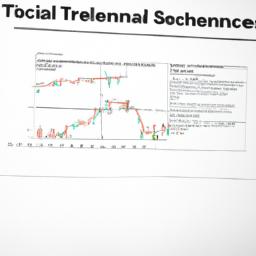
Technical Analysis: Trend Structure, Support/Resistance, and Momentum indicators
Trend structure should be evaluated across multiple timeframes to distinguish primary direction from shorter-term noise: confirm higher-highs/higher-lows for an uptrend or lower-highs/lower-lows for a downtrend, and validate with trendline slope and moving averages (50/200 EMA) as dynamic references. Key horizontal levels are defined by clustered pivots and volume nodes; a decisive break above resistance with expansion in volume and momentum often converts that level into support on a successful retest, while failed breakouts accompanied by negative divergence signal potential traps and range continuation.
- Support zones: prior lows,high-volume nodes,and Fibonacci retracement confluence.
- Resistance zones: prior highs, supply clusters, and psychological round numbers.
- Momentum indicators: RSI, MACD, and on-balance volume used for confirmation and divergence detection.
Momentum indicators should be used as confirmation tools rather than primary signals: look for RSI/momentum crosses that align with price structure (e.g., bullish RSI support during higher-low formation) and use MACD histogram expansion to confirm trending moves. Monitor volume and VWAP for institutional participation; declining volume on advances or bullish price with weakening momentum increases the probability of a pullback to defined support, while convergent price, volume, and momentum increases the statistical odds of sustained continuation past resistance.
On-Chain and Market Microstructure Signals: Supply, Exchange Flows, and Whale Activity
Supply-side dynamics remain a primary on-chain signal for assessing potential directional pressure. Changes in circulating supply driven by vesting schedules, staking/locking behavior, and protocol-issued inflation alter available float and should be monitored against realized supply trends. On-chain metrics that reliably correlate with short-to-medium term market impact include:
- Circulating vs. Total Supply – divergence indicates restricted float from vesting or burn events.
- Staked/Locked Supply – proportion removed from tradable liquidity reduces immediate sell-side depth.
- Exchange Reserves - balances held on major custodial platforms signal available sell or buy pressure.
- Large Transfer Count – frequency of transfers above a threshold can indicate accumulation or distribution by institutions.
- Net Flow (Exchange In/Out) - persistent inflows typically precede selling pressure; sustained outflows indicate accumulation.
These variables should be analyzed both in levels and in rate-of-change terms to differentiate one-off events from regime shifts in supply availability.
Market microstructure evidence from exchange flows and large-address activity provides higher-frequency signals about imminent liquidity and volatility changes.Sharp increases in net exchange inflows from whales or custodial wallets often precede widened spreads and price declines when on-book liquidity is shallow; conversely, coordinated large withdrawals and accumulation by top addresses reduce circulating supply and can precede price recognition. Monitoring the concentration of holdings among top addresses, the timing and destinations of >threshold transfers, and the balance between CEX and DEX flow gives insight into whether orders will hit order books or migrate to OTC/over-the-counter channels.Together, these metrics inform short-term expectations for liquidity, volatility, and the marketS capacity for orderly price revelation.
Macro Drivers and Regulatory Developments Shaping Short- and Medium-Term Outlook
Macro conditions continue to be the primary short-term throttle on BTC price dynamics: changes in the expected path of central-bank policy, moves in real yields, and shifts in US dollar liquidity materially alter demand for risk assets, including Bitcoin. Elevated real interest rates increase the chance cost of holding non-yielding assets and have historically correlated with downside pressure on BTC,while easing policy or slowing rate-hike expectations tend to restore risk appetite and support rallies. Near-term price sensitivity will be highest around scheduled macro prints (CPI, PCE, employment) and central-bank communications; medium-term direction will reflect whether tightening (balance-sheet runoff, persistent higher-for-longer rates) or a return to easier settings becomes the dominant regime, with spillovers from growth data, fiscal deficits and geopolitical shocks modulating the amplitude of moves.
Regulatory developments are the principal medium-term structural driver becuase they change institutional access, custody risk, and retail onboarding costs; clarity tends to compress risk premia and unlock capital, while punitive enforcement or restrictive legislation raises friction and episodic volatility. Key items to monitor include:
- Spot ETF approvals and inflows (affecting custody demand and visible institutional allocation);
- Custody and banking access rules (influencing on-/off-ramp liquidity and exchange reserves);
- Stablecoin and AML/KYC frameworks (shaping payment use-cases and transfer costs);
- Cross-jurisdiction enforcement actions and licensing regimes (driving regional flow divergences and operational risk).
Together, macro and regulatory signals determine whether bitcoin behaves primarily as a high-beta risk asset in the near term or progressively de-risks as infrastructure and policy certainty expand over the medium term, so traders and allocators should weight short-term macro event risk against the trajectory of institutional adoption and legal certainty when sizing positions.
today’s Bitcoin market is characterized by elevated volatility, mixed on-chain signals, and continued sensitivity to macroeconomic and regulatory developments. Price action reflects a tug-of-war between buyers responding to accumulation signals and sellers reacting to short-term risk events; derivatives markets show episodic leverage but no sustained directional consensus. On-chain indicators such as transaction activity and exchange flows provide useful context but do not yet point to an unequivocal trend continuation or reversal.
Key takeaways: market direction remains data-dependent rather than narrative-driven; liquidity and funding conditions in derivatives venues can accelerate moves; regulatory announcements and macro releases continue to act as catalysts; and shorter-term technical setups should be interpreted alongside longer-term on-chain health and adoption metrics.
For market participants: traders should align position sizing and time horizon with the observed volatility and liquidity conditions; medium- and long-term investors should weigh on-chain fundamentals and adoption signals against broader macro risks. Risk management-stop-loss discipline, diversification, and monitoring leverage across counterparties-remains essential.
What to watch next: daily and weekly price structure, exchange netflows, funding rates and open interest in futures, mining/hash rate trends, development activity, and major macro/regulatory calendars. Changes in any of these areas can materially alter the probability distribution of future outcomes.
the analysis presented here is a snapshot based on current data and should not be interpreted as investment advice. Continued monitoring and objective reassessment as new data arrive will be necessary for anyone seeking to navigate Bitcoin’s evolving market landscape.