
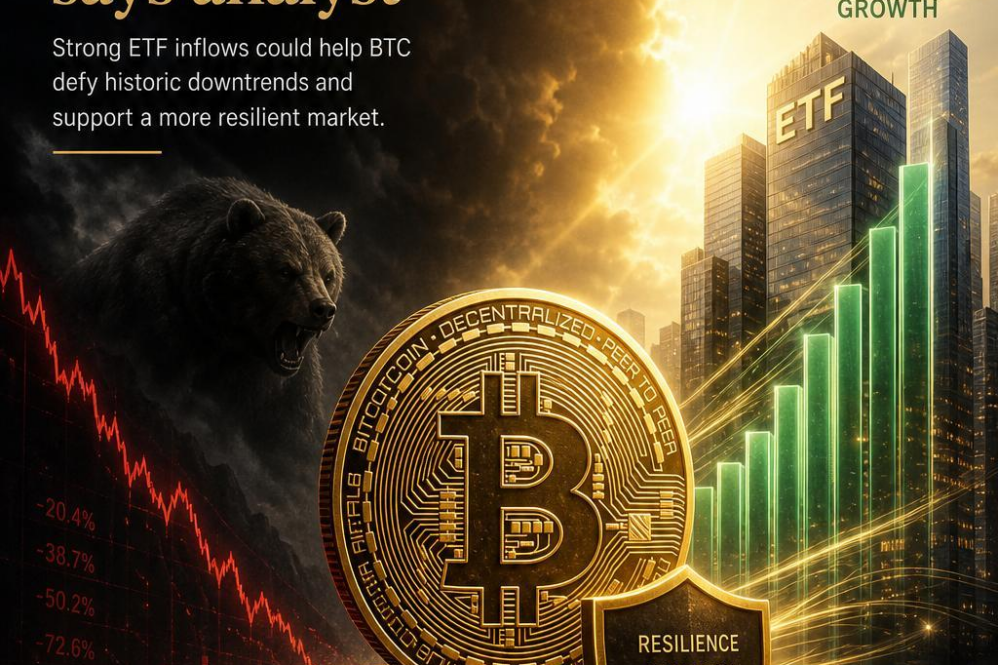
Bitcoin poised to defy historic bear market trends through rising ETF inflows
Recent increases in inflows to Bitcoin exchange-traded funds (ETFs) suggest a potentially notable divergence from historical bear market patterns. Traditionally, Bitcoin has experienced significant price declines during prolonged downturns, often coinciding with reduced institutional interest and outflows from investment vehicles.However, the sustained or rising inflows to Bitcoin ETFs indicate that investor demand within regulated, accessible financial products remains resilient. This dynamic highlights the evolving nature of cryptocurrency investment, where established financial instruments may influence market behavior differently compared to earlier cycles dominated primarily by retail trading.
It is importent to recognize that ETF inflows alone do not guarantee market performance, but they can provide valuable insight into investor sentiment and capital allocation trends. Bitcoin ETFs offer a regulated means for institutional and retail investors to gain exposure to the asset without directly holding it, which can affect liquidity and market participation. at the same time, other factors such as broader economic conditions, regulatory developments, and technological advancements continue to interplay with these flows, contributing to the complexity of assessing Bitcoin’s market trajectory during periods traditionally classified as bear markets.
Analyst examines the impact of increasing ETF investments on Bitcoin’s price stability
As interest in Bitcoin Exchange-Traded Funds (ETFs) grows, analysts are closely considering how increased ETF investments might influence Bitcoin’s price stability. ETFs, which are investment funds traded on stock exchanges, allow investors to gain exposure to Bitcoin without directly owning the cryptocurrency. This mechanism can introduce new liquidity into the market, potentially smoothing price fluctuations by enabling a broader range of participants to enter and exit positions more efficiently. By channeling conventional capital through regulated financial instruments, ETFs may help bridge gaps between conventional financial markets and the cryptocurrency ecosystem.
However, while ETFs can contribute to enhanced market participation, their impact on Bitcoin’s price stability is not without limitations. Factors such as market sentiment, regulatory developments, and underlying Bitcoin network dynamics continue to play significant roles in price behavior.Additionally, ETFs track the price of Bitcoin rather than influence its intrinsic supply or demand. Therefore, while ETFs may provide added structure and accessibility, they function within a complex system where multiple variables interact to shape price movements. Analysts emphasize the importance of monitoring these interconnected elements to understand the broader implications of ETF investment trends on Bitcoin’s market stability.
Strategic recommendations for investors amid evolving market dynamics and ETF growth
As the Bitcoin market continues to develop alongside increasing interest in exchange-traded funds (ETFs), investors are presented with a complex landscape that demands careful consideration. ETFs can provide new avenues for market participation by offering regulated, accessible investment vehicles that track the value of cryptocurrencies without requiring direct asset ownership. This could enhance liquidity and attract a broader range of market participants, but investors should remain aware of the structural differences between ETFs and direct cryptocurrency holdings, such as custody arrangements and regulatory oversight, which may influence both risk profiles and trading dynamics.
In navigating these evolving market dynamics, investors must balance the potential benefits of emerging financial products with the inherent volatility of digital assets. Thorough analysis of market trends, regulatory developments, and underlying technology is critical to informed decision-making. While ETFs may contribute to market maturation and increased institutional involvement, they do not eliminate risks associated with cryptocurrency markets, including price fluctuations and regulatory uncertainties. Maintaining diversified portfolios and staying informed through reliable sources will be critically important strategies as the ecosystem adapts to these transformative influences.