
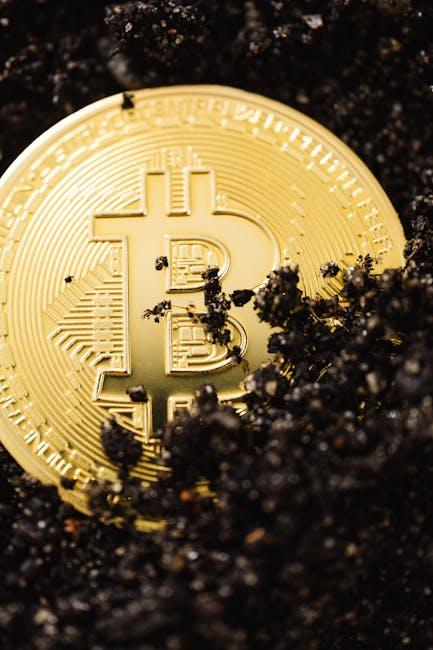
Unpacking the Bitcoin Plunge and broader Crypto Declines in Response to Geopolitical Strain
The recent downturn in Bitcoin prices, frequently enough viewed as a leading indicator for the cryptocurrency market, underscores the sector’s sensitivity to global geopolitical tensions. When international relations strain-such as through escalating conflicts or trade disputes-investors tend to seek refuge in traditional safe-haven assets like gold or U.S. dollars, prompting a sell-off in riskier assets including cryptocurrencies.This flight to safety reflects Bitcoin’s dual perception as both a digital store of value and a speculative investment, where uncertainty amplifies volatility. Historically, such events have triggered sharp declines, highlighting how external macroeconomic pressures can override the internal dynamics of blockchain-based economies.
Beyond bitcoin, the ripple effects extend to the broader cryptocurrency ecosystem, affecting altcoins and decentralized finance platforms that frequently enough correlate with Bitcoin’s movements. Geopolitical strains can disrupt global liquidity flows, indirectly impacting crypto exchanges and institutional adoption, as heightened risk aversion leads to reduced trading volumes and margin calls. However,the market’s decentralized nature provides some resilience; unlike centralized financial systems,cryptocurrencies operate on distributed networks that are less susceptible to single-point failures from geopolitical events. This duality-vulnerability to sentiment-driven sell-offs paired with structural independence-emphasizes the need for diversified strategies among investors navigating these interconnected global risks.
The Hormuz Standoffs Direct Influence on Oil Prices and Inverse Pressure on Digital Currencies
The Strait of Hormuz, a narrow waterway connecting the Persian Gulf to the Arabian Sea, serves as a critical chokepoint for global oil shipments, with a significant portion of the world’s crude oil supply passing through it daily. Geopolitical standoffs in this region,frequently enough involving tensions between major oil-producing nations and international powers,can disrupt maritime traffic and heighten supply concerns,directly exerting upward pressure on oil prices. This volatility stems from the market’s sensitivity to potential blockades or military escalations, which amplify fears of shortages and prompt traders to bid up futures contracts as a precautionary measure.
In the broader financial landscape, rising oil prices fueled by such Hormuz-related tensions can create inverse dynamics for digital currencies like Bitcoin, which are often viewed as alternative stores of value amid traditional market uncertainty. While elevated energy costs may strain global economic growth and fuel inflationary pressures-perhaps eroding confidence in fiat currencies-digital assets face their own vulnerabilities, including correlations with risk sentiment that lead to sell-offs during periods of heightened geopolitical risk. However, the relationship is not straightforward; cryptocurrencies’ decentralized nature offers some insulation from oil-specific shocks, though overall market liquidity and investor risk appetite can still transmit indirect pressures, underscoring the interconnected yet nuanced interplay between energy markets and emerging digital economies.
Key Insights into Ether and Solana Vulnerabilities Exposed by Global Energy Shifts
global energy shifts, including fluctuations in supply and increasing emphasis on lasting sources, have highlighted underlying vulnerabilities in major blockchain networks such as Ethereum, whose native token is Ether, and Solana. These networks primarily operate on proof-of-stake (PoS) consensus mechanisms, where validators stake their cryptocurrency holdings to secure the network rather than relying on energy-intensive proof-of-work mining. This transition, notably Ethereum’s move to PoS in recent years, was designed to reduce energy consumption considerably compared to earlier models. Though, as energy prices rise and geopolitical tensions disrupt traditional supply chains, the operational costs for maintaining decentralized infrastructure-such as data centers hosting validators-become more pronounced. for Ether and Solana, this underscores the need for robust, geographically diverse validator distributions to mitigate risks from localized energy shortages.
While PoS offers clear advantages in energy efficiency, it does not eliminate all exposure to global energy dynamics. Solana, known for its high-throughput design that processes thousands of transactions per second, depends on a network of validators running refined hardware, which still requires reliable electricity for continuous operation. Similarly, Ethereum’s ecosystem, with its vast array of decentralized applications, faces potential disruptions if energy-intensive regions host a disproportionate share of nodes. These insights reveal both the resilience of PoS systems in adapting to sustainability trends and their limitations in fully decoupling from broader energy market volatilities. Network participants must interpret these shifts as prompts for enhanced redundancy and energy-aware strategies, though the decentralized nature of these blockchains inherently limits centralized interventions.
Essential Investment Strategies to Mitigate Risks in Volatile Crypto and Commodity Markets
In volatile markets such as cryptocurrencies and commodities, where prices can fluctuate dramatically due to factors like regulatory announcements or global economic shifts, diversification emerges as a foundational strategy. By spreading investments across multiple assets-such as combining digital currencies with traditional commodities like gold or oil-investors can reduce the impact of downturns in any single sector. This approach, often referred to as portfolio diversification, helps mitigate systemic risks by ensuring that losses in one area may be offset by stability or gains elsewhere. However,it requires ongoing assessment to balance exposure,as over-diversification can dilute potential returns without fully eliminating volatility.
Another critical tactic involves employing risk management tools tailored to these markets, including stop-loss orders and position sizing. A stop-loss order automatically sells an asset when it reaches a predetermined price, limiting potential losses during sudden drops common in crypto trading. Similarly,allocating only a portion of capital to high-risk positions-known as position sizing-prevents overexposure that could jeopardize an entire portfolio. While these methods provide structured protection, their effectiveness depends on market liquidity and execution speed; in illiquid commodity markets, slippage can occur, underscoring the need for thorough research and a clear investment thesis before implementation.