
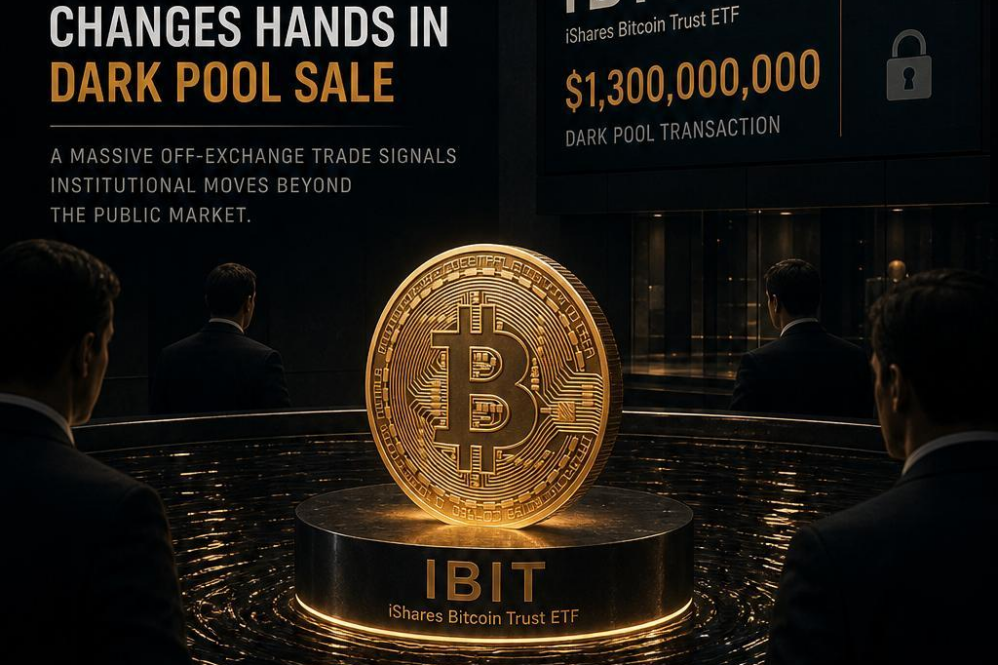
BlackRockS IBIT Dark Pool Transaction Analyzing Market Impact and Investor Reactions
BlackRock’s recent IBIT (Investable Bitcoin Trust) dark pool transaction has drawn attention within the cryptocurrency community due to its potential implications for market dynamics. Dark pool trading refers to private exchanges or forums for trading securities that are not accessible to the public, allowing large investors to execute sizable trades with limited market impact visibility. In this context, BlackRock’s involvement highlights the growing institutional interest in bitcoin-related products. Such transactions can offer liquidity and trading versatility but together reduce the openness that public order books provide, affecting how market participants interpret supply and demand signals.
The market impact and investor reactions to BlackRock’s IBIT transaction reflect the nuanced nature of institutional activity in digital asset markets. While the creation or movement of considerable Bitcoin positions in dark pools can indicate confidence or strategic repositioning by major financial entities,the lack of immediate public disclosure means that market participants must rely on secondary indicators,such as price action and volume trends,for insight. This dynamic can contribute to short-term volatility or price finding challenges but also underscores the evolving infrastructure and increasing sophistication of cryptocurrency trading among institutional investors.
understanding the Mechanics of Dark Pool Sales in Large Scale Asset Transfers
Dark pool sales refer to private transactions of large asset quantities, including cryptocurrencies, conducted outside conventional public exchanges. These non-transparent venues allow institutional investors to execute sizable trades without immediately revealing large market orders to the broader public. The mechanics involve matching buyers and sellers discreetly, which helps to minimize the market impact typically caused by large-scale asset transfers in open markets. In the cryptocurrency space, this can be notably relevant due to the market’s sensitivity to volume spikes and price fluctuations. By operating within dark pools, entities can strategically manage liquidity and price stability while transferring substantial holdings.
While dark pool transactions offer benefits such as reduced slippage and limited price disruption, they come with inherent limitations regarding market transparency. As these trades occur off-exchange and are not always reported in real time, they can obscure the full picture of market activity and liquidity conditions. This lack of immediate visibility poses challenges for regular market participants in accurately assessing supply and demand dynamics. Consequently, understanding the role and function of dark pool sales is critical for interpreting market movements, especially during periods of important asset reallocation by large stakeholders in the cryptocurrency ecosystem.
Strategic Recommendations for Investors Navigating dark Pool Transactions in Volatile Markets
Investors engaging in dark pool transactions within volatile cryptocurrency markets should prioritize complete due diligence and risk management strategies. Dark pools are private trading venues where large orders are executed anonymously, helping to reduce market impact but simultaneously limiting access to full order book transparency. Given the inherent price fluctuations in cryptocurrency markets, especially Bitcoin, participants must be aware that the lack of real-time public data in dark pool trades can complicate timely decision-making and risk assessment.Utilizing advanced analytical tools to track market sentiment and volume outside of these private exchanges can provide supplementary insights, although this facts remains indirect and should be integrated cautiously within broader investment frameworks.
strategic navigation of dark pool activity also requires an understanding of its potential implications for market dynamics. While these venues can contribute to improved liquidity and reduced volatility by absorbing large trades discreetly, they may also introduce additional layers of complexity regarding price discovery. Investors need to recognize that dark pool transactions occur away from public scrutiny, which can temporarily obscure supply and demand signals essential for assessing trend developments. Consequently,maintaining a diversified approach that balances exposure across different trading environments,combined with continuous monitoring of regulatory developments affecting dark pool operations,will better position investors to manage uncertainty and align their strategies with evolving market conditions.