
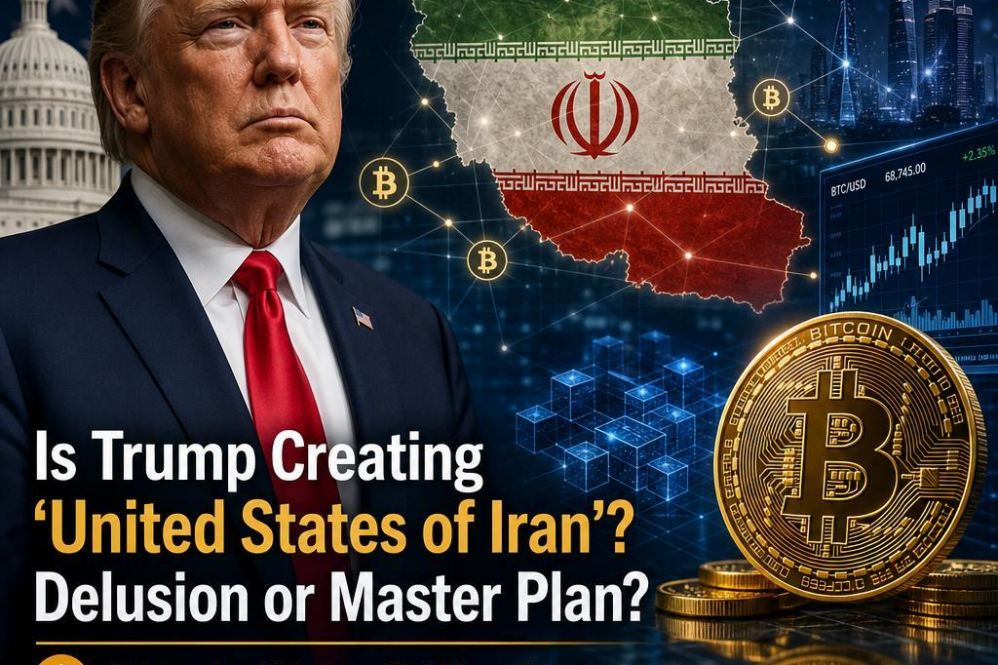
The Mirage of Sovereignty: Trump’s Iran Policy Through the Crypto Prism
In the realm of international relations, cryptocurrencies have emerged as potential tools for evading economic sanctions and maintaining sovereignty. The conflict between the United States and Iran provides a compelling case study to explore how blockchain technology can offer an choice financial framework outside conventional banking systems.
Iran has faced severe economic sanctions from Western nations due to its nuclear program and support for militant groups, restricting access to global financial markets and trade networks. Cryptocurrencies present a viable avenue for Iran to circumvent these restrictions by facilitating transactions that would otherwise be blocked through conventional channels. Though, the effectiveness of this strategy depends on various factors such as regulatory enforcement and adoption rates within Iran’s economy.
While cryptocurrencies promise economic sovereignty, they also come with significant challenges. Implementing blockchain solutions requires a robust technological infrastructure and user knowledge beyond basic trading activities. Additionally, while cryptocurrencies offer privacy features, they are not entirely immune to regulatory scrutiny and law enforcement efforts aimed at tracking illicit financial flows.
The Trump Administration’s Iran Strategy: A Critical Analysis of Economic Sanctions and Digital Currency Implications
During the Trump administration, the United States imposed stringent economic sanctions on Iran with the aim of compelling it to alter its policies regarding nuclear proliferation and support for terrorism. These measures were designed to isolate Iran economically by restricting access to financial markets, trade routes, and technology transfers essential for sectors like oil and automobile manufacturing.
The sanctions targeted traditional banking channels, pushing Iranian businesses and individuals towards alternative financial systems such as cryptocurrencies. The use of digital currencies presents both opportunities and risks for Iran’s economy in its efforts to evade sanctions and maintain international trade. However,the integration of blockchain technology complicates monitoring illicit activities due to the decentralized nature of cryptocurrencies.
Initiatives like Know Your Customer (KYC) regulations aim to enhance openness within crypto transactions but face significant challenges in tracking illicit financial flows through a decentralized network. This highlights broader implications for the perceived legitimacy and regulation of blockchain technologies globally as sanctioned entities explore digital currency options.
Navigating Geopolitical Turbulence: Bitcoin’s Resilience Amid US-Iran Tensions
As geopolitical tensions escalate between the United States and Iran, cryptocurrencies like Bitcoin demonstrate remarkable resilience in the face of political instability. The decentralized nature of Bitcoin makes it less susceptible to government-imposed restrictions compared to traditional currencies.
The inherent properties of anonymity and decentralization offer Bitcoin users a degree of freedom that is unmatched by conventional financial systems during times of political tension. Transactions on the blockchain are transparent yet secure, providing a level of privacy that traditional banking cannot match.
Despite ongoing geopolitical volatility, Bitcoin’s resilience underscores its potential as a store of value during economic uncertainty. As tensions rise between major world powers,investors increasingly view cryptocurrencies like Bitcoin not just as currencies but also as hedges against financial instability caused by political conflicts.

