
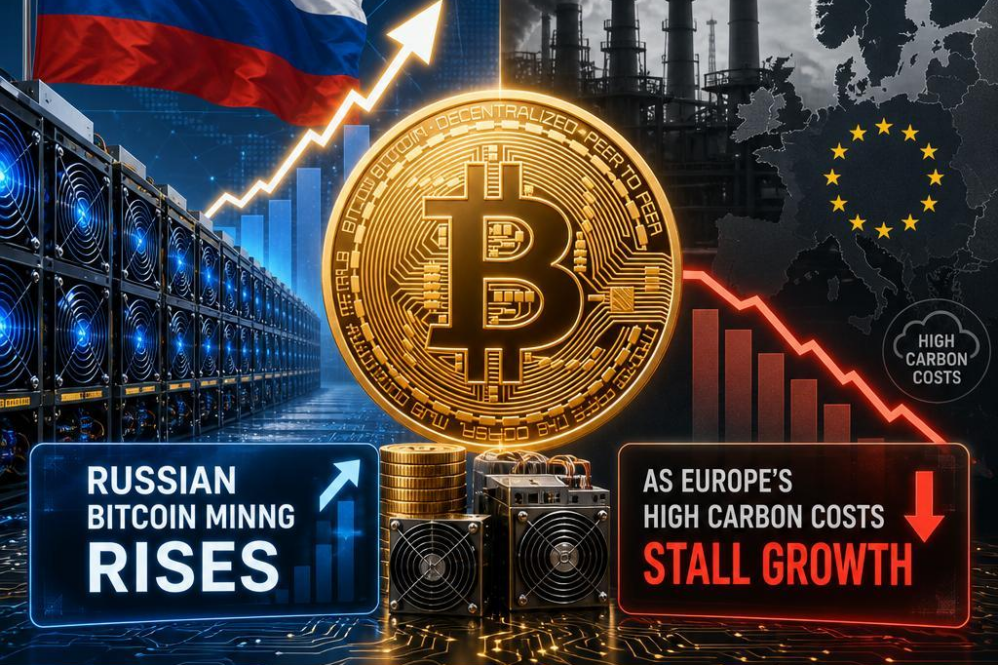
Increasing Carbon Costs Challenge European Bitcoin Mining
The escalating cost of carbon credits in Europe is putting significant pressure on Bitcoin mining operations that heavily depend on electricity from fossil fuels. As environmental regulations tighten across the European Union (EU), miners are witnessing a surge in operational expenses due to rising prices for carbon allowances.
This trend not only presents financial challenges but also underscores broader shifts towards sustainability and cleaner energy sources. Initially drawn by low electricity costs, often sourced from coal or natural gas, these mining operations now face new hurdles as regions enforce stricter environmental policies.
To adapt, some miners are exploring alternative locations with more favorable economic and regulatory conditions for their continued operation. Others are considering greener mining practices or adopting less power-intensive hardware solutions to minimize their carbon footprint.
Russian Bitcoin Miners Leverage Cheaper Energy Markets
Russian bitcoin miners are leveraging lower-cost energy markets to gain a competitive edge.In the cryptocurrency mining industry, where operational costs can determine profitability, accessing electricity at reduced rates is crucial.
Energy efficiency has become increasingly vital in the mining sector. Russian miners have identified favorable conditions with significantly lower electricity rates, such as regions relying on hydroelectric power or coal plants offering surplus capacity at discounted prices. This move not only enhances their margins but also underscores the strategic importance of energy infrastructure in the cryptocurrency world.
However, this trend is not without its challenges. High upfront costs for setting up mining farms and navigating complex regional regulatory landscapes are significant barriers. Geopolitical uncertainties can further impact long-term stability in these markets.Despite these hurdles, the influx of bitcoin miners into regions with cheaper energy supplies signals a strategic shift in how the industry optimizes performance and profitability.
Global Bitcoin Mining Shifts as Europe Enforces Stricter Regulations
The global landscape of Bitcoin mining has seen dramatic changes recently, with European countries leading regulatory reforms that could reshape the future of cryptocurrency operations within their borders. These changes aim to address environmental concerns and operational inefficiencies.
Europe’s push for stricter regulations reflects a broader international trend towards tighter oversight in the digital currency sector, driven by sustainability worries and financial stability risks. Some European nations are proposing bans or strict limitations on proof-of-work (PoW) mining due to its high energy consumption. These proposals pose significant challenges for miners currently operating under less restrictive frameworks elsewhere.
Mining operations may need to reassess their geographical strategies considering these developments. Miners could adapt by reducing power usage, embracing more enduring practices, or relocating to regions with looser regulations and favorable environmental policies. While such changes offer new opportunities for growth, they also introduce uncertainties about future regulatory landscapes that could impact long-term business models.
Expert Guidance for Navigating the Evolving Cryptocurrency Market
Experts recommend a cautious approach to navigating the changing cryptocurrency market. Understanding the dynamics of this volatile space is crucial, as prices fluctuate based on various factors such as regulatory changes and technological advancements.
Diversification within a cryptocurrency portfolio is essential for mitigating risks associated with relying too heavily on any single asset or technology. This involves being aware of different blockchain technologies and their underlying utility.
Staying informed about regulatory developments both domestically and internationally is vital,as these frameworks significantly influence the operational environment for cryptocurrencies. Keeping abreast of legal changes helps users navigate compliance challenges while seeking opportunities that align with current regulations.