

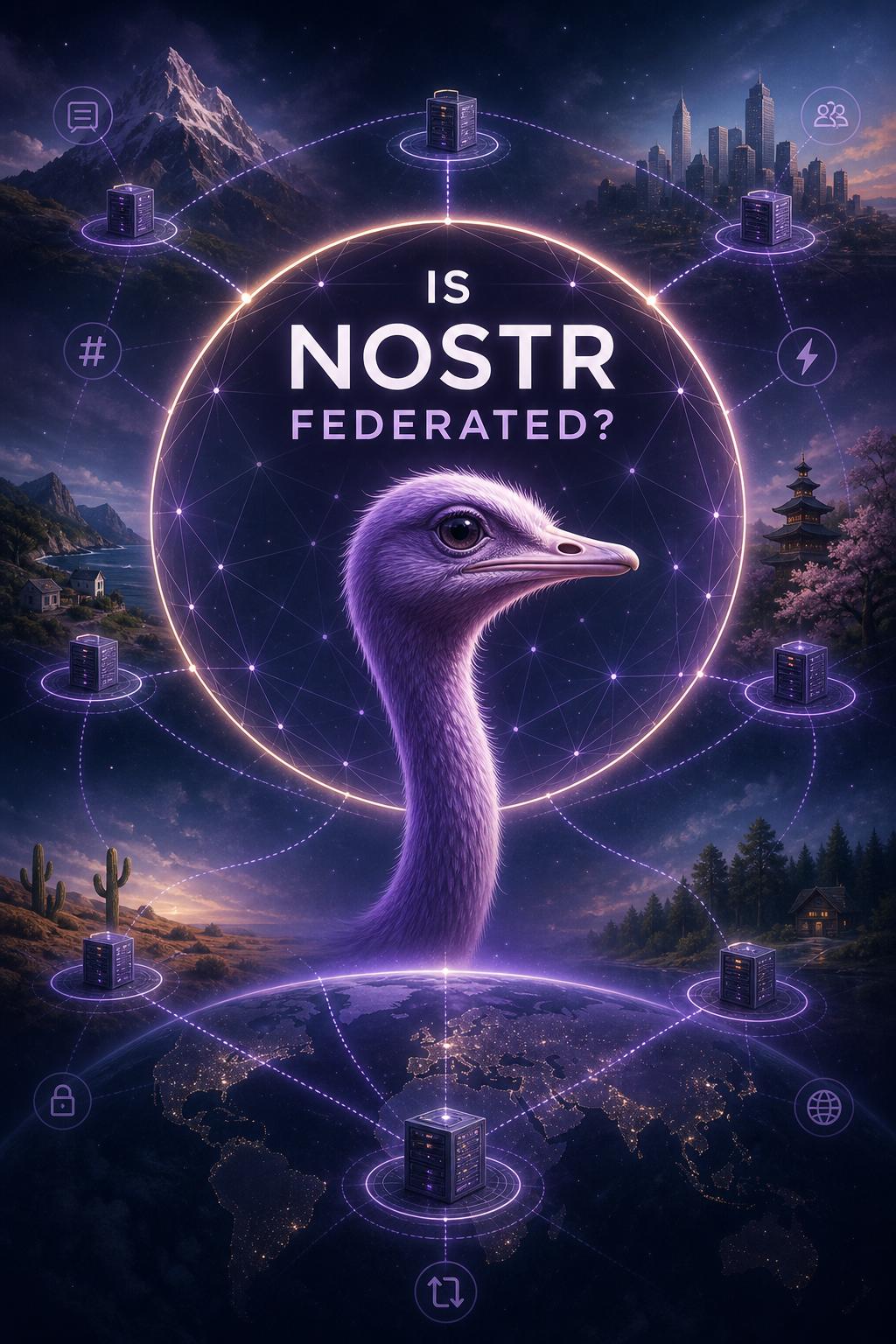
Nostr fundamentally diverges from traditional federated networks by adopting a distinct architectural ideology. Unlike federated systems, where multiple servers communicate under a shared protocol but maintain centralized control over their respective nodes, Nostr operates on a decentralized protocol where individual users directly interact with a network of relays. These relays are autonomous servers that host messages, but they do not impose restrictions or enforce consensus rules typical of federated nodes.
In federated networks, data flow typically involves synchronization and validation across trusted servers, creating a form of collective governance. Nostr,by contrast,disperses trust and duty through its simplistic relay-based model,enabling users to pick and choose which relays to connect with – frequently enough tailored by reliability,ideology,or specific content filters. This model enhances censorship resistance and aligns closely with a truly decentralized ecosystem.
- federated Networks: Controlled nodes,coordinated data sharing,shared governance
- Nostr: Independent relays,user-controlled subscriptions,no central authority
| Feature | Federated Network | Nostr |
|---|---|---|
| Node Relationship | server to server communication | user to multiple independent relays |
| Governance Model | Distributed,but coordinated | Fully decentralized,user-driven |
| Censorship Resistance | Moderate | High |
Understanding this distinction clarifies why labeling Nostr as federated is a misconception. It is better described as a decentralized relay network that empowers users with unprecedented control over their communication streams, sidestepping the structural limitations inherent in federated systems.
Create your Nostr Profile