

Hungary’s Regulatory Shift Marks a New Era for Cryptocurrency Oversight
Hungary’s regulatory environment for cryptocurrencies is undergoing a profound transformation as the authorities move away from routine crypto transaction checks. This shift signifies a decisive step towards aligning the country’s framework with broader European Union regulations, particularly in light of the upcoming implementation of the Markets in Crypto-Assets (MiCA) regulation. With the first MiCA license officially granted, the Hungarian government is signaling its commitment to fostering a transparent, secure, and innovation-friendly landscape for digital asset activities.
Key elements of this new oversight approach include:
- Streamlined licensing processes that reduce barriers for crypto service providers
- Enhanced consumer protection measures designed to bolster trust in the crypto ecosystem
- Rigorous compliance standards aligned with EU anti-money laundering and counter-terrorism financing protocols
| Regulatory Aspect | Previous Practice | New Framework |
|---|---|---|
| Crypto Checks | Mandatory, frequent transaction verifications | Repealed, replaced by license-based oversight |
| Licensing | Unregulated or fragmented | Centralized MiCA-compliant licensing |
| Consumer Safeguards | Limited and inconsistent | Comprehensive protective measures |
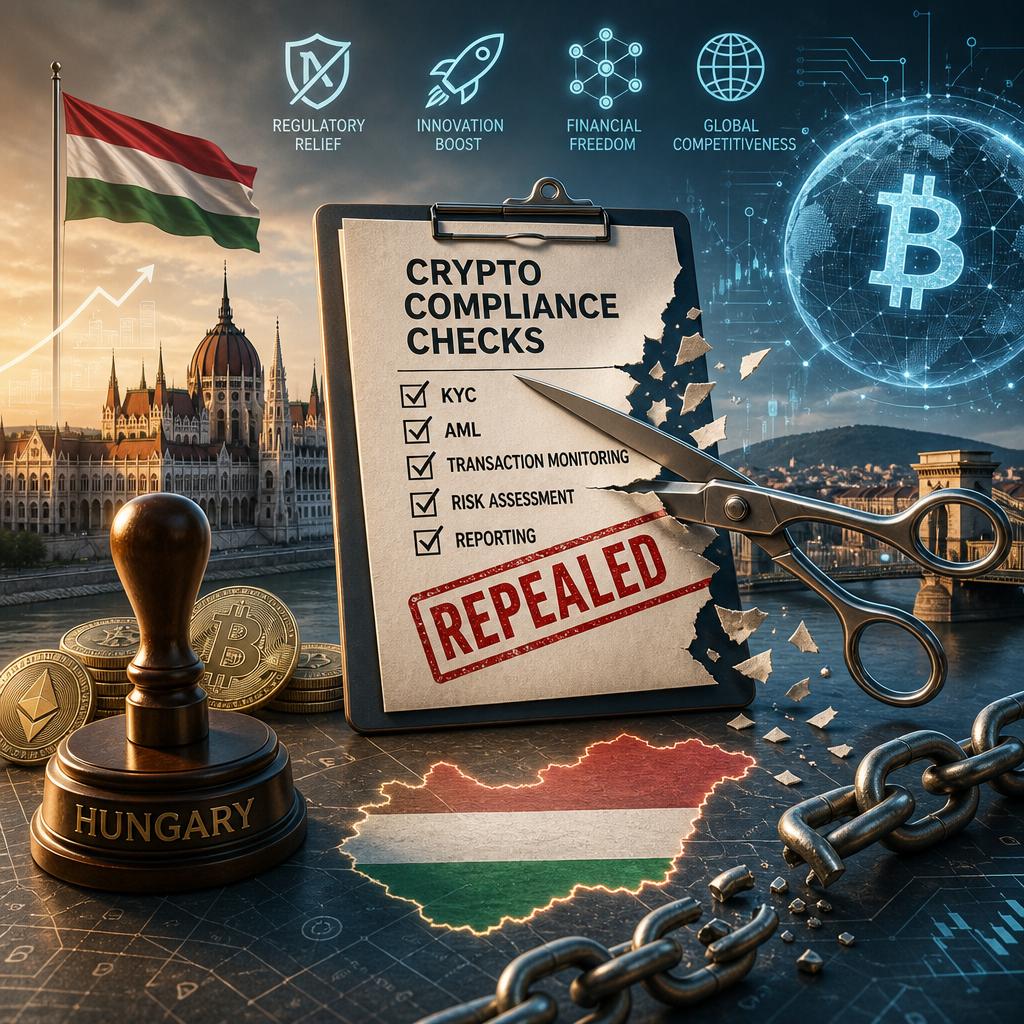
Detailed Analysis of Hungary’s Repeal of Crypto Compliance Checks
Hungary’s decision to rescind mandatory crypto compliance checks marks a significant regulatory pivot, positioning the country at the forefront of digital asset innovation within the European Union. This move eliminates the previously required due diligence procedures for cryptocurrency transactions, streamlining operations for market participants. By reducing bureaucratic hurdles, Hungary encourages a freer flow of crypto-related activities, potentially attracting a surge of fintech enterprises and investors seeking a more accommodating environment. The legislative change also reflects confidence in the newly introduced Markets in Crypto-Assets (MiCA) framework as a robust regulatory backbone, replacing fragmented national rules with a comprehensive EU-wide standard.
Key impacts of this repeal include:
- Enhanced market fluidity: Simplified processes reduce delays in transaction and onboarding procedures.
- Regulatory clarity: Aligns Hungary’s stance with MiCA, fostering cross-border crypto business consistency.
- Innovation incentives: Supports startups and established firms exploring blockchain and digital asset solutions.
| Aspect | Before Repeal | After Repeal |
|---|---|---|
| Compliance Checks | Mandatory for all crypto transactions | Removed for most scenarios |
| Regulatory Oversight | National rules with varied protocols | Unified by MiCA standards |
| Market Accessibility | Limited by complex requirements | Broadened access and faster processes |
Implications of the First MiCA License Issuance for the European Crypto Market
The authorization of the first MiCA license marks a pivotal advancement for the European crypto market, setting a clear regulatory precedent that reduces uncertainty for market participants. This milestone has already begun to reshape the landscape, as regulatory clarity fosters increased trust and engagement from both investors and service providers. Hungary’s decision to repeal its previous stringent crypto transaction checks exemplifies the confidence inspired by MiCA’s harmonized framework, promoting a more streamlined and efficient environment for crypto operations across the EU.
Key ramifications of this development include:
- Accelerated adoption of crypto services due to enhanced regulatory transparency
- Greater interoperability among EU member states’ crypto platforms under unified compliance standards
- Enhanced consumer protection balanced with innovation-friendly policies
- Heightened competition among service providers, encouraging improved offerings and security measures
| Before MiCA License | After First MiCA License | Impact |
|---|---|---|
| Fragmented national rules | Unified regulatory framework | Market consistency |
| Stringent, selective checks | Regulatory trust leading to relaxed national controls | Operational ease |
| High entry barriers for crypto startups | Clear authorization pathways | Market growth |
As Hungary’s removal of prior crypto checks demonstrates, the MiCA licensing not only simplifies compliance but also validates crypto as a legitimate asset class within the EU’s financial ecosystem. This evolution is anticipated to encourage other member states to revisit their regulatory policies, potentially leading to widespread liberalization in crypto oversight and fostering an environment conducive to innovation and economic expansion in the digital asset space.
Strategic Recommendations for Crypto Stakeholders in Response to Hungary’s Policy Changes
With Hungary’s recent repeal of mandatory crypto transaction checks and the issuance of the first MiCA (Markets in Crypto-Assets) license, stakeholders must recalibrate their approach to compliance and opportunity. Crypto businesses operating in the region should prioritize aligning their operations with the new regulatory framework, leveraging the reduced friction in transaction monitoring to optimize customer onboarding and transaction processing. This shift not only signifies a more open regulatory environment but also underscores the importance of robust internal controls to maintain transparency and trust under the MiCA licensing regime.
Investors and service providers are advised to adopt a proactive stance by:
- Monitoring policy updates closely to ensure ongoing adherence to evolving EU standards under MiCA.
- Enhancing risk management frameworks to capitalize on streamlined compliance requirements while mitigating potential operational risks.
- Engaging with regulatory bodies and industry groups to influence future policy development and stay ahead of compliance obligations.
By strategically adapting to Hungary’s policy pivot, crypto stakeholders can position themselves at the forefront of innovation and regulatory certainty within the European market.