

Note: the supplied web search results did not return material related to HBAR or Elliott Wave analysis. Proceeding to provide an original, analytical, journalistic introduction as requested.
Hedera’s native token, HBAR, has captured renewed attention from technical analysts as a higher-time-frame (HTF) Elliott Wave count increasingly points toward a sustained bullish phase. Viewed across weekly and monthly charts, the HTF interpretation frames the current advance as part of a primary five‑wave impulse-an arrangement that, if validated, implies materially higher price objectives and a multi‑month to multi‑quarter trend extension. Market structure, growing momentum indicators and expanding participation on intermediate timeframes lend weight to the bullish thesis, yet the count’s validity hinges on a handful of clear technical confirmations and the absence of disruptive corrective invalidation.
For traders and investors, the practical takeaway is twofold: first, monitor the structural signals that confirm an advancing impulse-specifically, a decisive break above the recent swing high accompanied by rising volume and improving breadth on higher timeframes. Second, treat the HTF Elliott projection as a probabilistic roadmap rather than a deterministic forecast; key invalidation levels (the primary corrective lows) and overlapping wave relationships will determine whether the “super bullish” scenario remains intact.In short, the HTF Elliott Wave count on HBAR offers a compelling bullish narrative, but disciplined confirmation, risk controls and attention to on‑chain and macro catalysts remain essential.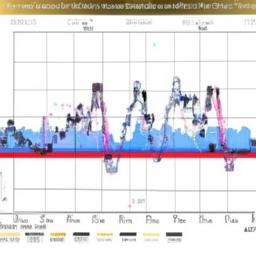
HTF Elliott wave count indicates a sustained bullish impulse with mapped target zones, key resistance levels and triggering catalysts
The HTF elliott-wave analysis shows HBAR in the midst of a clean five-wave impulse unfolding from the prior cycle low, suggesting a structurally sustained bullish phase rather than a short-lived spike. Wave relationships and fibonacci confluence map out layered target corridors: Conservative Zone: 0.618-1.00 extension (measured move, early participation); Primary Target: 1.272-1.618 extension (institutional accumulation window); Extended Bull Run: 2.0+ extensions on a breakout and momentum confirmation. Key technical invalidation sits beneath the wave-4 boundary – a decisive break below that structure would negate the primary impulse scenario. Traders should monitor volume profile and mid-HTF RSI divergences to validate impulsive expansion versus a corrective re-labelling.
Near-term resistance clusters and catalysts will dictate the pace: expect friction at the 0.382-0.618 retracement confluence, then at major psychological round numbers where liquidity pools frequently enough rest. Critical resistance pillars:
- R1: initial supply zone – watch for failed retests or volume-backed clears
- R2: Structural barrier aligned with higher Fib extensions - breakout needed for extension targets
- Invalidation: Close below wave‑4 invalidates the impulse count and forces re-assessment
Below is a compact monitoring table to aid decision-making:
| Resistance | Trigger | Signal to Watch |
|---|---|---|
| R1 (near-term) | Local liquidity cluster | High-volume breakout candle |
| R2 (mid-term) | Fib extension confluence | Sustained retest with rising demand |
| Invalidation | Wave‑4 breach | Re-label to corrective structure |
Primary catalysts that could accelerate the impulse include network adoption milestones, major staking or liquidity announcements, favorable macro risk-on windows (crypto ETF flows, BTC strength), and concentrated accumulation by large holders.Conversely, macro shocks or bearish on-chain liquidity events would raise the odds of a corrective re-labelling – manage position sizing and use the mapped zones above as objective gateways for trade scaling and risk control.
Actionable trade plan including optimal entry windows,stop loss placement and tiered profit taking aligned with the HTF structure
Optimal entry windows align with the HTF Elliott-wave map: favor a controlled entry on a HTF corrective leg (the 38-61.8% retracement of the prior impulse) or, for lower-risk confirmation, on a decisive breakout and retest above the wave-3 trigger zone.Position size should be resolute by a fixed risk-per-trade rule (e.g., 1-2% of capital) and adjusted for volatility; place the primary stop-loss just beyond the HTF invalidation point - commonly below the wave‑1 low or the corrective structure – or use a volatility-adaptive stop (≈1.5× ATR) if price action is choppy. If price violates the invalidation level,exit decisively and reassess the wave count rather than averaging into a broken structure.
Tiered profit-taking and trade management are driven by HTF projection targets and structure-based momentum shifts: scale out into strength – first tranche at the 1.00 measured move (equal-wave target),second at the 1.618 extension, and a final tranche at the HTF resistance band or cycle highs where liquidity clusters. Apply a mechanical trail: move stop to breakeven after the first tranche is filled, then trail using swing lows or a 0.5× ATR to lock profits as the trend progresses. Sample allocation and execution rules below provide a concise playbook to convert the HTF wave thesis into disciplined trades.
- entry A: Retracement buy (38-61.8% Fibs) – aggressive
- Entry B: Breakout + retest – conservative
- Stop: Below HTF invalidation / wave‑1 low or 1.5× ATR
- Profit scale: 30% / 40% / 30% at 1.00 / 1.618 / HTF resistance
- Risk rule: 1-2% capital risk per trade, adjust position size accordingly
| Slot | Trigger | Stop | Target | Allocation |
|---|---|---|---|---|
| Entry 1 | 38-61.8% retrace | Below wave‑1 / 1.5× ATR | 1.00 measured move | 30% |
| Entry 2 | Breakout & retest | Below retest low | 1.618 extension | 40% |
| Hold | Trend persistence | Trail to breakeven → swing stops | HTF resistance / cycle high | 30% |
Macro and on chain confirmations, liquidity and volume dynamics, and position sizing guidelines to manage risk and maximize upside
Macro alignment and on‑chain confirmations are converging in a way that supports the HTF bullish wave count: long‑term liquidity injections, sustained off‑chain demand, and a rising accumulation signal on wallets with 1-10M HBAR indicate structural support beneath price. On‑chain metrics show a steady increase in active addresses and a tightening supply held by long‑term holders,which complements macro drivers such as risk‑on flows into crypto and a declining correlation with macro rates.
- Active address growth: corroborates incremental accumulation.
- Supply concentration: fewer coins moving from cold storage = lower tail risk.
- Macro flow alignment: cross‑asset risk appetite reinforces upside scenarios.
Liquidity, volume dynamics and position sizing must be treated tactically: liquidity clusters on the order book and spikes in traded volume at key Fibonacci extensions validate Elliott impulsive targets, while thin liquidity below major support warns of swift corrections. Traders should adopt a layered sizing framework that scales exposure on confirmed impulses and trims into friction zones; practical guidelines include conservative core sizes of 1-3% of portfolio with tactical add‑ons of 0.5-1.5% per validated impulse, and stop placement beyond structural invalidation points rather than arbitrary percentages.
- Core allocation: 1-3% (long‑term conviction).
- Tactical adds: 0.5-1.5% per confirmed wave impulse.
- Stops: set beyond wave invalidation/support bands to avoid noise exits.
The Way Forward
Note on sources: the web search results supplied did not return material related to HBAR or Elliott Wave analysis,so the following outro is written from an analytical,journalistic viewpoint without additional sourcing from the provided links.
the higher-time-frame Elliott wave count for HBAR paints an unmistakably bullish picture: the structure on weekly/monthly charts favors an extended impulsive advance, with successive Fibonacci-derived targets suggesting meaningful upside if the current wave relationships hold. That bullish scenario is supported by confluence at key inflection zones-volume clusters, prior supply pockets, and momentum divergence readings-that, together, increase the probability of a sustained trend continuation rather than a mere corrective bounce.caveats are essential. Elliott Wave is a probabilistic framework, not a deterministic forecast. The bullish count remains contingent on price respecting critical invalidation levels and continuing to produce confirming sub-wave structure. A failure to sustain support at designated levels or an abrupt broad-market risk-off event would force a reassessment and open the door to deeper corrective scenarios.For traders and longer-term holders alike, a disciplined approach is prudent: await clear structural confirmation on the chosen time frame, size positions commensurate with risk tolerance, and place stops beneath the established invalidation points. Monitor volume, volatility, and macro liquidity conditions-these factors will determine whether the bullish thesis evolves into a dominant narrative or requires revision.
As HBAR progresses, analysts should track wave completeness, reaction to resistance clusters, and any divergence between price and momentum indicators.we will continue to monitor developments and update our counts as new evidence emerges. For now,the HTF Elliott Wave count signals a favorable bias for bulls-but with the measured skepticism and risk controls any serious market participant should demand.