

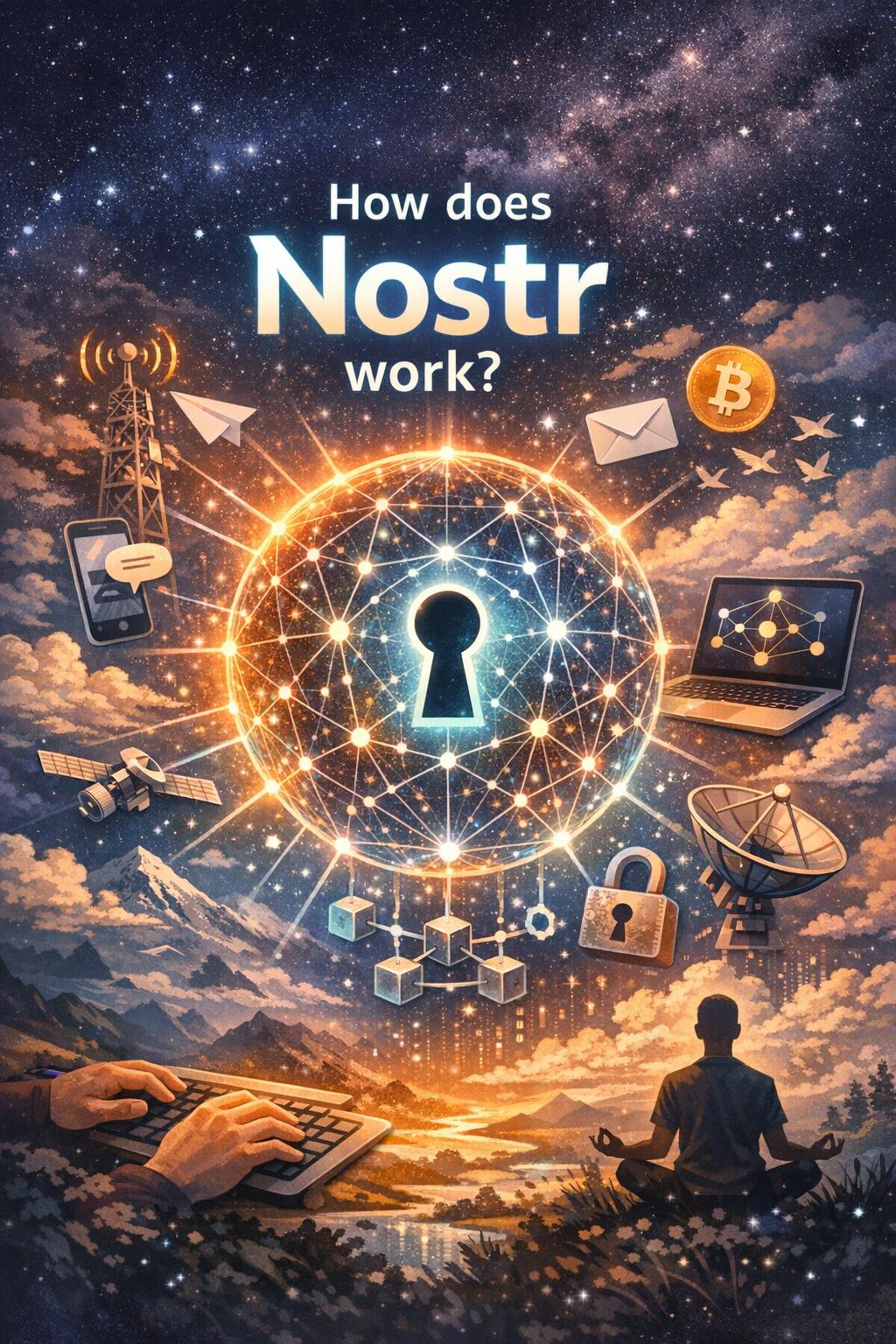
Nostr operates as a decentralized protocol designed to facilitate censorship-resistant social media interactions through a minimalist yet robust infrastructure. Instead of relying on centralized servers, Nostr utilizes a network of self-reliant relays that distribute messages, making it virtually impossible for a single entity to control or suppress content.Users create cryptographic key pairs-public and private keys-which serve as their digital identity and credentials within the ecosystem. Every post or interaction is signed with the user’s private key, ensuring authenticity and integrity.
this architecture fosters decentralization by allowing users to connect to multiple relays together, aggregating content from various sources without entrusting any singular platform. the protocol supports a simple format where each event-such as a post or a reaction-is encapsulated with metadata including timestamps and event types. This open standard encourages interoperability across diverse clients and applications, promoting a resilient surroundings for social networking outside customary platforms.
- Cryptographic identity: Secures user actions and prevents impersonation.
- Distributed relays: Enable message propagation without central control.
- Event-based format: Simplifies interaction and interaction protocols.
| Component | Function | Benefit |
|---|---|---|
| Public/Private Keys | Identify and authenticate users | Ensures secure, verifiable interactions |
| Relays | Distribute events across the network | Prevents censorship and single-point failures |
| Events | Encapsulate user content and actions | Enable standardized data exchange |
Create your Nostr Profile