

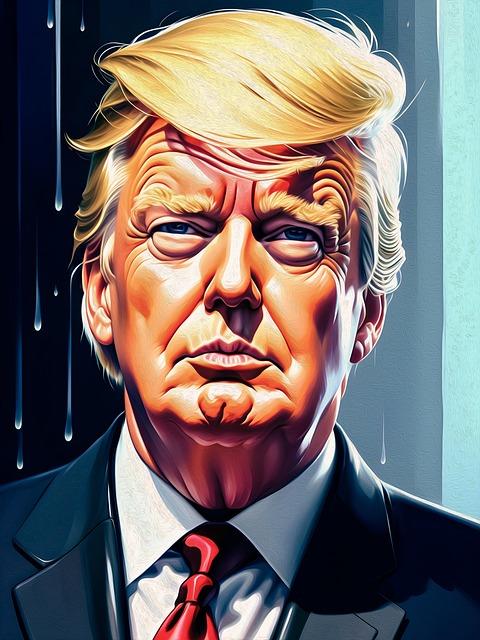
Which headline tones and SEO keywords work best for coverage of tariffs, tokenization, and utility-token markets?
Note on sources: the provided web search results did not return material relevant to trade policy, Donald Trump’s tariffs, or utility tokens (they link to unrelated Google support pages). The article below is therefore based on the headline options you supplied and on general,widely understood connections between trade policy and crypto/utility-token markets. if you want citations or to incorporate a particular source (such as, the Animoca Brands / Yat Siu piece you referenced), tell me and I will integrate it.
Article
Title: Choosing the Right Headline for Coverage of Trump’s Tariffs and Utility tokens
Introduction
As debate over trade policy re‑intensifies, headlines must do more than attract clicks: they must frame complex interactions between trade policy and emerging digital-asset markets wiht appropriate tone and precision. The intersection of presidential trade actions (including tariffs) and tokenization – especially utility tokens that represent access, rights, or functionality rather than pure investment vehicles – presents an opportunity for reporters, analysts, and industry commentators to translate policy shifts into market implications.
Below are ten headline options that cover a range of tones and audience expectations, followed by a proposal of the top three picks (by tone), rationale for each, short SEO variants, and suggested lead sentences and metadata to use directly in publishing workflows.
The headline options (grouped by tone)
- Neutral / Analytical
- From Tariffs to Tokens: What Trump’s Trade moves Mean for Crypto
- How Trump’s Tariffs Could Rewire the Utility Token Landscape
- Trade Policy Meets Crypto: Why Trump’s Tariffs Matter for Utility Tokens
- Provocative / newsy
- Trump, Tariffs and Tokenization: How Trade Policy Could Reshape Utility Tokens
- Trade Wars, Token wars: The Ripple Effect of Trump’s Tariffs on Utility Tokens
- Trump vs. Trade: Winners and Losers in the Utility Token Economy
- Tariffs, Tokens, and Tactics: Navigating Crypto Under trump’s Trade Agenda
- Creative / Narrative
- Tariff Tangles and Token Trails: Trump’s Impact on the utility-Token Market
- From steel to Smart Contracts: The Unexpected Link Between Trump’s Tariffs and Utility Tokens
- Trump, Tariffs & Tokenization: The New Frontiers of Trade and Crypto
Top 3 picks (by tone) – with rationale and publishing-ready materials
1) Neutral / analytical pick
Headline: From Tariffs to Tokens: What Trump’s Trade Moves Mean for Crypto
Rationale: Clear, balanced, and appropriate for policy briefs, mainstream outlets, and readers seeking description rather than hype. It signals an explanatory piece linking macroeconomic policy to crypto markets.
Suggested meta title: From Tariffs to Tokens – What Trump’s Trade Moves Mean for Crypto
Suggested meta description: A concise analysis of how tariff policy may influence utility-token issuance, supply chains for tokenized businesses, and investor behavior.
URL slug suggestion: tariffs-to-tokens-trump-crypto
Suggested social blurb: How could tariffs reshape the crypto landscape? A clear look at policy mechanisms and implications for utility tokens.
Suggested lead paragraph: As U.S. trade policy evolves, ripple effects extend beyond commodities and manufacturing to the world of tokenization. This analysis examines mechanisms by which tariff measures can influence utility-token economics,tokenized supply chains,and the strategic choices of crypto firms.
2) Provocative / newsy pick
Headline: Trade Wars, Token Wars: The Ripple Effect of Trump’s Tariffs on Utility Tokens
Rationale: Grabs attention and frames the story as dynamic and consequential – suited to news desks, op-eds, and outlets seeking higher engagement.
Suggested meta title: Trade Wars,Token Wars – Tariffs’ ripple Effect on Utility Tokens
Suggested meta description: Examining how tariff-driven costs,supply-chain disruption,and policy uncertainty can reshape the utility-token market.
URL slug suggestion: trade-wars-token-wars-tariffs
Suggested social blurb: Trump’s tariffs aren’t just about steel and cars – they may change how utility tokens function and fare. Read the analysis.
Suggested lead paragraph: Recent tariff actions have reignited debates about supply chains,costs and economic sovereignty. Less visible, but no less crucial, are the likely implications for utility tokens: from token economics to platform strategy, trade policy could produce winners and losers in the nascent token economy.
3) Industry / technical pick
Headline: Trump, Tariffs and Tokenization: How Trade Policy Could Reshape Utility Tokens
Rationale: Signals a deeper, more technical exploration of mechanisms (cost structures, on-chain vs off-chain dependencies, regulatory risk) – best for industry journals, developer communities, and investor research.
Suggested meta title: How Trade Policy Could Reshape Utility Tokens
Suggested meta description: Technical review of the economic and operational channels through which tariffs affect token-based platforms and token design.
URL slug suggestion: trade-policy-tokenization-utility-tokens
Suggested social blurb: A technical look at how tariffs influence token economics, platform architecture and token governance.
Suggested lead paragraph: Tariff policy alters the cost structure of cross-border goods and services and can shift where and how firms choose to tokenize operations.This technical review maps the direct and indirect transmission channels from tariff measures to utility-token design, issuance strategies, and platform governance.
why these headlines matter (concise analytical frame)
- Signaling: Headlines set reader expectations – neutral titles invite analysis, provocative titles emphasize urgency, technical titles attract domain experts.
- Framing: The chosen headline determines whether the piece is read as policy analysis, market news, or technical guidance.
- SEO and discoverability: Including keywords such as “tariffs,” “Trump,” “utility tokens,” “tokenization,” and “trade policy” improves relevance for readers researching these intersections.
Shorter / SEO‑focused versions by target audience
- General public / mainstream readers
Short headline: How Trump’s Tariffs Could Affect Crypto
SEO keywords: Trump tariffs crypto,impact of tariffs on crypto,utility token effects
- Investors / business readers
Short headline: Tariffs and Token Economics: Investment Implications
SEO keywords: token economics tariffs,crypto investment trade policy,utility token market impact
- Developers / blockchain professionals
Short headline: Trade Policy and token Design: Technical Impacts
SEO keywords: token design tariffs,tokenization supply chain,blockchain governance trade policy
- Journalists / analysts
Short headline: From Tariffs to Tokens – Policy Channels to Watch
SEO keywords: trade policy tokenization,tariffs crypto analysis,regulatory trade crypto effects
Recommended tags and keywords (useful for CMS and distribution)
- Primary tags: tariffs,trade policy,Donald Trump,utility tokens,tokenization,crypto,blockchain
- Secondary tags: supply chain,token economics,governance,regulation,market impact
Sample 2-3 sentence openers for each top tone (ready to publish)
- Neutral/analytical opener: As U.S. trade measures evolve, they create indirect but material pressures on tokenized businesses. This piece explains the principal channels – costs, supply-chain reorientation, compliance risk – through which tariffs can influence utility-token issuances and valuations.
- Provocative/newsy opener: Tariffs may no longer be confined to raw materials and manufacturing – their effects could ripple into the tokenized economy. From rising operational costs to shifting cross-border user behaviors, trump’s tariff agenda may redraw the competitive map for utility-token projects.
- Industry/technical opener: tariffs alter input costs,onshore/offshore decisions,and cross-border settlement dynamics – all factors that feed into token economics and platform architecture. This technical briefing maps these channels and suggests design and governance responses for token issuers and platforms.
Editorial and distribution tips
- Contextualize with concrete examples: Cite specific industries where tariff impacts are immediate (manufacturing, hardware for IoT, gaming hardware) and explain how tokenized services tied to these industries could be affected.
- Use data and scenario analysis: Where possible,include modeled cost impacts and scenario outcomes (best case / worst case).
- Separate technical detail from broader narrative: Include a short explainer box defining “utility token” for general readers, and a technical appendix or sidebar for developer readers.
- Update dynamically: trade policy changes quickly; publish a dated “policy snapshot” and update as new tariffs or regulations are announced.
Next steps / call to action
If you want a headline shortened or optimized for SEO, tell me:
- the primary target audience (general public, investors, industry/technical readers, policymakers, journalists), and
- desired length (short social headline, article headline, or meta title).
I can then produce:
- three alternative headlines optimized for that audience,
- a 100-160 character meta description,
- a 50-80 character SEO title,
- a 1-2 sentence opening paragraph tailored to the audience,
- and recommended tags/keywords.
would you like me to produce those assets for a particular audience now?
Donald Trump’s resurgence on the political stage, an escalation in global tariff tensions, and a tightening regulatory environment for digital assets are converging to challenge crypto’s oldest claim: that it can remain beyond the influence of established powers. for Animoca Brands co‑founder Yat Siu, the phase of youthful defiance is ending. In a wide‑ranging discussion about trade, token engineering and U.S. policy, the Hong Kong‑based executive contends that crypto must adjust to a more hostile macro backdrop, move past speculative excesses and demonstrate concrete economic utility – or risk being regulated, taxed and sidelined.
Trump’s Crypto Pivot Places the Industry at a Political Crossroads
The former U.S. president’s sudden warming to Bitcoin and other digital assets has elevated crypto from a niche technical discussion to a central theme in economic and trade policy. Trump’s statements now tie crypto to issues such as capital flight, tariff-driven de‑dollarization, and strategic rivalry with china, signaling that blockchain networks are now viewed as instruments of geopolitical competition. This comes as global crypto market capitalization has fluctuated near roughly $1.6-$1.9 trillion in 2025, with Bitcoin commonly accounting for about 45-55% of the total. In that context, any shift in U.S. policy – whether toward clearer rules or renewed antagonism – can materially affect liquidity, institutional flows, and the prospects for utility tokens that underpin Web3 ecosystems.
Analysts note that Trump’s rhetoric dovetails with worries over proposed tariffs, since higher trade friction can boost demand for borderless settlement rails such as Bitcoin and stablecoins. at the same time, industry veterans like Animoca Brands’ co‑founder Yat Siu insist crypto must “grow up”: projects can no longer depend on speculative token rallies or regulatory ambiguities. Instead, resilient utility tokens will need to show explicit on‑chain functions – governance, access rights, in‑game ownership, or data entitlements – supported by transparent tokenomics and compliance‑aware architectures.For newcomers, this shift makes it meaningful to separate:
- Monetary networks such as Bitcoin, focused on censorship‑resistant value storage and settlement
- Smart contract platforms (such as, Ethereum and option L1s) that host DeFi, NFTs and Web3 services
- Regulated stablecoins that serve as on‑ramps between traditional finance and blockchain rails
- Utility tokens whose worth derives from genuine platform usage rather then pure speculation
Trump’s stance presents both openings and hazards for the sector. A White House friendlier to crypto could accelerate congressional action to define commodity vs. security status for tokens, clarify KYC/AML responsibilities, and create a federal framework for stablecoin issuance – all areas that have long stalled U.S. growth. Conversely, turning Bitcoin and blockchain into partisan issues risks making core infrastructure a political football, producing policy whiplash after election cycles and complicating long‑range planning for miners, exchanges and on‑chain services. Savvy participants therefore pay less attention to headlines and more to tangible signals: draft laws, enforcement behavior at the SEC and CFTC, and how trade policy might shape cross‑border crypto flows.
Practically, this is an inflection point for both retail and professional users. New entrants shoudl double down on security hygiene – use hardware wallets, enable multi‑factor authentication, and trade on reputable venues – while learning basics like on‑chain fees, hash rate and liquidity depth before committing meaningful capital. More advanced investors and builders can meet the “grow up” challenge by choosing jurisdictions with clear licensing regimes, stress‑testing token models under multiple regulatory scenarios, and prioritizing metrics such as daily active addresses, protocol revenue, and on‑chain volume rather than short‑term price gyrations. As Trump’s posture thrusts crypto into debates over tariffs, digital trade and financial sovereignty, projects that blend technical resilience, regulatory preparedness and authentic user value will likely outperform, regardless of which party holds power.
Tariffs,Trade Tensions and the Evolving Digital Asset Landscape
With tariff talk and the risk of trade confrontations returning to center stage,digital assets are being reexamined both as hedges and as policy targets. During Trump’s first term, tariff escalations with China (2018-2019) coincided with spikes in Bitcoin trading activity across East Asian venues, as capital sought alternatives to dollar‑ or yuan‑based instruments. While correlation does not prove causation, several exchange datasets recorded double‑digit jumps in BTC/USDT volumes around tariff announcements, highlighting how geopolitical uncertainty can divert flows into permissionless, cross‑border instruments. Today, fresh talk of import duties and “economic nationalism” raises the same dilemma: will cryptocurrencies act like digital gold – a macro hedge – or behave more like high‑beta tech stocks tied to risk appetite?
Meanwhile, policymakers increasingly treat blockchain rails as both strategic assets and potential vulnerabilities. U.S. regulators have stepped up scrutiny of stablecoins that function as dollar proxies in global crypto markets, the European Union has implemented MiCA, and China continues to promote its central bank digital currency, the e‑CNY, while restricting much retail crypto trading. This fractured regulatory map changes how utility tokens and gaming assets traverse borders. as Animoca Brands’ Yat Siu warns, in an era of tariffs and trading blocs, projects based purely on speculation are vulnerable to stricter enforcement on securities laws, sanctions and consumer protections – whereas tokens with tangible in‑app utility and transparent governance have a better shot at fitting into compliant, cross‑jurisdictional platforms.
For investors and practitioners, the implications are practical and immediate. First, digital assets can no longer be treated as if they operate in a regulatory vacuum; trade policy and compliance standards increasingly determine liquidity, listings and on/off‑ramps. To navigate this,users should prioritize fundamental utility over hype,favoring networks where tokens are needed to pay gas fees,unlock services or participate in governance. second, portfolio construction must reflect crypto’s shifting macro role: rather than assuming Bitcoin will always move opposite tariffs or equities, a more cautious stance is to treat BTC as a diversifier within a broader allocation while watching indicators like correlation coefficients with the S&P 500, on‑chain volume in major trading hubs, and the share of trades settled via stablecoins – which, on several major exchanges, has risen to more than half of spot volume in recent years.
Looking forward, trade frictions are likely to accelerate experiments in tokenized trade finance, cross‑border settlement rails and sector‑specific utility tokens – particularly in gaming, infrastructure and supply‑chain traceability – even as oversight tightens.Builders should thus engineer token models that separate governance, payments and speculation to survive regulatory review.Users should adopt an institutional mindset for risk management, including:
- Spreading exposure across layer‑1 and layer‑2 ecosystems rather than concentrating in a single jurisdiction‑exposed asset.
- Choosing exchanges and DeFi protocols with robust KYC/AML practices and clear legal disclosures.
- Stress‑testing portfolios for scenarios such as new tariffs, tightened capital controls, or sanctions that could impair liquidity or custody.
In this environment, opportunities for Bitcoin and other digital assets remain large – but so are policy and execution risks.The market is shifting from a narrative‑driven era to one where regulatory resilience, demonstrable real‑world use and macro awareness will increasingly decide which projects survive across trade cycles and geopolitical shifts.
Utility Tokens Under Intensifying Regulatory Scrutiny
As global regulators ramp up enforcement, utility tokens are encountering scrutiny that increasingly resembles the attention once focused on ICO‑era securities tokens. In the United States, the SEC continues to assert that many exchange‑listed tokens meet the Howey test for investment contracts even when marketed as “pure utility.” Parallel pressures are appearing in Europe under MiCA and across Asia as licensing rules for trading platforms tighten. Projects are now being forced to explain not only the purpose of their tokens – access to services, governance or in‑game items – but also the underlying economic architecture: token issuance, vesting timetables and profit expectations. By contrast, Bitcoin, lacking a central issuer and characterized by a fixed supply and censorship resistance, often falls into a different regulatory bucket as a commodity‑like digital asset, highlighting divergent risk profiles within crypto.
Market dynamics have intensified this regulatory squeeze. Following the speculative excesses of the 2020-2021 bull run, on‑chain metrics across many smart contract platforms show declines in daily active addresses and falling token velocity for numerous application tokens, even as core layer‑1 assets like BTC and ETH maintain relatively stronger liquidity and institutional attention. Concurrent macro uncertainty – from shifting U.S. trade policy and renewed tariff debates to tighter global monetary conditions – has made authorities more alert to cross‑border capital movement over crypto rails.Voices such as Animoca Brands’ Yat Siu argue that “crypto finally has to grow up,” meaning token projects must meet the same compliance and consumer‑protection expectations applied to traditional fintech. Practically,that requires clearer disclosures,rigorous tokenomics and demonstrable real‑world utility rather than dependence on speculative trading volumes.
Investors and builders are thus recalibrating how they judge utility token models. Instead of selling narratives about outsized gains from token price increases, credible projects are stressing measurable usage and sustainable revenue streams. key evaluation criteria now include:
- On‑chain activity: increases in transactions, unique users and protocol revenue denominated in the native token.
- Economic sinks and demand: mechanisms such as token burns, staking for access, or mandatory spending that produce structural demand beyond speculation.
- Regulatory posture: whether the token has undergone legal review, modified distributions to avoid unregistered public offerings, or limited sales in high‑risk jurisdictions.
- Interoperability with major ecosystems: bridges or integrations with solutions like Bitcoin layer‑2 technologies and ethereum rollups, which grow the addressable user base and reduce single‑jurisdiction exposure.
Collected, thes factors increasingly determine whether a token can weather heightened oversight and recurrent market downturns.
Those new to crypto can adopt a more disciplined evaluation framework by first distinguishing between monetary assets such as Bitcoin – whose core value is scarcity, security and censorship resistance – and platform‑specific tokens whose fate depends on a given app or game. A prudent review process includes:
- Reading whitepapers and legal disclosures carefully for explicit descriptions of utility and clear disclaimers about investment returns.
- Comparing the token’s market cap and fully diluted valuation against actual usage metrics, not just social media momentum.
- Examining jurisdictional risk, including whether major exchanges have delisted the token over regulatory concerns.
- balancing speculative positions with established assets like BTC,which typically respond to macro narratives (tariffs,geopolitical risk) rather than issuer‑specific enforcement actions.
Seasoned participants are increasingly allocating toward projects and protocols that can show regulatory durability – decentralized infrastructure with transparent governance, or Bitcoin‑aligned products framed clearly as commodities – positioning themselves for a market where compliance as well as code determines longevity.
Animoca’s Yat Siu: A call for Crypto Maturity
Amid growing geopolitical uncertainty, leaders like Animoca Brands co‑founder Yat Siu argue digital assets can no longer be treated as open‑ended experiments. With renewed debate about a potential second trump administration, rising tariffs on strategic industries, and widening fractures in global trade, the original Bitcoin story of a non‑sovereign, censorship‑resistant asset is colliding with a more institutionalized market. Bitcoin’s market capitalization – now sitting in the hundreds of billions – responds not only to retail sentiment but to flows from spot Bitcoin etfs, corporate treasury allocations and policy signals from Washington and Brussels.Siu believes the sector must pivot from speculative meme cycles to utility tokens and on‑chain assets that generate measurable economic value: from gaming and IP licensing to supply‑chain tracking and data ownership.
That maturation is already visible in how Bitcoin behaves as a store of value while programmable networks like Ethereum, Solana and various layer‑2 solutions support a broader class of crypto assets. Bitcoin’s supply remains capped at 21 million coins, whereas many projects issuing utility tokens are experimenting with models that grant access, governance or revenue‑sharing rather than pure price exposure. Siu’s argument is that,as trade barriers and data localization rules proliferate,genuinely useful tokens – for instance those that embed IP licensing within games or enable decentralized metaverse governance – will be more resilient to policy shocks than speculative “price‑only” tokens.This trend is already clear in Web3 gaming, where initiatives backed by Animoca and others are shifting away from unsustainable play‑to‑earn schemes toward token designs emphasizing in‑game utility, cross‑platform asset use and community governance.
For investors, Siu’s plea to “grow up” means applying tougher filters to token economics, regulatory exposure and real‑world adoption. Rather than chasing short‑term volatility around elections or tariff headlines, both newcomers and veterans are increasingly asking whether a token is: compliant, tied to cash flows, and meaningfully decentralized. Practical screening criteria include:
- Use case clarity: Does the token enable a specific on‑chain function (payments, governance, access) or is it mainly speculative?
- Regulatory posture: Has the project addressed securities concerns, KYC/AML obligations and exposure to U.S. and EU enforcement?
- Economic sustainability: Are emissions, staking rewards and burn mechanics structured to avoid runaway inflation or Ponzi‑like payouts?
- User traction: Are there verifiable metrics – daily active addresses, on‑chain volume or protocol revenue – that support the token’s fully diluted valuation?
Simultaneously occurring, Siu emphasizes that risk management and investor education are as critically important as innovation. New users are well advised to begin with Bitcoin and a modest basket of large‑cap, liquid assets, trade on regulated platforms and secure keys with hardware wallets while they learn about blockchains and smart contracts. For experienced market actors, the next phase may center less on leverage and more on building and funding infrastructure – scaling solutions, compliant stablecoins and tokenized real‑world assets – that can endure political regime changes, tariff shocks and evolving views on digital ownership. In short, crypto’s “adulthood” is not about abandoning decentralization but embedding it in systems where governance, legal clarity and robustness are core features rather than afterthoughts.
Siu’s caution is less about timing the next market swing than about a closing window of possibility.A second Trump administration, renewed tariff wars and deeper geopolitical blocs will do more than alter trade patterns – they will test whether crypto can function as credible financial infrastructure instead of a parallel speculative market.
Today, utility tokens remain in a regulatory gray area, caught between securities law on one side and consumer‑protection imperatives on the other. Whether they transition into compliant, revenue‑linked instruments or fade under enforcement pressure and investor fatigue will depend on policy choices in Washington, Brussels and major Asian centers in the coming months.
what is unmistakable is that the industry’s margin for error is shrinking. If crypto seeks a legitimate place in a world of weaponized supply chains and digital capital controls, it must accept the scrutiny, standards and responsibilities expected of the institutions it once aimed to unseat. As siu puts it, the era of consequence‑free experimentation is over – now, crypto must demonstrate it can grow up.