

As Ethereum reorganizes itself amid shifting macro conditions, protocol evolution and intensifying regulatory scrutiny, traders face a moment of pronounced uncertainty – and possibility.This ETH trade Update opens with a concise read on the market signals driving price action today, then moves too an evidence-based assessment of on-chain indicators, liquidity flows and derivative positioning that are shaping short- to medium-term risk/reward for participants.Against the headline noise of upgrade roadmaps and policy headlines, the story on the charts is being written by supply dynamics (exchange balances, staking flows), demand pulses (realized usage, liquidations, and ETF/spot product interest) and macro crosswinds such as rates and dollar strength. Our analysis synthesizes those inputs with volatility metrics and funding/perm markets to outline the likeliest scenarios – from consolidation and range-bound trade to breakout or accelerated sell-off – and the triggers that would validate each path.
What follows is a disciplined, data-frist briefing intended to help traders and allocators separate transient headlines from persistent signals, identify tactical entry/exit considerations, and understand the risk controls that matter most as ETH navigates this inflection.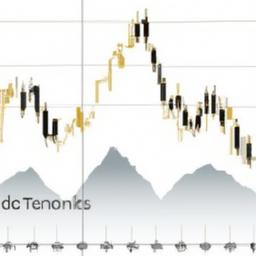
ETH technical outlook shows weakening momentum; implement tighter stop losses and reduce leverage ahead of potential pullback
Market internals point to a deceleration in upside momentum: momentum oscillators have flattened and volumes on advance days lag those on declines, suggesting a loss of buyer conviction. Liquidity has clustered near recent highs, creating a risk that a failed breakout triggers a rapid unwind; consequently, preserve capital by applying tighter stop-losses and trimming directional exposure. Watch these near-term technical cues closely:
- RSI showing negative divergence versus price
- MACD histogram contracting toward zero
- On-chain flows indicating diminished accumulation from whales
Implement position-sizing moves now rather than after an adverse move-preemptive adjustments reduce forced liquidation risk in a swift pullback.
Risk management shoudl lead trade decisions as the setup favors short-term mean reversion over continuation. reduce gross leverage and prioritize capital preservation over marginal upside: scale down leverage, tighten stop bands, and convert a portion of exposure to stable collateral where possible. Recommended tactical steps include:
- Leverage: reduce to conservative levels (e.g., ≤3x for active trades)
- Stops: set just below the latest structural support or tighten trailing stops to lock gains
- Exposure: trim winners incrementally and keep dry powder for a confirmed re-accumulation signal
Adopting these measures will limit downside while positioning for a disciplined re-entry if momentum reasserts itself.
Macro catalysts and liquidity events that could amplify volatility; prioritize risk adjusted entries and staggered scaling strategies
macro shocks such as surprise inflation prints, central-bank guidance shifts, or a sudden repricing in risk assets can turn calm ETH tape into violent directional moves. Equally, on-chain and market liquidity events – from large staking unlocks and coordinated whale rebalances to concentrated options expiries and ETF-related flows - act as accelerants: they crystallize latent positioning and can force quick deleveraging or momentum chasing.Watch for convergences of these drivers; when a macro surprise lands within a thin liquidity window, price discovery becomes compressed and intraday ranges can expand several-fold.
- Monetary policy (rate guidance, unexpected hikes/cuts)
- Economic data (CPI, employment, GDP surprises)
- Market structure (large options expiries, ETF flows)
- On‑chain events (staking unlocks, protocol upgrades, bridge congestion)
Given these tailwinds for volatility, prioritize entry discipline and scale into risk rather than “all‑in” timing assumptions. employ layered sizing, stagger entries across confirmed liquidity windows, and convert conviction into incremental increases only after price respects predefined risk thresholds. Practical tactics include placing limit orders at liquidity clusters, using smaller initial tranches with systematic add-ons, and defining tranche stop rules to preserve capital on dislocations.
- Initial tranche: conservative size to test market reaction
- Adds: scheduled or signal-based, tied to volatility bands
- risk controls: tranche stops, portfolio-level max drawdown
| Risk Profile | Initial Tranche | Max Exposure |
|---|---|---|
| Conservative | 5-10% | 15-20% |
| Balanced | 10-20% | 25-40% |
| Aggressive | 20-35% | 50%+ |
Actionable trade plan detailing entry zones, stop placement and profit targets aligned with support, resistance and order book dynamics
planned entry windows are defined around visible liquidity clusters and proven structural levels: prioritize entries that align with large resting bids and recent swing support to skew risk in your favor. Target two primary zones – a conservative zone keyed to confirmed retest and an aggressive zone that captures early momentum off the book.
- Conservative: 1,920-1,980 – wait for candle confirmation and reduced immediate ask-side pressure.
- Aggressive: 1,860-1,915 – size smaller, opportunistic buys where order-book depth shows stacked bids beneath price.
- Breakout re-entry: 2,020-2,070 – follow-through buys above cleared resistance with incoming order-flow pickup.
Each zone is chosen to align stop efficiency with clear nearby liquidity bands so position sizing can be optimized against expected slippage.
Stops and profit targets are set to respect structure and expected order-book reactions: place stops beneath the nearest stacked bids or volatility buffer and stagger profit-taking to capture both mean-reversion and momentum moves.
- Stop discipline: 2-4% below conservative entries; 4-7% below aggressive entries, tightened if bids rebuild.
- Order-book triggers: trim if a large opposing wall forms or if cumulative asks exceed bids by a meaningful skew.
| Scenario | Stop | Targets |
|---|---|---|
| Conservative | -3% | +6% / +12% |
| Aggressive | -5% | +8% / +18% |
| Breakout | -4% | +10% / +25% |
Manage size so a single stop loss equals an acceptable portfolio risk; adjust targets and stops dynamically as order-book imbalances resolve and short-term support/resistance are retested.
To Conclude
As Ether’s price action settles into its latest range,the key takeaways are clarity on momentum and a shortlist of catalysts that will likely determine the next directional leg. Near-term upside will need confirmation from sustained volume and a breach of defined resistance, while failure to hold established support would open the door to a deeper pullback. Traders should watch liquidity shifts in derivatives, on‑chain flows into and out of major exchanges and staking behavior, alongside macro cues that have increasingly correlated with crypto performance. Risk management remains paramount: position sizing and stop discipline will matter more than conviction in any single thesis.
For market participants, the coming sessions will be decisive in separating continuation setups from distribution, and outcomes will hinge as much on market structure as on headlines. We will continue to track price action, order‑book dynamics and on‑chain indicators to refine our coverage. Stay tuned for follow‑up analysis and trade updates as new data emerges.