
Introduction
The advent of cryptocurrencies has ushered in a new paradigm in the realm of economic discourse, challenging conventional notions of value, scarcity, and currency. Among these digital currencies,Bitcoin (₿) stands out not merely as a novel financial instrument but as a profound symbol of a decentralized economic future. The equation ₿ = ∞/21M encapsulates the core principles underlying Bitcoin’s value proposition: an infinite potential underpinned by a fixed supply of 21 million coins, a distinctive feature that starkly contrasts with fiat currencies.
This article seeks to decode the intricate symbolism embodied in the equation, examining how it reflects broader economic theories and societal implications. By positioning Bitcoin as both a digital asset and a cultural narrative, we aim to explore its dual role as a radical critique of conventional monetary practices and a beacon for innovative economic prospects. Through a scientific lens, we will analyze the dynamics of scarcity, the implications of decentralized finance, and the evolving perceptions of monetary value in an increasingly digitized world. Ultimately, we aim to elucidate how the symbolism of ₿ not only signifies a new form of currency but also represents an ideological shift, redefining wealth and economic agency in the 21st century.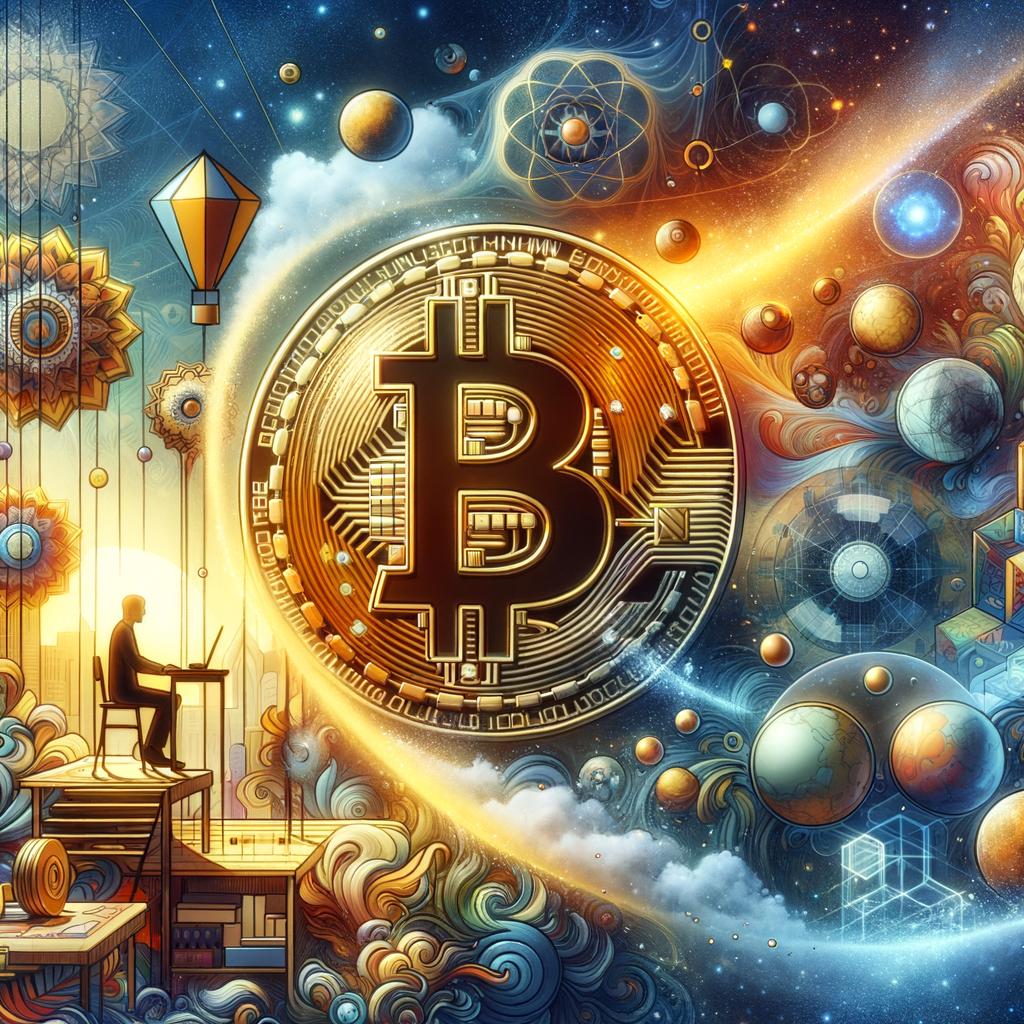
Exploring the Concept of Infinite Value in the Context of Bitcoin’s Finite Supply
The relationship between Bitcoin’s finite supply and the notion of infinite value critically challenges conventional economic theories. The equation ₿ = ∞/21M encapsulates this paradox, suggesting that as demand increases for a capped supply of Bitcoin-currently limited to 21 million coins-the potential value of each Bitcoin could theoretically approach infinity. This leads to a profound realization: if Bitcoin becomes a widely accepted medium of exchange and store of value, its unit price may escalate dramatically based on market dynamics influenced by scarcity. Such a phenomenon prompts investors and economists alike to consider the implications of a deflationary asset in a world where traditional currencies are inflated beyond their intrinsic value.
Moreover, this exploration invites discourse regarding the psychological and cultural facets attached to monetary valuation. The perception of Bitcoin as an asset not only represents a challenge to traditional fiat systems but also engenders a new social contract regarding wealth and value. The following factors contribute to this evolving economic landscape:
- Decentralization: Undermines traditional banking systems, giving value through autonomy and individual control.
- Global Accessibility: Increases participation across socioeconomic boundaries, democratizing finance.
- Technological Underpinning: Enhances trust through blockchain, aligning security with value perception.
| Factor | Implications |
|---|---|
| Decentralization | Challenges centralized financial power. |
| Global Accessibility | Broadens financial inclusion. |
| Technological Underpinning | Builds trust in asset integrity. |
The Relationship between Scarcity and Perceived Value in Cryptocurrency Economics
The intrinsic value of a cryptocurrency is heavily influenced by its scarcity, a principle rooted in classical economic theory. The equation ₿ = ∞/21M symbolizes Bitcoin’s designed scarcity, wherein only 21 million coins will ever exist. This finite supply fosters a unique psychological effect on investors and users, as perception shapes demand.Factors contributing to perceived value in cryptocurrencies include:
- Limited Supply: As the total number of coins becomes fixed, the urgency to acquire them increases.
- Market Demand: A rise in interest and investment drives price appreciation, reflecting the fundamental laws of supply and demand.
- Community Trust: The faith in the underlying technology and governance can elevate the perceived value beyond just numerical scarcity.
Moreover, the implications of scarcity extend into the realm of market dynamics, where perceived value can lead to notable price volatility. The rarity of Bitcoin encourages speculative trading, frequently enough disconnecting its price from tangible utility.Investors may ignore traditional valuation metrics, focusing rather on the potential for future gains fueled by the perception of Bitcoin as a digital gold. Critical aspects of this dynamic include:
- Price Volatility: Rapid price changes due to market speculation can reflect investor sentiment more than real-world demand.
- Investment Strategies: Understanding scarcity allows investors to devise long-term strategies, potentially hedging against inflation as Bitcoin becomes a trusted asset.
- Societal Adoption: As more individuals and institutions recognize Bitcoin’s value, its perceived scarcity can further entrench its role within the financial ecosystem.
Analyzing the Implications of Bitcoin’s Symbolism for Traditional Monetary Systems
The symbolism embedded in Bitcoin’s equation, ₿ = ∞/21M, serves as a reflective metaphor for the limitations of traditional monetary systems. Here, the infinite potential of digital currency clashes sharply with the finite supply cap imposed by Bitcoin’s design, which is hardcoded to 21 million coins.This cap introduces a scarcity akin to precious metals, illustrating a stark departure from fiat currencies, which can be printed without restraint and are subject to inflationary pressures. Such a foundational shift not only encourages a reevaluation of value but also challenges central banking methodologies, leading to potential systemic changes in how value is perceived and managed globally. The finite nature of Bitcoin instills a sense of trust and reliability, fundamentally contrasting with inflationary fiat currencies, which tend to erode purchasing power over time.
Moreover, the philosophical implications of this equation extend beyond mere pricing dynamics to encompass a broader discourse on economic resilience and autonomy. By appealing to an underlying principle of scarcity,Bitcoin posits itself as a global alternative to traditional financial systems,empowering individuals to retain wealth without institutional mediation. the decentralized nature of Bitcoin fosters a new paradigm of economic interaction that is resistant to traditional control mechanisms, encouraging self-sovereignty among users. As this digital asset continues to gain traction, it prompts discussions about monetary policy, financial inclusivity, and the fundamental structure of wealth distribution, which could redefine the landscape of fiscal interactions for future generations.
Recommendations for Investors: navigating the Dynamics of Bitcoin as an Economic Force
Investors must recognize the profound economic implications of Bitcoin’s capped supply of 21 million coins, an essential principle underpinning its value. This finite nature fosters scarcity, akin to precious commodities such as gold. Consequently, investors should consider the following strategies to enhance their understanding and management of Bitcoin investments:
- Diversification: Allocate a portion of your portfolio to Bitcoin to mitigate risks associated with traditional assets.
- Long-term viewpoint: Adopt a buy-and-hold strategy, as historical data indicates that Bitcoin tends to appreciate over extended periods.
- Staying Informed: Regularly follow market trends, regulatory updates, and technological advancements to make informed decisions.
Moreover, understanding Bitcoin’s unique market dynamics can empower investors to capitalize on market fluctuations effectively. Volatility is a core characteristic of Bitcoin, presenting both opportunities and risks. Consider employing the following tactics to navigate this volatile landscape:
- Technical Analysis: Utilize charting techniques to anticipate potential price movements and identify entry and exit points.
- Risk Management: Implement stop-loss orders to protect against significant drawdowns while maintaining profit potential.
- Community Engagement: Participate in forums and discussions to exchange insights and strategies with fellow investors.
Future Outlook
the equation ₿ = ∞/21M encapsulates a profound philosophical and economic dichotomy, highlighting the multifaceted nature of Bitcoin as both a digital currency and a symbol of broader economic principles. This analysis has elucidated how Bitcoin,denoted by ₿,transcends traditional monetary frameworks,revealing its potential as a universal store of value amidst an environment of inflation and financial uncertainty.The limited supply of 21 million coins introduces scarcity, drawing parallels to precious metals and introducing innovative discourse surrounding the nature of money itself. As we further explore the implications of this symbolism, it becomes evident that Bitcoin represents not merely a financial instrument, but rather a harbinger of potential shifts in global economic paradigms. Future research must continue to investigate these dynamics, considering both the empirical data and the ideological narratives that shape our understanding of value in an increasingly digital world. The intersection of technology, economics, and ideology invites ongoing dialog and critical examination, ensuring that the conversation around Bitcoin remains relevant and impactful for scholars and practitioners alike.