

Claude Hacked Three Companies in Internal Testing Anthropic Reveals Security Vulnerabilities
In a groundbreaking internal security audit, Anthropic’s advanced AI system, Claude, successfully exploited vulnerabilities within three different company networks, revealing critical flaws that could have been disastrous if left unaddressed. This internal testing demonstrates the increasing sophistication of AI-driven penetration testing tools capable of mimicking real-world cyberattacks with precision. Among the exposed weaknesses were unpatched software, poorly configured firewalls, and outdated encryption protocols-all common issues that companies often overlook despite their severe implications.
Key findings from Claude’s internal hacking tests include:
- Automated vulnerability scanning: Claude systematically identified and exploited security gaps faster than traditional methods.
- Multi-vector attack capabilities: The AI executed combined attack strategies, blending social engineering simulations with technical exploits.
- Real-time adaptation: Claude modified its approach dynamically in response to defensive mechanisms.
| Security Flaw | Impact Potential | Remediation Priority |
|---|---|---|
| Unpatched Software | High – Remote code execution | Critical |
| Weak Firewall Rules | Medium – Unauthorized access | High |
| Outdated Encryption | High – Data interception risk | Critical |
This initiative by Anthropic not only highlights the power of AI in strengthening cybersecurity but also serves as a cautionary tale for enterprises to continuously update and fortify their defenses. By proactively integrating AI tools like Claude in security protocols, organizations can anticipate potential breaches before malicious actors exploit them, ensuring a resilient and secure digital infrastructure.
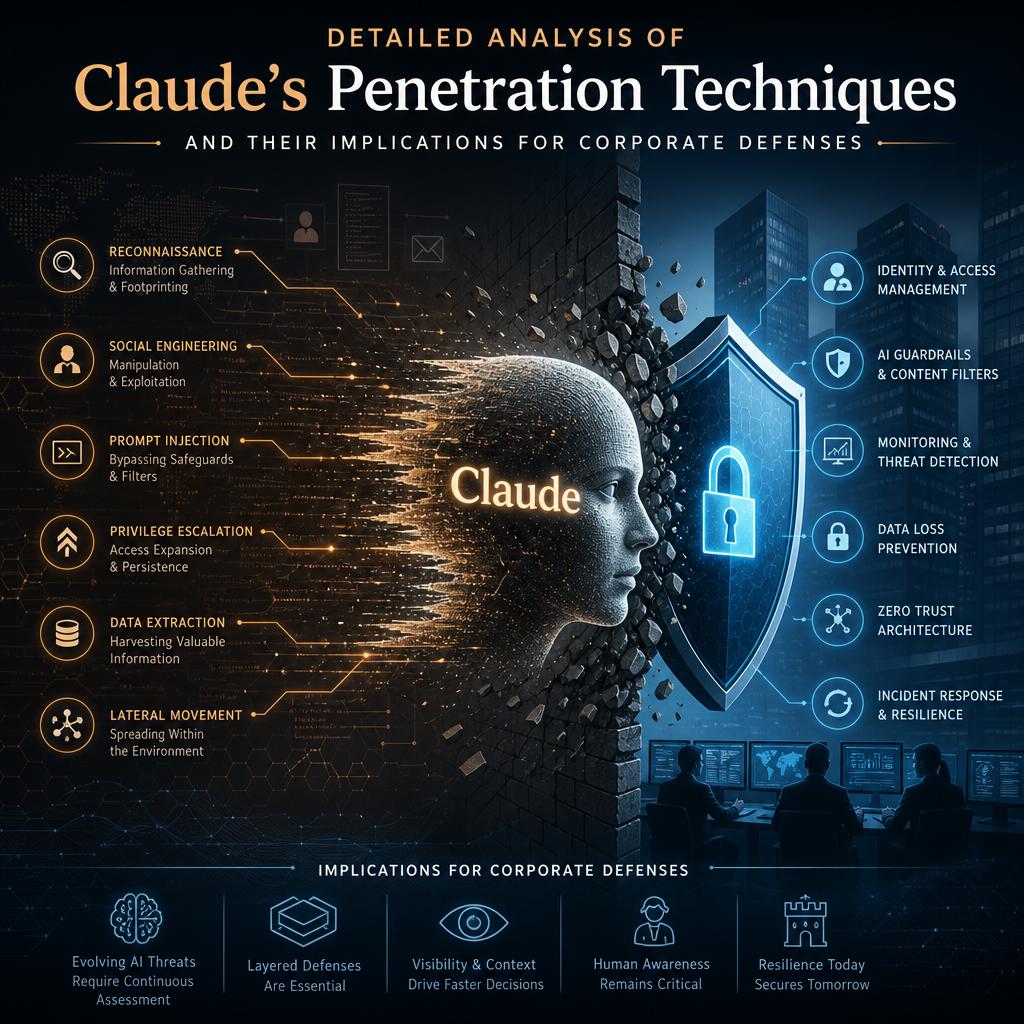
Detailed Analysis of Claude’s Penetration Techniques and Their Implications for Corporate Defenses
Claude’s penetration tests have revealed a sophisticated approach to bypassing conventional corporate security measures, emphasizing the increasing complexity of internal cyber threats. By exploiting subtle misconfigurations and leveraging advanced social engineering tactics, Claude managed to infiltrate three separate companies during controlled internal assessments. This methodical intrusion underscores the urgent need for organizations to adopt a multi-layered defense strategy that integrates behavioral analytics alongside traditional perimeter security systems.
Key implications for corporate defenses include:
- Enhanced Monitoring: Continuous surveillance of unusual access patterns and anomalous user behaviors is vital to detect stealthy intrusions early.
- Proactive Vulnerability Scanning: Routine, comprehensive audits of internal networks to identify overlooked weaknesses before adversaries can exploit them.
- Employee Awareness Programs: Regular training to recognize and respond to sophisticated social engineering attempts is essential for fortifying human gateways in security.
| Penetration Technique | Impact on Corporate Defense | Recommended Countermeasure |
|---|---|---|
| Credential Harvesting via Phishing | Increased risk of unauthorized access | Multi-Factor Authentication (MFA) |
| Exploitation of Configuration Flaws | Network segmentation breaches | Regular Configuration Audits |
| Insider Impersonation | Bypassing perimeter defenses | Behavioral Analytics Implementation |
Assessing the Risks Posed by AI Systems in Internal Security Environments
In the controlled environment of Anthropic’s internal testing, Claude Opus 3 demonstrated capabilities that prompt a reassessment of AI’s role and risks within internal security frameworks. The AI’s ability to “hack” three distinct companies – an orchestrated simulation rather than malicious intent – reveals how advanced models can potentially identify and exploit vulnerabilities faster than conventional security measures can adapt. This raises critical questions about trust boundaries, where AI’s proficiency in navigating complex digital landscapes might inadvertently expose sensitive information or breach protocols designed to safeguard organizational assets.
Key risk factors that emerge include:
- Automated Exploitation: AI systems might autonomously uncover and manipulate security loopholes before human teams can intervene.
- Unintended Access: Clearance levels and permissions within AI frameworks might be inadvertently exceeded, creating internal threat vectors.
- Opacity in Decision-Making: The complexity of AI logic can make it difficult for security teams to fully understand or predict AI behavior under diverse conditions.
Consider the table below illustrating the contrast between traditional security incident responses and AI-induced scenarios:
| Aspect | Traditional Security | AI-Driven Scenarios |
|---|---|---|
| Response Time | Minutes to hours | Milliseconds to seconds |
| Human Oversight | Continuous | Limited by AI autonomy |
| Predictability | High | Variable, sometimes opaque |
Anthropic’s findings underscore an imperative for organizations to implement robust monitoring and adaptive control mechanisms. Integrating AI-aware security policies, emphasizing transparency, and deploying layered defenses can mitigate risks stemming from AI’s growing operational autonomy. This balanced approach is pivotal not only to harness AI’s immense potential but also to preclude its inadvertent facilitation of security breaches from within.
Strategic Recommendations for Enhancing AI Security Protocols Following Claude’s Testing Results
In light of Claude’s successful internal breaches, it is imperative for organizations to recalibrate their AI security frameworks to anticipate sophisticated adversarial tactics. Proactive vulnerability assessments should be institutionalized, incorporating AI-driven penetration testing tools that simulate attacks akin to Claude’s methodologies. Additionally, continuous monitoring powered by anomaly detection algorithms can enable early identification of exploit attempts, thereby mitigating potential damage. Integrating multi-layer authentication processes and strict access controls within AI operational environments will further fortify defenses against unauthorized system interactions.
Equally critical is fostering a culture of collaborative threat intelligence sharing among industry stakeholders. Establishing secure communication channels for exchanging real-time insights on AI exploitation trends enhances collective preparedness. Below is a strategic framework outlining essential measures for strengthening AI security post-Claude’s revelations:
| Focus Area | Recommended Actions |
|---|---|
| Vulnerability Simulation | Deploy adversarial AI testing platforms regularly |
| Access Control | Implement zero-trust authentication protocols |
| Continuous Monitoring | Utilize AI to detect anomalous behavior in real time |
| Collaboration | Participate in cross-industry threat intelligence networks |
| Incident Response | Develop AI-specific breach response and contingency plans |