
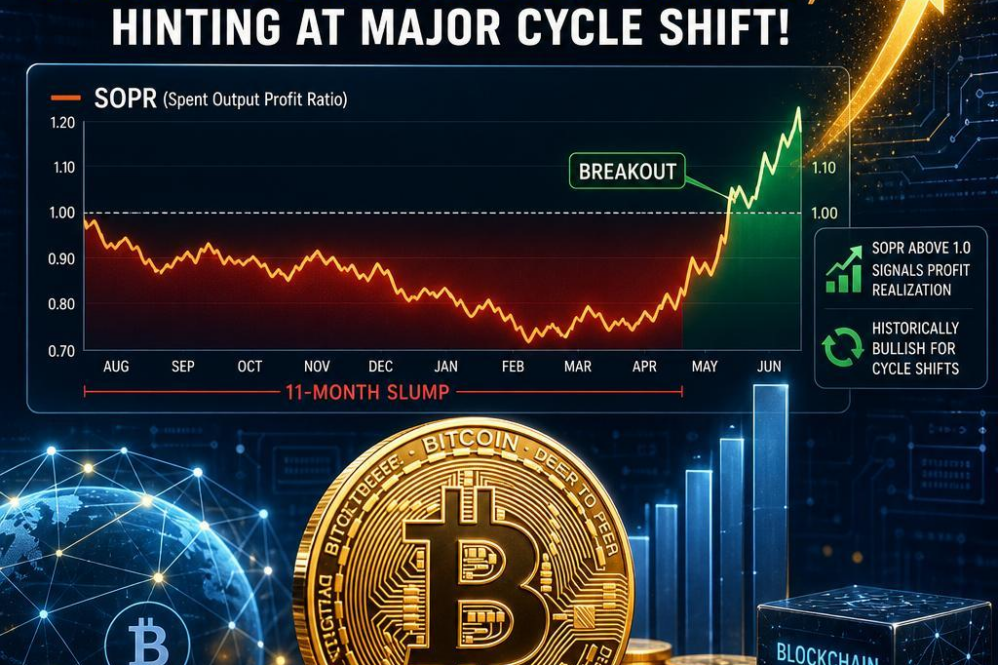
Bitcoin’s SOPR Indicator Surges: A Break from Long-Term Stagnation
The SOPR (Spent Output Profit Ratio) indicator, a critical metric in the cryptocurrency market, has recently shown a significant uptick, signaling a notable shift in market dynamics. This metric tracks the profitability of transactions involving previously held coins, offering insights into the sentiment of long-term holders and their willingness to sell appreciated assets. The recent surge in the SOPR could indicate that the market is transitioning out of a prolonged period of stagnation.
During extended periods of market downturn, holders often refrain from selling due to fear of realizing losses.However,the recent surge in the SOPR suggests that this hesitation might be easing. Holders may now be more inclined to sell their coins, possibly due to improved market conditions or a shift in investor sentiment. While the exact cause of this change remains unclear, the movement in the SOPR provides a tangible reflection of market behavior.
It’s critically important to approach the SOPR surge with caution. Although a high SOPR can signal that profitable coins are being sold, it does not predict future market trends or guarantee further price movements. The SOPR is more of a reflection of market behavior and holder sentiment. Investors should consider a range of factors and indicators to get a comprehensive view of the market.
Potential Market Reversal: Implications for Long-Term Investors
The recent emergence of a possible market reversal in Bitcoin is a significant growth that long-term investors should closely monitor. A market reversal refers to a change in the prevailing trend, possibly indicating a transition from a bearish phase to a bullish one or vice versa. Understanding these cycles is crucial for navigating the volatile digital currency market. Analysts often look at patterns in price movements, volume changes, and other technical indicators to identify these turning points.
When a potential market reversal is detected, it suggests that the current trend in Bitcoin’s price movement may no longer be enduring. Long-term investors should use this as a signal to reassess their positions and investment strategies. This might involve reviewing the timing of investments, re-evaluating risk appetite, and adjusting portfolio allocations to align with new market conditions.Though, a market reversal does not guarantee an immediate change in price; it suggests a shift in market dynamics that could lead to further price action.
Interpreting a potential market reversal requires a nuanced approach. Relying solely on technical signals can be misleading without considering broader economic trends, regulatory developments, and technological advancements in the crypto landscape. Long-term investors must remain vigilant and patient, as confirming a genuine reversal takes time and thorough inquiry. While a reversal can present opportunities for ample gains, it also comes with the risk of false signals that could lead to significant financial losses.
Understanding Recent Market Fluctuations: Key Factors at Play
Recent fluctuations in the cryptocurrency market have been influenced by a complex interplay of regulatory changes and investor sentiment. Governments around the world continue to draft and implement new regulations affecting trading activities and market behaviors. As an example,stricter KYC (Know Your Customer) requirements and AML (Anti-Money Laundering) regulations in several major jurisdictions have compelled exchanges to adopt more rigorous identity verification processes,which can temporarily alter trading patterns and liquidity. These regulatory shifts are crucial to understand, as they directly influence market stability and investor confidence.
Technological advancements are also shaping the landscape of digital assets. Innovations such as Layer 2 scaling solutions and the integration of smart contracts continue to introduce periods of volatility as the market adjusts to new capabilities and use cases. For example, the introduction of more efficient transaction settlement methods can attract speculative interest, leading to sudden price movements. Understanding these technical nuances is essential for grasping current market trends and their implications for future developments in the crypto ecosystem.
The recent fluctuations have also highlighted the importance of market sentiment and media coverage in driving short-term price movements. Social media platforms play a significant role in shaping public perception and can amplify both positive and negative news rapidly. News about major companies integrating cryptocurrencies into their operations can drive up demand and prices, while concerns over security breaches or economic policy changes can lead to sell-offs. Investors and analysts need to stay informed about these factors, as they have a substantial immediate impact on market valuations. However, it’s critically important to recognize that while such events can be informative, they do not provide a complete picture of long-term market health and sustainability.
Strategic Recommendations Based on the Latest Market Signals
The recent market signals in the cryptocurrency world reflect a growing interest in stablecoins and decentralized finance (DeFi) platforms. Stablecoins, designed to maintain their value relative to a more stable asset like the U.S. dollar, continue to attract investors seeking to mitigate risk in volatile cryptocurrency markets.This trend highlights the increasing need for tools that offer a degree of financial stability within the inherently volatile crypto ecosystem.
Moreover, the rise of DeFi platforms has brought new opportunities for liquidity and yield generation, challenging conventional banking systems with their reliance on digital-only solutions. These platforms offer features such as lending, borrowing, and trading without the need for traditional intermediaries.However, the regulatory landscape remains uncertain, and the potential for systemic risk is a concern as users can lose significant holdings due to security breaches or smart contract bugs. It’s crucial for investors to understand both the rewards and the risks associated with these platforms.
Given the current landscape, strategic recommendations for investors should focus on diversification, thorough research, and an understanding of regulatory frameworks. Diversification helps spread risk across different types of assets and projects, reducing exposure to any single risk point.Investors should also keep an eye on regulatory developments to mitigate potential legal risks. Conducting thorough research on both the technical details and the teams behind projects can help discern the robustness and potential of DeFi protocols and other technological innovations in the space.