
—
Bitcoin Fails to Achieve Golden Cross Amid Rising Rate Hike Concerns
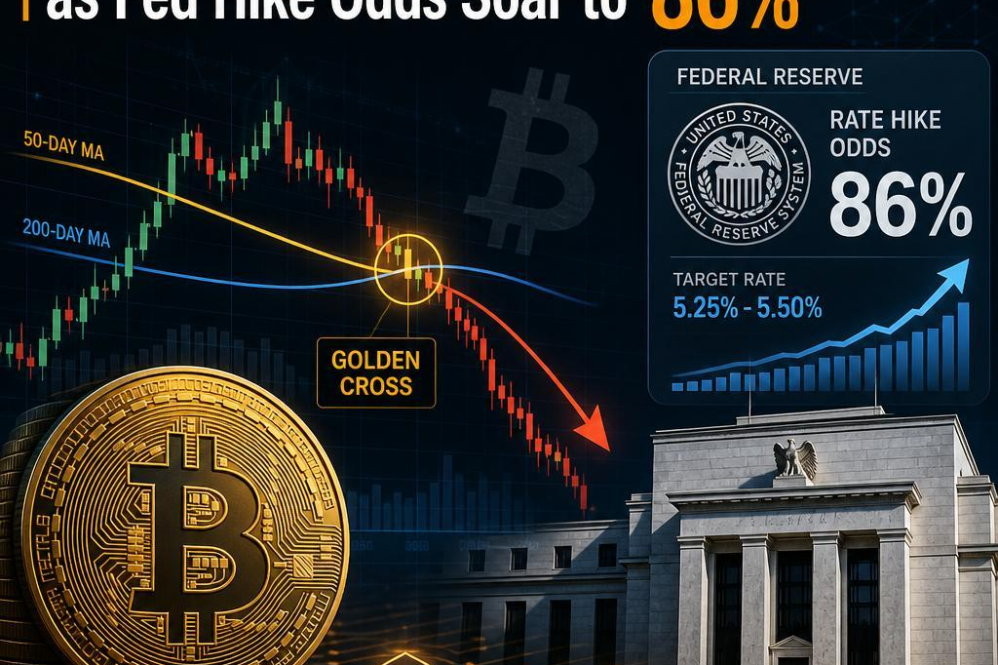
The recent failure of Bitcoin to achieve a golden cross, a bullish technical indicator, has raised concerns among analysts about a shift towards a more bearish market sentiment. A golden cross occurs when a 50-day moving average crosses above a 200-day moving average, typically signaling to traders that the upward trend is robust and enduring. Though, the absence of this cross amid growing expectations of interest rate hikes has cast doubt on Bitcoin’s immediate prospects.
Central banks’ recent monetary tightening measures have sparked fears among crypto investors about the potential impact on the broader economy and, consequently, on the demand for digital assets. Higher interest rates are generally seen as negative for riskier assets like cryptocurrencies, which many investors view as a hedge against inflation and monetary policy uncertainty. The concern is that these hikes could diminish the attractiveness of Bitcoin as a store of value.
The lack of a golden cross is a technical red flag, but it’s important to recognize that market sentiment and economic conditions significantly influence Bitcoin’s valuation. The looming risk of interest rate hikes may exacerbate existing selling pressures, reinforcing bearish signals. However,past trends suggest that bearish periods can also present opportunities for informed investors to buy into dips.
Understanding the Market Reaction to Bitcoin’s Selloff During Rate Hike Expectations
Bitcoin’s recent selloff coincides with heightened expectations for interest rate hikes from central banks. This trend reflects how the perceived risk of higher borrowing costs can influence investor behavior. The belief in upcoming rate increases leads to a reevaluation of risk appetite, with many opting to divest from riskier assets like cryptocurrencies to preserve capital and seek safer investments like government bonds.
Central bank rate hikes typically aim to curb inflation by reducing the amount of money circulating, which can slow economic growth. This cautious monetary policy stance impacts the overall investment landscape, causing uncertainty and volatility in markets. For Bitcoin, this means reduced speculative trading and a greater emphasis on portfolio stability, as investors turn their attention to assets with historically proven stability and reliability.
While the immediate effects of rate hikes on Bitcoin have been observable, predicting long-term impacts requires a nuanced understanding of both macroeconomic conditions and investor sentiment. Bitcoin’s price movements are not solely influenced by central bank activities; factors like technological advancements and wider adoption also play crucial roles. As these variables interact, they shape the market sentiment, presenting both challenges and opportunities for Bitcoin and other cryptocurrencies.
The Federal Reserve and Its Impact on Crypto Markets
The Federal Reserve’s upcoming decisions cast a shadow over the cryptocurrency markets,where investors are increasingly cautious about potential market turbulence. The central bank’s monetary policies have a profound impact on global financial markets,creating uncertainty for digital assets sensitive to shifts in traditional finance.
When the Federal Reserve modifies interest rates or implements quantitative easing measures, it affects the cost of borrowing and the supply of money in the economy. These changes can lead to fluctuations in the valuations of assets, including cryptocurrencies. As the Fed prepares for pivotal meetings, speculative trading in the crypto space intensifies, driven by the anticipation of changes that could either bolster or deflate market sentiment.
Investors in the crypto arena closely monitor economic indicators such as inflation rates and unemployment figures, which provide clues about the Federal Reserve’s likely course of action. Understanding these correlations is crucial, but it’s critically important to note that while the Fed’s policies influence broader market dynamics, the unique characteristics and speculative nature of cryptocurrencies mean they may diverge from conventional asset reactions. This divergence poses both risks and opportunities for astute observers and traders in the digital coin universe.
Evaluating the Effects of Increasing Rate Hike Projections on Bitcoin’s Price Dynamics
The relationship between central bank rate hikes and Bitcoin’s price dynamics is a topic of ongoing scrutiny among market analysts. As central banks project increased rate hikes to combat inflation and stabilize financial markets, the implications for Bitcoin become more nuanced. Historically, periods of higher interest rates tend to encourage investors to shift their assets into more stable, government-backed securities, perhaps reducing the appeal of riskier investments like cryptocurrencies. Though, Bitcoin’s growing acceptance and use as a hedge against economic volatility introduce new dynamics. As central banks tighten monetary policies, the narrative around Bitcoin as a store of value and a hedge against inflation becomes even more relevant, possibly drawing in new investors seeking choice assets.
In this context, the impact of increased rate hikes on Bitcoin’s price is not straightforward. While higher rates might traditionally lead to reduced investment in speculative assets, the digital currency’s unique attributes and growing acceptance as a global financial instrument complicate the traditional economic model. With major financial firms increasingly incorporating Bitcoin into their portfolios, such moves can offset the potential negative impact of higher rates on retail investments. Nevertheless, the immediate impact of rate hikes can still influence short-term market sentiment and liquidity, causing fluctuations in Bitcoin’s price. It’s important to understand that while these developments can create price volatility,they are part of a broader set of factors influencing the cryptocurrency market.
As investors and analysts weigh the implications of rate hikes, recognizing the evolving nature of Bitcoin’s role in the broader financial ecosystem is crucial.While historical patterns might suggest a negative correlation between rising interest rates and cryptocurrency prices, the emerging narrative is different. Bitcoin’s performance in the face of increased rate hikes might more accurately reflect investor sentiment and institutional confidence.This nuanced approach to analyzing the impact of central bank actions on Bitcoin is crucial for understanding market dynamics and making informed investment decisions.
—