
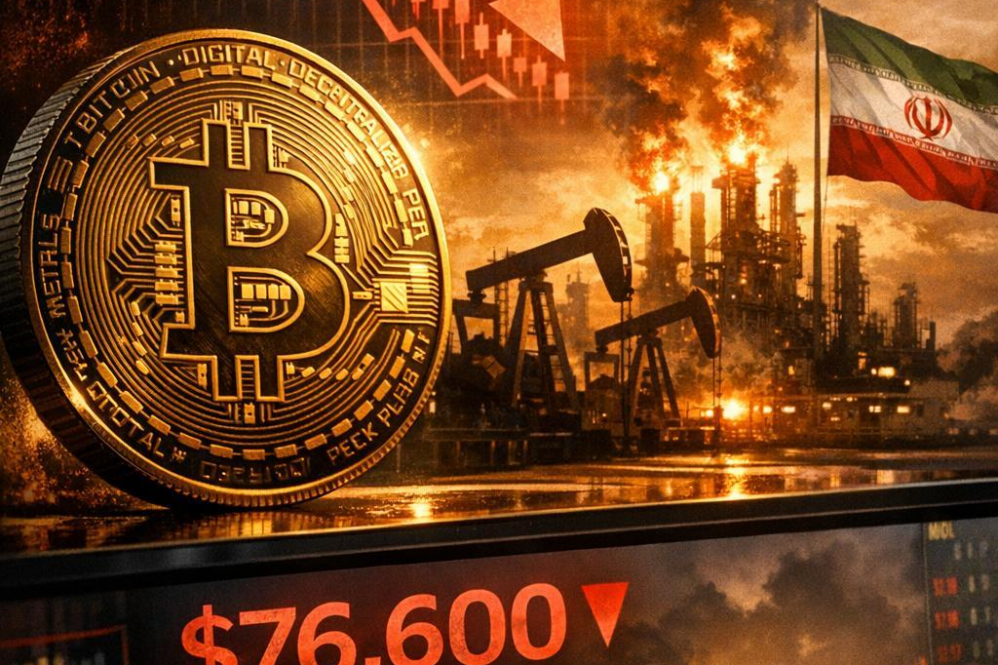
Bitcoin Market Correction Amid Escalating Geopolitical Tensions and Energy Price Surge
The recent correction in the Bitcoin market has coincided with escalating geopolitical tensions and a significant surge in energy prices,both of which have contributed to an surroundings of increased uncertainty. Heightened geopolitical conflicts often lead to volatility in global markets as investors reassess risk and liquidity positions.For bitcoin,a digital asset frequently viewed as an choice investment,such geopolitical factors can influence market dynamics by impacting investor sentiment and the cost structures associated with cryptocurrency mining,given its reliance on energy-intensive computational processes.
The rise in energy prices plays a particularly crucial role in the Bitcoin ecosystem, where mining activities consume ample amounts of electricity. Increased operational costs for miners can affect the overall network, potentially leading to shifts in mining profitability and adjustments in hash rate distribution. While these factors add layers of complexity to market behavior, it is significant to note that Bitcoin’s decentralized nature and diverse investor base contribute to a nuanced response to macroeconomic and geopolitical developments, making straightforward causal relationships challenging to establish.
Analyzing the Impact of Rising oil Prices on Cryptocurrency Valuations and Investor Sentiment
Rising oil prices can influence cryptocurrency valuations and investor sentiment through several channels, though the relationship is not direct or uniformly predictable. Higher oil costs generally increase inflationary pressures, prompting central banks to consider tightening monetary policy. Such shifts in customary financial ecosystems may lead investors to re-evaluate portfolio allocations, including exposure to digital assets like Bitcoin and other cryptocurrencies. Additionally,as oil represents a critical input for energy-intensive processes such as cryptocurrency mining,increased energy costs could affect mining profitability,thereby impacting network dynamics and,indirectly,market valuations.
However, the impact of rising oil prices on cryptocurrencies is nuanced and can vary depending on broader economic conditions and investor behavior. While higher energy costs might raise operational expenses for miners,this factor alone does not determine price movements in decentralized digital currencies,which are influenced by diverse elements including regulatory developments,technological advancements,and market sentiment. Furthermore, some investors may view cryptocurrencies as alternative stores of value during commodity-driven inflationary periods, though such interpretations demand careful scrutiny and cannot be generalized. Therefore, understanding the interplay between oil price fluctuations and cryptocurrency markets requires thorough analysis rather than simplistic cause-and-effect assumptions.
Strategic investment Approaches in Volatile Markets Influenced by Global political and Economic Uncertainties
In the current climate marked by unpredictable shifts in global political and economic landscapes, investment strategies in the cryptocurrency market require careful consideration. Investors frequently enough face amplified volatility as geopolitical tensions and economic policies can influence digital asset valuations indirectly through macroeconomic channels such as currency fluctuations, regulatory changes, and shifts in investor sentiment. Understanding these external factors is crucial for developing approaches that seek to mitigate risk while capitalizing on emergent market dynamics. Diversification and robust risk management practices often become essential components when navigating this environment, given the interconnectedness between traditional financial systems and digital asset markets.
Given the complex and evolving nature of these influences, strategic approaches typically emphasize a need for ongoing analysis rather than reliance on static models.This involves monitoring a range of indicators-from regulatory developments and macroeconomic trends to technological advances within blockchain ecosystems-that can affect market conditions. While such strategies aim to provide a framework for informed decision-making, investors must also acknowledge inherent limitations, including the challenge of accurately predicting timing and scale of market movements amid high uncertainty. Consequently, maintaining flexibility and a comprehensive understanding of both global contexts and crypto-specific factors is vital to adapting strategies as conditions evolve.