
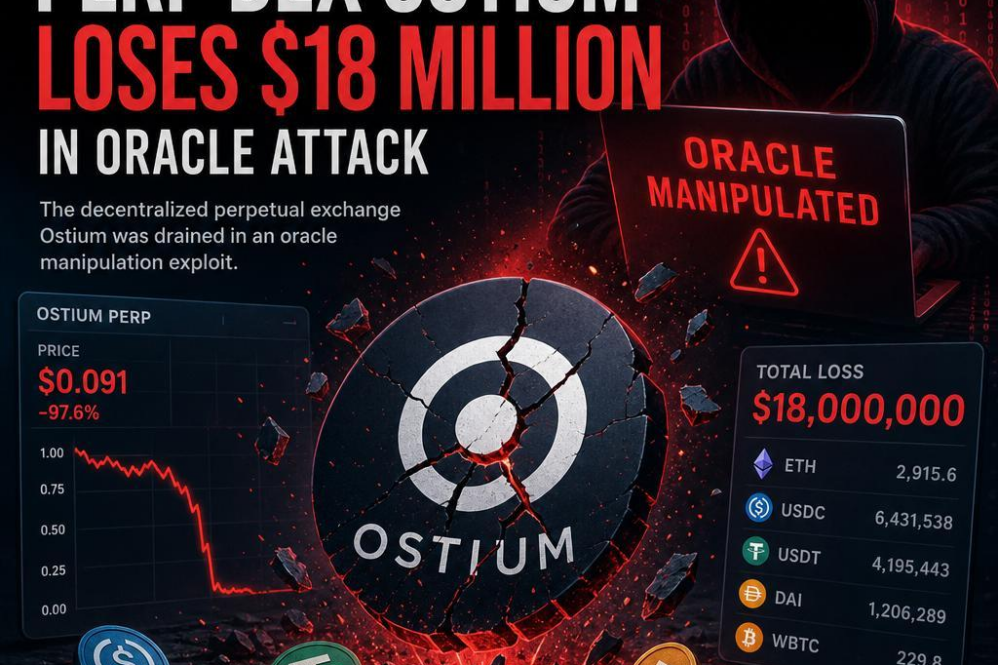
Another DeFi Exploit Exposes Vulnerabilities in Perpetual DEX Architectures
The recent attack on Perp DEX Ostium has once again highlighted critical weaknesses inherent in perpetual decentralized exchange architectures, particularly regarding their reliance on external data feeds. The $18 million loss was the result of a sophisticated oracle manipulation that allowed attackers to feed false price information, destabilizing the system’s pricing mechanisms and enabling unauthorized liquidation of positions. This incident underscores how oracle integrity remains a single point of failure, threatening the core philosophy of decentralized finance by exposing users to system-level risks that traditional exchanges often mitigate through centralized controls.
Key vulnerabilities exploited include:
- Oracle data manipulation through compromised or poorly secured price feeds.
- Inadequate on-chain validation mechanisms to cross-check and verify incoming data.
- Excessive permission levels granted to off-chain entities, amplifying attack surfaces.
| Aspect | Impact |
|---|---|
| Oracle Dependence | High risk of price manipulation |
| Permission Controls | Exposed attack vectors |
| Data Validation | Insufficient safeguards |
| User Funds | Substantial losses |
This exploit serves as a stark warning for DeFi developers and stakeholders: without robust, decentralized oracle solutions and enhanced smart contract auditing, perpetual DEXs will continue to be lucrative targets for malicious actors. Strengthening these systems through comprehensive regulation and innovative technological safeguards is essential for fostering trust and driving broader adoption within the Web3 ecosystem.

Detailed Analysis of the Ostium Oracle Manipulation Attack Mechanism
The Ostium Oracle manipulation attack exploited critical vulnerabilities in the way the Perp DEX aggregated and verified price feeds. By injecting falsified data into the oracle’s data sources, attackers were able to distort the asset valuations used by the platform’s automated market-making algorithms. This created a significant discrepancy between the perceived and actual value of assets, which attackers leveraged to execute trades at artificially inflated prices. The root cause stemmed from inadequate validation protocols and the reliance on a narrow set of external price oracles without sufficient cross-verification.
Key factors enabling the attack included:
- Absence of multi-oracle consensus mechanisms to ensure price accuracy
- Insufficient rate-limiting controls on oracle data updates
- Weak fallback procedures when anomalous price data was detected
- Lack of robust real-time monitoring tools to promptly identify manipulation attempts
| Component | Vulnerability | Effect |
|---|---|---|
| Oracle Aggregator | Single-source dominance | Data spoofing |
| Price Verification | No consensus validation | Incorrect pricing |
| Update Frequency | Unrestricted rapid updates | Data inconsistency |
| Alert System | Nonexistent or delayed | Late attack detection |
Assessing the Impact of the $18 Million Loss on the DeFi Ecosystem
The $18 million loss from the oracle manipulation attack on Ostium’s Perpetual DEX has sent ripples throughout the DeFi ecosystem, raising significant concerns about the robustness of decentralized finance protocols. This incident underscores the critical vulnerability oracles present, which serve as the bridge between on-chain smart contracts and off-chain data. By exploiting this weakness, attackers can manipulate market prices, resulting in substantial financial damage and destabilizing user trust. The event has reignited debates around the need for more stringent security measures and comprehensive risk assessments tailored specifically to oracle integrations.
Key repercussions of this exploit include:
- Investor caution: A surge in risk-averse behavior among DeFi participants, potentially slowing down capital inflows and liquidity provision.
- Regulatory interest: Increased scrutiny from regulators aiming to establish clearer frameworks to safeguard consumer assets and increase transparency within DeFi applications.
- Technological innovation: Accelerated development of tamper-resistant oracle solutions and multi-layered security protocols in response to identified weaknesses.
| Aspect | Impact | Future Consideration |
|---|---|---|
| Financial Loss | -$18 Million | Enhanced auditing and capital reserves |
| Trust in Oracles | Critically Weakened | Diversification and decentralization of data sources |
| User Behavior | Increased Skepticism | Improved user education and transparency |
Strategies for Enhancing Oracle Security and Preventing Future Exploits
Securing oracles within decentralized finance systems requires a multi-layered approach that emphasizes both technical robustness and continuous monitoring. Implementing decentralized oracle networks can significantly reduce single points of failure by distributing data sources across a wide array of independent validators. Additionally, employing cryptographic proofs and data validation algorithms helps verify the authenticity and integrity of price feeds before they influence smart contract execution. Robust access controls and rate limiting can further mitigate risks posed by adversarial actors attempting to manipulate or flood oracle data channels.
Beyond technical measures, fostering a culture of proactive risk management through regular security audits and bug bounty programs incentivizes the discovery of vulnerabilities before they are exploited. Integrating real-time anomaly detection systems enables immediate identification of irregular data patterns or suspicious transactions, allowing rapid response to emerging threats. Together, these strategies form a comprehensive defense framework that not only safeguards oracles but also strengthens the resilience of the wider DeFi ecosystem against evolving attack vectors.