
Bitcoin’s energy use is often portrayed as a climate problem-but a quiet counter‑trend is emerging in oilfields, landfills, and remote industrial sites around the world. In “4 Ways Bitcoin Mining Slashes Methane Emissions,” we examine four concrete methods miners are using to capture methane that would or else be vented or flared, convert it into electricity, and power off‑grid data centers.
Across these four examples, readers will see how waste gas is being turned into a revenue stream, why mobile mining units are showing up at wellheads and landfill sites, and how this model could complement existing climate and energy policies. By the end, you’ll understand not only the mechanics behind methane-powered Bitcoin mining, but also its potential-and limits-as a tool in broader decarbonization efforts.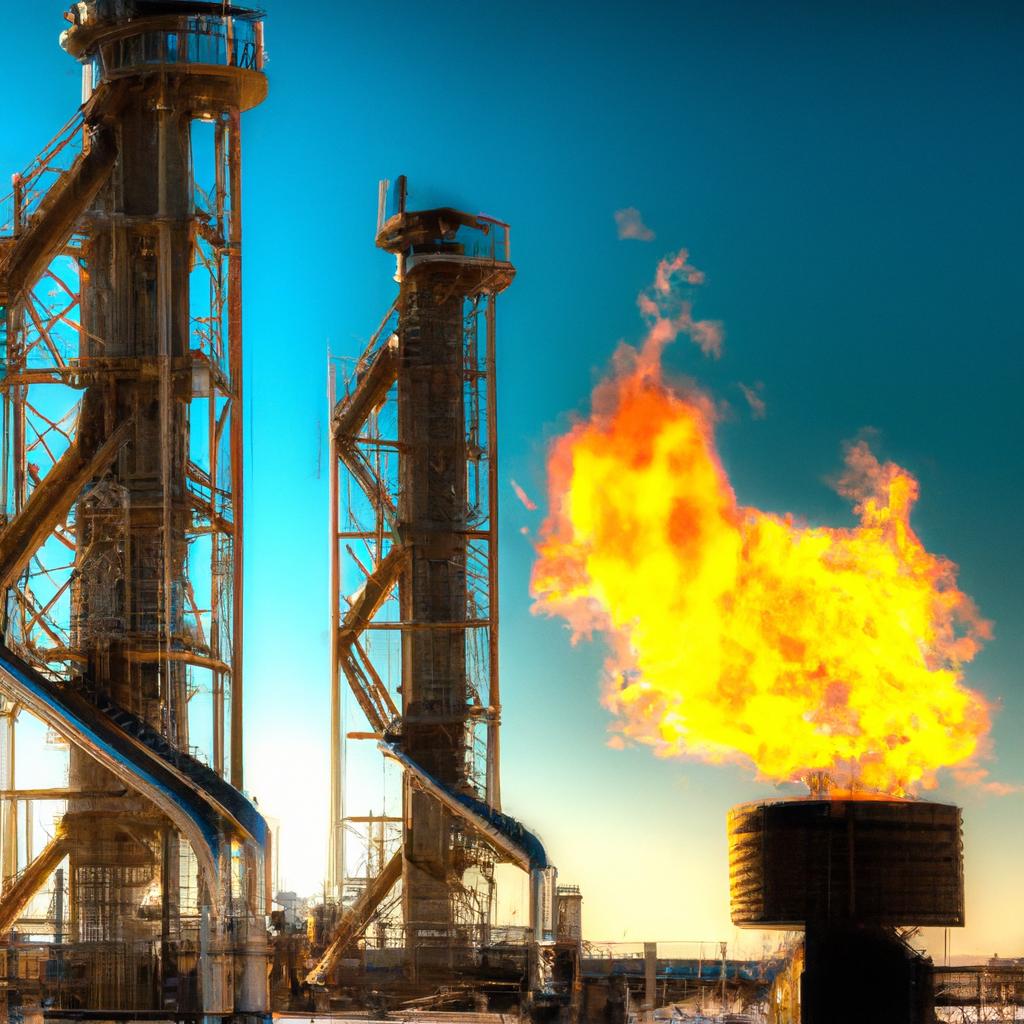
1) Capturing methane at oil and gas wellheads by co-locating bitcoin miners with flare stacks, allowing companies to convert would-be flared or vented gas into electricity that powers mining rigs rather than releasing potent methane into the atmosphere
Across shale basins from Texas to Alberta, producers are pairing mobile Bitcoin data centers with flare stacks to tackle one of the oil industry’s dirtiest secrets: wasted gas. Instead of venting or flaring associated gas that lacks pipeline access,operators install compact generators and containers of mining rigs directly at the wellhead. The gas that would have been burned inefficiently in an open flame is routed into engines, converted to electricity, and fed into racks of ASIC miners. As combusting methane in a controlled generator substantially reduces its climate impact compared with raw venting, the process turns a high‑impact greenhouse gas into a lower‑impact CO₂ stream while concurrently securing the Bitcoin network.
This approach is gaining traction because it fits neatly into existing upstream workflows yet unlocks a new revenue line. Oil producers that once treated stranded gas as a liability can now monetize it on-site, with miners paying for fuel that would or else generate no income. The modular infrastructure-trailers, skid-mounted gensets, and plug‑and‑play mining containers-can be deployed quickly and relocated as wells decline.Typical projects highlight a mix of operational and environmental advantages:
- Reduced methane intensity per barrel of oil produced
- Improved flare efficiency via steady, controllable combustion in generators
- Incremental cash flow from selling or self‑using stranded gas
- Regulatory risk mitigation as methane and flaring rules tighten
| Metric | Traditional Flaring | With Bitcoin Mining |
|---|---|---|
| Methane wasted | High | Significantly lower |
| Gas value | Lost | Captured as revenue |
| Site power use | Minimal | On‑site, dedicated load |
For climate analysts, the key detail is methane’s outsized warming power-over 80 times more potent than CO₂ over a 20‑year horizon. By converting unmarketable gas into a continuous electrical load, Bitcoin miners effectively create a demand sink that makes it financially rational to combust and capture energy that was previously discarded. Early pilots report reductions in flaring volumes and lower upstream emissions footprints, offering a tangible example of how a controversial digital asset can be repurposed as an industrial tool for emissions management rather than an additional climate burden.
2) Deploying mobile, containerized Bitcoin mining units at remote landfills to harness landfill gas, turning biogenic methane emissions from decomposing waste into a revenue-generating power source that incentivizes continuous gas capture and improved site management
At remote landfills, where flaring or venting has long been the default, containerized Bitcoin mining units are emerging as a portable, plug-in demand source for waste gas. Rugged shipping containers arrive preloaded with ASIC miners,gas generators,and control systems,then connect directly to existing or newly drilled landfill gas wells. Instead of burning methane into the atmosphere with no economic upside,operators can now combust landfill gas on-site to power miners,capturing energy that was previously stranded. This shifts landfills from passive emitters into small, distributed power plants with a built-in customer: the Bitcoin network.
The economics are straightforward but transformative. Once the basic gas collection infrastructure is in place, mobile mining units can be dropped in, scaled up or down, and even relocated as gas flows decline over time. That flexibility lowers risk and makes it easier for smaller or remote landfills-often ignored by traditional energy developers-to justify investing in better gas capture. Operators gain a new revenue stream from block rewards and transaction fees while reducing their climate liability, creating a feedback loop that rewards:
- Continuous gas monitoring to maximize capture rates
- Improved wellfield maintenance and leak detection
- Faster deployment of gas-to-power projects at or else uneconomic sites
| Landfill Reality | with Mobile Bitcoin Mining |
|---|---|
| Biogenic methane flared or vented | Methane converted to electricity and hash rate |
| Weak incentive to optimize gas capture | Direct revenue tied to every cubic meter of gas |
| Remote sites overlooked by grid developers | Off-grid, containerized power demand on day one |
3) Monetizing stranded methane from agriculture and wastewater treatment facilities by pairing small-scale generators with mining equipment, giving farmers and utilities a financial motive to install digesters and capture biogas that would otherwise leak or be flared
Across dairy farms, feedlots and municipal treatment plants, methane bubbles up from lagoons, manure piles and sludge tanks with few cost-effective ways to capture it. By pairing compact biogas generators with containerized bitcoin mining rigs, operators can transform this “stranded” methane into a steady revenue stream instead of a climate liability. The model is simple: digesters convert organic waste into biogas, generators turn that gas into electricity on-site, and miners purchase every available watt, functioning as a built‑in buyer of last resort for energy that would otherwise be wasted, leaked or flared.
This new demand signal is changing the investment math for farmers and utilities. Digesters and gas-cleaning systems, once hard to justify on thin margins, start to look attractive when they can power:
- On-farm Bitcoin mining containers that operate year‑round
- Modular generator sets sized to match methane output from lagoons and digesters
- Co-located data centers at wastewater plants that monetize excess biogas electricity
Rather of relying solely on subsidies or renewable credits, project developers can underwrite infrastructure with projected mining revenue, while still supplying surplus power to local loads when grid conditions and pricing make that more profitable.
| Site Type | Main Waste Source | Bitcoin Mining Role |
|---|---|---|
| Dairy farm | Manure lagoons | Buys power from biogas gensets, funds digester install |
| Feedlot | Solid manure heaps | Creates market for captured gas instead of open-air decay |
| Wastewater plant | Sludge digesters | Monetizes excess biogas when grid prices are low |
As more facilities adopt this model, the climate impact compounds. Methane’s short atmospheric lifetime means that burning it in generators and using the electricity for mining can produce rapid reductions in near-term warming compared to unchecked venting. Simultaneously occurring, the financial upside encourages better waste management: covered lagoons rather of open pits, sealed digesters rather than raw sludge ponds, and metered, monetized gas flows instead of diffuse emissions. In effect, Bitcoin miners become anchor tenants for rural and municipal methane capture projects, helping to turn one of agriculture and sanitation’s dirtiest byproducts into a bankable, trackable digital commodity.
4) Stabilizing off-grid renewable projects that use methane as a transitional fuel-such as hybrid biogas and solar microgrids-by acting as a flexible,always-on energy buyer,improving project economics and enabling more methane capture infrastructure to be built and maintained
in remote regions where grid connections are costly or nonexistent,hybrid systems that pair biogas generators with solar microgrids often struggle with uneven demand and volatile revenues. Bitcoin mining offers a novel anchor load that can run 24/7, soaking up surplus electricity when local consumption dips and scaling down when communities need more power. This transforms previously risky projects-like village-scale biogas plants on small farms or landfill-gas-powered microgrids-into bankable infrastructure with predictable cash flow.
Because miners can be programmed to respond in real time to weather, demand, and fuel availability, they help engineers design systems with higher shares of renewables without sacrificing reliability. Operators can, for example:
- Prioritize community loads by automatically throttling mining rigs during peak household or industrial use.
- Absorb excess methane-derived power at night or in low-demand seasons, avoiding costly curtailment.
- Finance storage and capture upgrades with the additional revenue from consistent mining operations.
| Project Type | Role of Methane | Bitcoin Mining Benefit |
|---|---|---|
| Farm Biogas + Solar | Transitional fuel, backup power | baseline buyer for excess kWh |
| Landfill Microgrid | Captured waste gas generation | Funds additional capture wells |
| Wastewater CHP System | Sludge-to-biogas electricity | Improves plant payback period |
As revenues become more stable, developers can justify building larger methane capture systems, installing better gas-cleaning equipment, and maintaining engines and microgrid controls over longer lifecycles. This leads directly to higher volumes of methane being diverted from the atmosphere into useful energy,even as the share of solar and other renewables steadily increases. In practice, the combination of programmable Bitcoin loads and off-grid clean energy acts like a financial shock absorber-turning what was once a fragile, grant-dependent climate project into a self-sustaining, revenue-generating asset that continues to capture and destroy methane for decades.
Q&A
How Can Bitcoin Mining Actually Help Slash Methane Emissions?
Bitcoin mining has become an unexpected tool in the fight against climate change, particularly when it comes to methane, a greenhouse gas far more potent than carbon dioxide over the short term. By colocating with methane sources and using stranded or waste gas as fuel, miners can turn a liability into productive energy. Below are four key ways this works in practice.
Q1: How does Bitcoin mining turn flared or vented methane from oilfields into a climate solution?
in oil and gas fields, methane is often either flared (burned off) or vented (released directly into the atmosphere) because it’s not economical to capture and transport. Both practices are highly polluting, and venting is especially damaging because raw methane traps far more heat than CO₂.
Bitcoin miners are increasingly setting up modular data centers right at the wellhead to use this otherwise wasted gas:
- Capturing stranded gas: Portable generators and mining containers are connected to gas that would have been flared or vented. the gas is combusted in engines or turbines to generate electricity on-site.
- Reducing methane’s warming impact: Burning methane converts it mainly into CO₂ and water vapor. Because methane is roughly 80+ times more potent than CO₂ over 20 years, this conversion significantly cuts the short-term warming impact.
- Monetizing waste rather of wasting it: By selling newly mined bitcoin, operators can profitably use gas that previously had no market value, creating a financial incentive to capture and use rather than flare or vent.
this approach is particularly impactful in remote oilfields where pipeline infrastructure is lacking. Instead of allowing methane to escape or be inefficiently flared, Bitcoin miners transform it into electricity and computational work, lowering net emissions from existing fossil operations.
Q2: In what way are landfills and biogas sites using Bitcoin mining to manage methane more cleanly?
Landfills, manure lagoons, and other organic waste sites generate methane as trash and biomass decompose. while some advanced facilities capture this gas for power or heating,many smaller or older sites still leak or flare a notable share.
Bitcoin mining offers a flexible offtake for biogas projects that might or else be too small or intermittent to feed a traditional power market:
- On-site power generation: Methane from landfill gas collection systems or anaerobic digesters is used to fuel small generators. The resulting electricity runs Bitcoin miners located on or near the site.
- Creating a guaranteed buyer of power: Instead of depending on utility interconnections, complex permits, and long-term power purchase agreements, project developers can plug miners directly into their generation, making projects viable at smaller scales.
- Improving collection economics: The extra revenue from Bitcoin mining can justify investment in:
- Better gas capture and piping
- Flares and generators where none existed
- Monitoring systems that reduce leaks
By turning low-quality, otherwise wasted methane into a revenue-generating digital commodity, landfill and biogas operators can afford to capture more gas, tighten up their systems, and reduce uncontrolled emissions.
Q3: How do off-grid Bitcoin mining operations enable cleaner energy in remote regions?
Many methane-emitting sites are “off-grid” or located in regions with weak or nonexistent electricity infrastructure. That makes traditional power projects hard to finance, even when there is abundant potential fuel from waste gas.
Off-grid Bitcoin mining changes this equation by acting as a demand source of last resort that doesn’t require a connection to a national grid:
- Deployable in remote locations: Miners can be placed wherever there is fuel and minimal infrastructure. All that’s needed is:
- A gas source (such as flared methane)
- Generation equipment (engines/turbines)
- Internet connectivity (frequently enough via satellite)
- Smoothing project risk: As miners can operate 24/7 and relocate if needed, investors in small-scale gas or biogas projects gain more flexibility and downside protection.
- Pathway to future clean grids: In certain specific cases, these off-grid operations serve as the first step toward more permanent energy infrastructure. once gas capture and generation are proven economically viable with mining, it may become easier to extend lines, add renewables, or connect to a broader grid.
In effect, Bitcoin miners become mobile, instant customers that can catalyze gas capture and clean power development where no traditional buyers or grid connections exist.
Q4: How are flexible Bitcoin mining loads helping to integrate renewables and reduce reliance on fossil fuels long-term?
While the most direct methane benefits come from capturing waste gas, Bitcoin mining can also play a role in the broader decarbonization of power systems, which indirectly curbs demand for fossil fuel extraction and associated methane leaks.
Because mining rigs can ramp their power use up or down quickly, they function as highly flexible loads that can support grids with growing shares of renewable energy:
- Absorbing excess clean power: During periods of strong wind or sun, renewables often produce more electricity than the grid can use or transport. Miners can consume this surplus,improving the financial case for renewable projects.
- Backing off when demand spikes: When grid demand is high, miners can scale down or shut off, freeing up power for households and businesses. This flexibility helps reduce the need for peaker plants fueled by gas or oil, which contribute to methane emissions across their supply chains.
- Financing early-stage renewables: Co-locating miners with new wind, solar, or hydro projects provides a ready-made customer from day one, even before full grid connections or industrial users are in place. That can speed up the build-out of cleaner generation and reduce long-term dependence on methane-leaking fossil infrastructure.
While this dynamic is more indirect than burning waste methane, it’s part of a broader pattern: Bitcoin mining can serve as a flexible, monetizable energy sink that improves the economics of both methane reduction projects and renewable build-outs, reinforcing a transition away from high-emission systems.
the Way Forward
As these examples show, Bitcoin mining is no longer confined to anonymous warehouses running on grid electricity. From landfills and dairy farms to oilfields and wastewater plants, miners are increasingly positioning themselves at the source of methane leaks and flares-turning a potent greenhouse gas into a revenue-generating fuel.
The climate case is far from settled. Critics point out that not all mining is ”green,” and regulators are only beginning to grapple with how to distinguish genuinely mitigating projects from greenwashing. Much will depend on transparency: clear data on emissions avoided, independent verification, and public reporting of energy sources.
Still, the early deployments highlighted here suggest a meaningful shift. By monetizing waste gas that would or else be vented or flared,Bitcoin mining is testing a new model for financing methane abatement-one that doesn’t rely solely on subsidies or carbon credits.
Whether this approach scales, and how responsibly it does so, will be a key storyline to watch at the intersection of climate technology and crypto. For now, it offers a concrete reminder that the impact of digital infrastructure on the environment can be as much about where and how it operates as how much power it consumes.
