
Bitcoin’s energy use has long been a lightning rod for criticism-but a growing body of real‑world projects is turning that narrative on its head. Around oilfields, landfills, and agricultural sites, miners are beginning to tap methane that would otherwise be vented or flared, converting a powerful greenhouse gas into electricity to secure the Bitcoin network.In this piece, we break down 4 specific ways Bitcoin mining is being used to cut methane emissions, from capturing waste gas at remote wells to monetizing stranded biogas that customary energy markets overlook.
Readers can expect a clear, evidence‑based overview of how these four approaches work in practice, what kinds of emissions reductions they can deliver, and why they’re attracting interest from energy companies, environmental advocates, and policymakers alike. By the end, you’ll have a sharper understanding of how an often‑controversial technology is being repurposed as an unconventional tool in the fight against climate change-and the opportunities and trade‑offs that come with it.
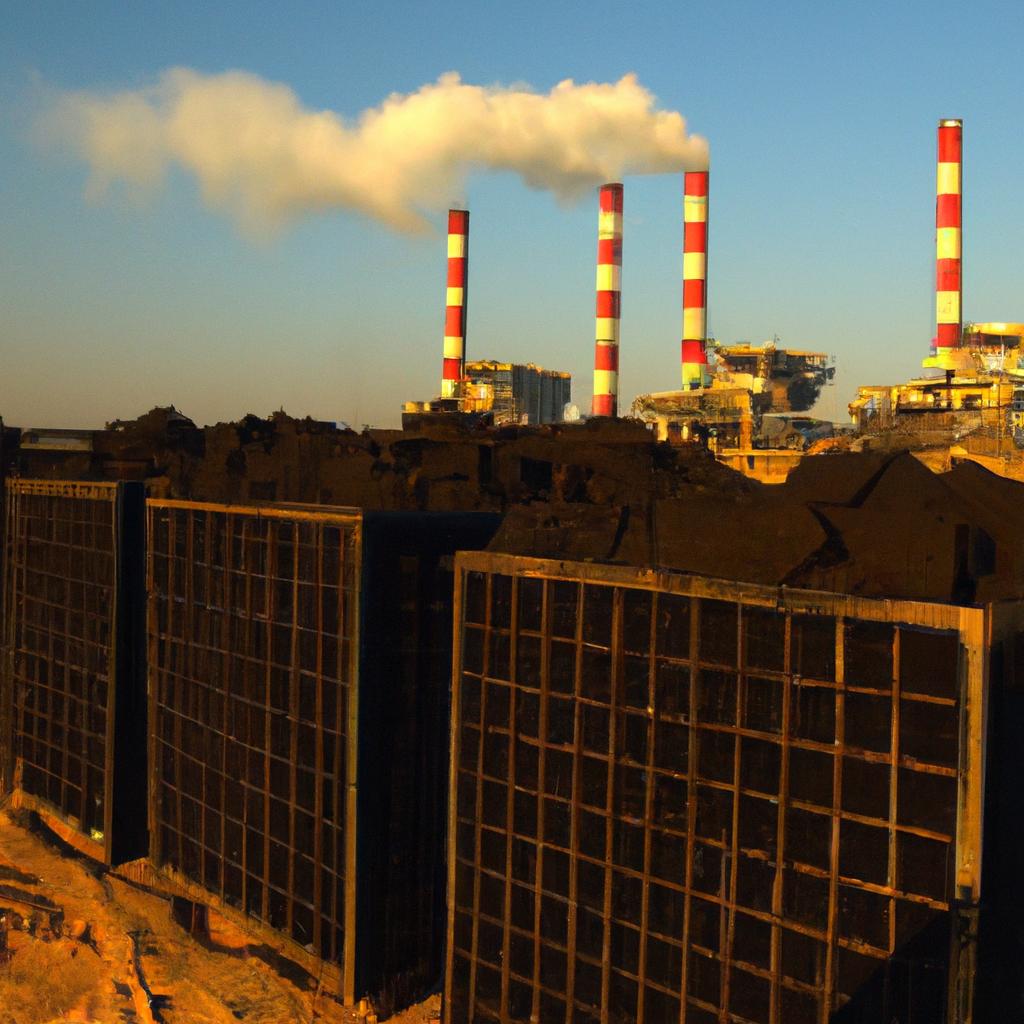
1) Capturing Methane at Landfills: bitcoin miners colocate data centers next to landfills, where they install generators that burn otherwise-vented methane to produce electricity for mining operations, converting a highly potent greenhouse gas into less harmful CO₂ while monetizing waste emissions
On the fringes of sprawling landfills, Bitcoin mining containers are increasingly doubling as micro power plants. Rather than allowing methane to seep into the atmosphere or be flared inefficiently,operators deploy small,modular generators that combust the gas on-site and feed the resulting electricity straight into mining rigs. This turns a regulatory headache for landfill operators into a revenue stream, funding better gas capture systems while cutting a greenhouse gas that is roughly 80+ times more potent than CO₂ over 20 years.
The model hinges on matching an unruly, stranded energy source with a uniquely flexible load.Mining firms can ramp their power use up or down in minutes, a perfect fit for variable landfill gas flows that would be uneconomical for traditional grid-tied projects. In practice, that can mean:
- Monetizing waste gas that previously had zero or negative value
- Financing improved gas collection through long-term offtake deals
- Reducing uncontrolled venting where flaring is absent or unreliable
- Providing a local tax base via infrastructure, jobs, and site leases
| Factor | Without Mining | With Mining |
|---|---|---|
| methane Handling | Vented or sporadically flared | Continuously captured and burned |
| Site Economics | Cost center | Revenue-generating asset |
| Climate Impact | High methane footprint | Reduced to CO₂ with lower warming effect |
2) Monetizing Stranded Gas from oil Fields: In remote oil operations, miners deploy mobile generators that run on flared or stranded gas that would otherwise be burned or vented, turning an environmental liability into a revenue source and incentivizing producers to capture more methane rather of wasting it
Oil fields frequently enough sit on pockets of “stranded” natural gas that lack pipelines or nearby demand, leading operators to flare (burn) or even vent (release) this potent greenhouse gas. Bitcoin miners are increasingly rolling in with containerized data centers and mobile gas gensets that plug directly into wellheads, converting what was once a liability into an on-site power plant. By combusting methane in controlled engines to produce electricity for mining, they transform an unmarketable byproduct into digital revenue, while also considerably lowering the climate impact compared with open flares or direct venting.
This model is reshaping incentives in remote basins. rather of treating gas as waste, producers can now justify investments in gas capture, separation, and treatment equipment as there is a guaranteed offtaker at the pad. Common features of these deployments include:
- modular power units sized to match variable gas flows
- Skid-mounted mining containers that can be moved as wells decline
- on-site monitoring of emissions and engine efficiency
- Revenue-sharing agreements between miners and operators
| Aspect | Before Mining | With Mining |
|---|---|---|
| Stranded gas | Flaring or venting | Fuel for generators |
| Environmental impact | high methane footprint | Lowered via controlled combustion |
| Producer economics | Zero or negative value | New, site-level cash flow |
The climate impact hinges on methane’s outsized warming potency. When unburned methane leaks or is vented, its short-term warming effect far exceeds that of CO₂. By routing this gas through engines or microturbines to power mining hardware, operators convert it into electricity and mostly CO₂, which has a much lower warming effect per molecule. While this doesn’t eliminate emissions, it often represents a net reduction in greenhouse gas intensity per barrel of oil. In jurisdictions tightening methane rules, such arrangements can definitely help oil companies meet compliance targets, avoid flaring penalties, and demonstrate measurable progress on emissions, while miners gain access to some of the cheapest power on earth-a convergence of environmental mitigation and market-driven innovation.
3) Stabilizing Biogas projects on Farms: Agricultural methane digesters often struggle with inconsistent energy demand and low grid prices, but Bitcoin mining provides a flexible, onsite buyer for biogas-generated power, improving project economics and encouraging more farms to invest in manure and waste methane capture systems
On many livestock farms, anaerobic digesters convert manure and crop residues into biogas, but the economics often hinge on selling electricity into weak rural grids at volatile, low prices. Bitcoin mining changes that equation by acting as a built-in, onsite power purchaser. Miners can be installed directly beside the digester’s generator, consuming power that would otherwise be sold at a discount or not at all. Instead of flaring or venting excess methane when the grid cannot absorb more electricity, farms can route that biogas into mining rigs, turning a disposal problem into a digital commodity.
- Onsite buyer of last resort for biogas-generated power
- Revenue floor when wholesale electricity prices crash
- Less flaring and venting of methane from manure and waste
- Modular deployments that scale with herd size or feedstock
| Farm Type | Biogas Use | Mining Impact |
|---|---|---|
| dairy | Manure to power | Stabilizes digester revenue |
| Pig farms | Waste methane capture | Reduces odor, earns BTC |
| Mixed crop-livestock | Co-digestion of residues | Monetizes seasonal surplus |
Because mining rigs are highly flexible loads, they can be dialed up when gas production is strong and dialed down when the farm needs more electricity for its own operations or when grid prices briefly spike. This flexibility helps projects secure financing: lenders see a diversified revenue stack that includes power sales, potential heat reuse, and Bitcoin income.The result is a stronger business case for installing digesters in the first place, encouraging more farms to invest in manure and organic waste methane capture systems that would not have cleared the hurdle rate without a dependable, programmable buyer of energy sitting right on the farm.
4) Enabling Remote Methane Abatement Infrastructure: Because Bitcoin mining can operate profitably off-grid with only an internet connection, it makes small-scale methane capture viable in remote locations, accelerating deployment of modular generators and processing units that would not be justified by traditional power market demand alone
In places where flares are the only “plan” for unwanted gas, Bitcoin miners are beginning to act like plug‑in demand centers for stranded methane. As mining hardware can run wherever there is a basic network connection and enough cooling, operators can co-locate with remote oil wells, landfills, or biogas projects and turn what was once pure waste into a monetized energy stream. This ability to go off‑grid removes the need for costly transmission lines or long-term power purchase agreements, lowering the economic threshold for investing in capture and combustion equipment.
That shift is changing the project math for small and scattered methane sources. Instead of having to justify a full-scale power plant, developers can deploy modular generators and containerized data centers sized precisely to the local gas flow. These units can be dropped onto a well pad or landfill cell, hooked into the gas collection system, and brought online in weeks rather than years. Key components typically include:
- Skid-mounted gensets tuned for variable methane quality
- Mobile mining containers with integrated cooling and controls
- Satellite or wireless backhaul for low-latency connectivity
- On-site monitoring to track gas capture and uptime
| Project Type | Typical Scale | Why Mining Works Here |
|---|---|---|
| Remote oil well flare | Small, intermittent | Flexible load follows gas flow |
| Rural landfill | Steady but low volume | no need for grid connection |
| Farm biogas digester | Modular, scalable | New revenue stream funds upgrades |
As these off‑grid deployments scale, they create a blueprint for a new class of methane-first infrastructure. Instead of waiting for population growth or industrial demand to justify a substation, developers can roll out small, repeatable units that monetize emissions immediately and can later be repurposed or connected to the grid if local energy demand emerges. In effect, Bitcoin mining becomes an anchor tenant for emission‑reduction hardware, accelerating the rollout of capture technology into regions and niches that conventional power markets have historically ignored.
Q&A
How Can Bitcoin Mining possibly Help Cut Methane Emissions?
At first glance, Bitcoin mining and climate mitigation seem like unlikely allies. Bitcoin’s energy use is widely criticized, and methane is a potent greenhouse gas mostly associated with fossil fuels and agriculture. Yet in specific, well-designed applications, Bitcoin mining can actually reduce net methane emissions by turning what would have been wasted or vented gas into useful electricity.
The key is that Bitcoin mining is:
- Location-agnostic – miners can go to where wasted methane is produced.
- instantly dispatchable – computers can be turned on and off in minutes.
- Modular and scalable – mining units can start small and grow with supply.
Those traits make mining a uniquely flexible buyer of otherwise stranded or wasted energy. Below are four primary ways that works in practice.
1.How Does bitcoin Mining Turn Flared or Vented Gas Into a Climate Benefit?
Oil and gas operations often produce “associated gas” that’s tough or uneconomic to bring to market. Traditionally, this gas is:
- Flared – burned off in open-air flames, converting methane into CO₂ but still wasting energy.
- Vented - released directly into the atmosphere, which is far worse as methane is much more potent than CO₂ over the short term.
bitcoin miners can deploy modular generators and data centers directly to these oilfields, using the associated gas as a fuel source. This process typically involves:
- Capturing the stranded natural gas that would otherwise be vented or flared.
- feeding it into small on-site generators that produce electricity.
- Powering Bitcoin mining computers with that electricity.
From a climate perspective, this can be beneficial as:
- Methane is far more warming than CO₂. Over a 20-year period, methane’s global warming potential is dozens of times higher than that of CO₂, molecule for molecule.
- Combustion converts methane into CO₂ and water. While CO₂ still contributes to warming, the net short-term impact is lower than releasing methane directly.
- Better-than-flare combustion – in some implementations, generators may burn gas more entirely and more consistently than open flares, reducing unburned methane slip.
In practice, the benefit depends on:
- How much methane would have been vented or flared without the mining operation.
- The efficiency of the combustion and the amount of methane leakage.
- The baseline regulations and alternatives available (e.g., mandated flare capture, pipeline build-out).
Still, in under-regulated or remote regions where gas is routinely wasted, pairing Bitcoin mining with gas capture provides a financially viable incentive to reduce methane emissions that or else receive little or no economic value.
2. In What Ways can Bitcoin Mining Help Capture Landfill Methane?
Landfills emit methane as organic waste decomposes. Municipalities and landfill operators have traditionally had three main options:
- do nothing,allowing methane to vent into the atmosphere.
- Flare the gas, burning methane into CO₂ without using the energy.
- Build gas-to-energy projects, such as engines or turbines feeding electricity into the grid.
Large, well-situated landfills often develop gas-to-grid projects. But for many small or remote landfills, connecting to the grid is technically difficult and economically unattractive. That’s where Bitcoin mining can play a role.
By colocating modular mining units on-site, operators can:
- install relatively small-scale gas collection systems that capture methane which would otherwise vent.
- Use simple generators to convert the gas into electricity on-site, bypassing the need for power lines and utility interconnection.
- run Bitcoin miners directly from this electricity, monetizing energy that previously had no buyer.
The environmental implications include:
- Reduced fugitive methane emissions from landfills, especially in regions without strong environmental regulation.
- Creation of a revenue stream that can definitely help justify investment in landfill gas capture systems.
- Potential transition pathways – in certain specific cases, a landfill might start with Bitcoin mining as a flexible, early-stage off-taker, and later upgrade to grid-interconnected projects once scale and economics improve.
Critically, the climate benefit is contingent on additionality: whether the methane would truly have been released or poorly managed without Bitcoin mining. In jurisdictions already phasing in strict landfill gas controls, the incremental impact might potentially be smaller. but in many places, mining provides the missing economic incentive to move from venting to capture and controlled combustion.
3. How Could Bitcoin mining Support Methane Reduction in Agriculture and Wastewater?
Methane leaks from manure lagoons, biogas digesters, and wastewater treatment plants are critically important sources of greenhouse gases. While there are established technologies to capture and use biogas (such as combined heat and power or grid injection), they are not always financially practical or reliable at smaller scales or in rural contexts.
Bitcoin mining can definitely help by acting as a flexible, drop-in consumer of power at the point of production. In these sectors, potential applications include:
- On-farm digesters: Livestock operations can install digesters that convert manure into biogas. Rather than flaring or struggling to sell excess energy into weak rural grids, farmers can power small on-site Bitcoin mining setups.
- Wastewater plants: Facilities that already capture biogas may face variability in output and limited local demand. Mining can absorb surplus power during periods when other loads are low,reducing flaring.
- Microgrids: In some cases, digesters and wastewater plants can host small microgrids, where Bitcoin miners act as a controllable load that stabilizes the system and ensures revenue from captured methane.
This approach can promote methane reduction by:
- Monetizing captured biogas that would otherwise be uneconomic, supporting wider adoption of digesters and capture technologies.
- Encouraging more consistent operation and maintenance of gas-handling equipment by attaching revenue directly to uptime.
- Enhancing project bankability – predictable Bitcoin mining revenue may help developers secure finance for methane abatement projects.
Risks and caveats include price volatility in Bitcoin markets, regulatory uncertainty around on-site generation, and the need to avoid locking in fossil-fuel infrastructure under the banner of ”methane reduction.” Nevertheless, in agricultural and wastewater settings, Bitcoin mining can provide an incremental financial incentive to capture and responsibly combust methane.
4. why Is Bitcoin Mining Uniquely Suited to Be a ”Buyer of Last Resort” for Methane-Based Energy?
Many energy sources tied to methane emissions are stranded, intermittent, or uneconomical to connect to conventional users. While other flexible loads exist-such as data centers, hydrogen production, or industrial processes-Bitcoin mining has a combination of characteristics that make it particularly adaptable:
- Extreme geographic flexibility: Mining units can operate almost anywhere with fuel and basic infrastructure, from remote oilfields to small landfills or farms.
- Instant adjustability: Miners can be turned off within minutes if the gas supply stops or if regulators require curtailment, allowing safe handling of variable methane flows.
- Scalable in small increments: Mining farms can start with a handful of machines and modest generators, expanding only as secure methane supply is proven.
- No need for additional offtakers: Unlike typical power plants,operators do not need long-term utility contracts or local industrial customers; the “customer” is the global Bitcoin network.
These traits matter for methane reduction because they address a central challenge: how to create demand for energy that no one else wants. When methane is a liability rather than an asset, projects to capture and use it often struggle to justify costs. By serving as a “buyer of last resort,” Bitcoin mining can:
- Increase the number of viable methane capture projects across oil and gas, waste, and agriculture.
- Accelerate deployment timelines, as miners can be installed faster than many conventional infrastructure projects.
- fill economic gaps untill more conventional offtakers (like utilities or industrial users) emerge or until stronger regulations make capture mandatory.
Though,this role is not a blanket endorsement of Bitcoin mining as inherently “green.” The climate value depends on specific conditions:
- Whether the methane reduction is additional and not already mandated or economically driven.
- Whether mining displaces, rather than delays, cleaner long-term solutions such as direct grid integration or full gas capture infrastructure.
- how the lifecycle impacts of the hardware, logistics, and combustion processes are accounted for.
in the best cases, Bitcoin mining provides a transitional, financially motivated tool to tackle difficult methane emissions, especially in places where policy and infrastructure have lagged. Used carefully and transparently, it can convert one of the most dangerous greenhouse gases into a managed, monetized energy stream-and in doing so, help bend the methane emissions curve downward.
The Way Forward
framing bitcoin mining solely as an energy hog misses a rapidly evolving story.
As we’ve seen,pairing mobile data centers with oilfield flaring,landfill gas,agricultural waste and biogas projects can turn a powerful greenhouse gas into a productive asset. In each case, miners act as a buyer of last resort for otherwise stranded or uneconomic methane-helping operators monetize waste streams, comply with tightening emissions rules, and experiment with cleaner infrastructure that would be difficult to finance on energy sales alone.
None of this makes bitcoin mining inherently ”green,” nor does it replace the need for broader climate policy, grid decarbonization, or methane regulations. These projects are still early,frequently enough small in scale,and highly dependent on local economics and regulatory clarity. They are, however, a real-world test of an unusual idea: that a fully flexible, location-agnostic digital load can help solve one of the most stubborn problems in climate science.
As methane abatement rises up the policy agenda, the question is less whether bitcoin mining contributes to emissions and more how it is integrated into that landscape. The difference between a liability and a climate tool will be decided on the ground-by project design, transparency, and whether these initiatives measurably cut methane while they mint blocks.

