
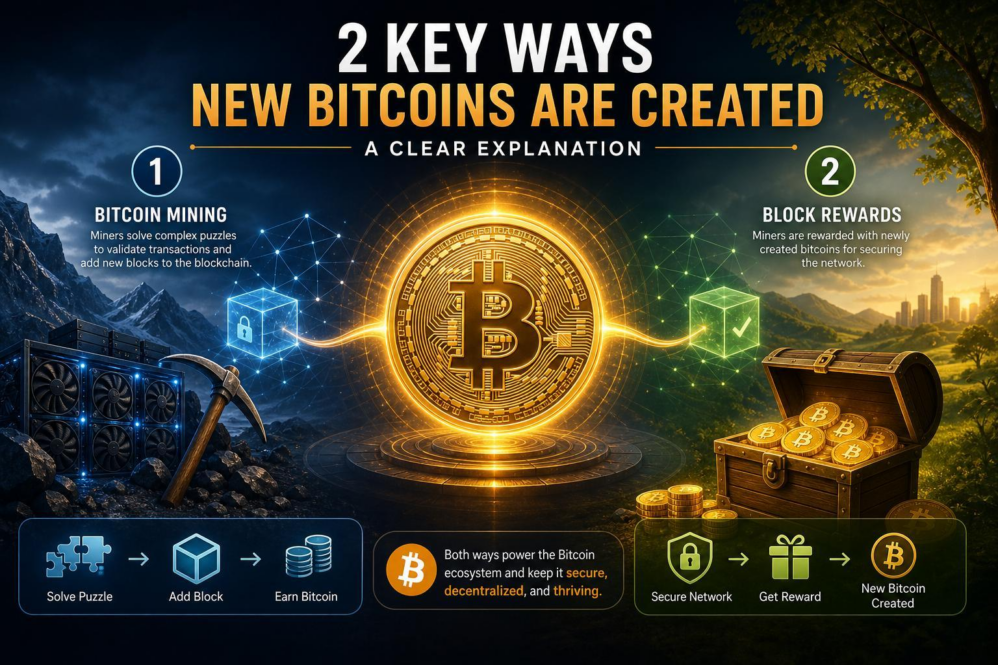
1) Bitcoin Mining: The primary and most well-known method of creating new Bitcoins is through a process called mining. Miners use powerful computers to solve complex mathematical problems that validate transactions on the Bitcoin network. When a miner successfully solves a problem, they add a new block to the blockchain and are rewarded with newly minted Bitcoins, incentivizing the maintenance and security of the network
At the core of Bitcoin’s architecture lies the process of mining, an essential mechanism that underpins the network’s security and the issuance of new coins. Miners employ advanced hardware-often specialized ASIC devices-to tackle intricate mathematical puzzles. These puzzles require significant computational power and energy, serving as a proof-of-work system that confirms the legitimacy of transactions.
When a miner successfully cracks the problem, a new “block” of transaction data is appended to Bitcoin’s decentralized ledger, the blockchain. This process is more than just record-keeping: it ensures that every Bitcoin transaction is obvious, immutable, and free from double-spending. The reward for this computational effort is newly minted Bitcoins, which are introduced into circulation as part of the block’s creation.
Key aspects of bitcoin mining include:
- Transaction Validation: verifying digital signatures and ensuring no fraudulent transfers occur.
- block Creation: Bundling valid transactions into a block that gets added to the blockchain.
- Incentivization: Earning block rewards and transaction fees as compensation for mining efforts.