
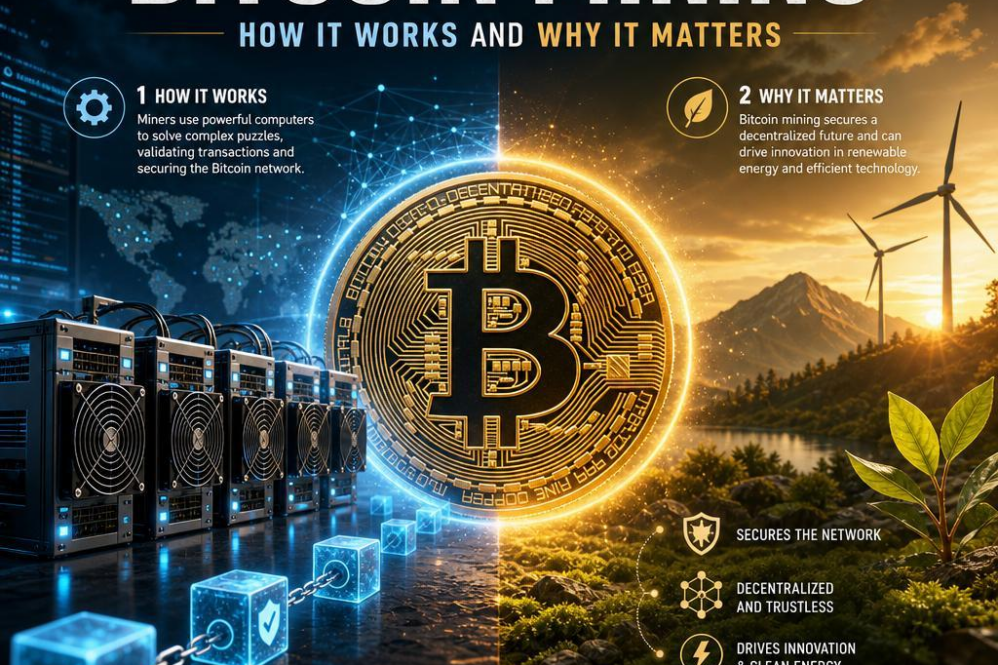
1) Bitcoin mining is the process where powerful computers solve complex mathematical problems to validate transactions and secure the network, rewarding miners with new bitcoins for their efforts. This process ensures the decentralized integrity of Bitcoin by preventing double-spending and fraud without relying on a central authority
At the heart of Bitcoin mining lies a sophisticated process where specialized computers, known as miners, race to solve cryptographic puzzles. These puzzles are no ordinary problems-they’re designed to be extremely tough to solve but easy to verify once completed.By tackling these challenges, miners validate groups of Bitcoin transactions, bundling them into secure blocks that become a permanent part of the blockchain ledger.
This proof-of-work mechanism is integral to the system’s decentralized nature. Instead of relying on a single company or government to approve transactions, mining distributes this responsibility across a global network of participants. This decentralized consensus approach safeguards against double-spending and fraud, ensuring every Bitcoin transferred is unique and legitimate, without any central authority dictating the rules.
The miners’ rewards come as newly minted bitcoins-a clever incentive that fuels the network’s growth and security together. Aside from securing transactions,mining introduces fresh bitcoins into circulation,balancing supply with demand in this innovative digital economy. It’s a continuous cycle where miners contribute computational power, uphold network integrityand get compensated in bitcoin, reinforcing the ecosystem’s trustworthiness and fairness.
2) Despite its crucial role,Bitcoin mining faces significant challenges such as high energy consumption and environmental concerns,as miners compete globally with increasingly specialized hardware,driving up electricity use and contributing to carbon emissions. These factors spark ongoing debates about the sustainability and future of the mining ecosystem
Bitcoin mining, while essential for validating transactions and securing the blockchain, comes with its share of mounting challenges. Central to these is the soaring energy demand; mining farms worldwide consume vast amounts of electricity to power their constantly running hardware. As miners vie to solve complex cryptographic puzzles quickly, competition intensifies, pushing them to employ increasingly sophisticated and energy-hungry devices. This relentless pursuit of efficiency drives up overall consumption, spotlighting the considerable environmental footprint of Bitcoin mining.
The environmental implications extend beyond energy usage.Many mining operations rely on electricity generated from fossil fuels, particularly coal, wich significantly contributes to carbon emissions. This nexus between mining activities and greenhouse gas output has sparked a heated global debate. Critics argue that the environmental cost outweighs the benefits of Bitcoin’s decentralized network, urging for greener solutions and stricter regulations.Advocates, however, emphasize the innovation mining fuels and point to emerging trends of integrating renewable energy into mining setups to lessen the carbon footprint.
Challenges Facing Bitcoin Mining:
- escalating energy consumption due to competitive mining hardware.
- Heavy reliance on non-renewable energy sources leading to carbon emissions.
- Ongoing debates about ecological sustainability and regulatory oversight.
| Aspect | Impact | Potential Solutions |
|---|---|---|
| Energy Use | High power consumption strains global resources | Shift to renewable energy, efficiency improvements |
| Carbon Emissions | Contributes to climate change and pollution | Carbon offset programs, green mining incentives |
| Hardware Race | Accelerates energy use and environmental impact | Growth of energy-efficient mining tech |